Get in Touch
Leave Your Message
0%

Picking a hybrid solar inverter? Start with how your home actually uses energy—not the shiny label on the box. A good unit ties together solar panels, batteries, grid power, and your everyday loads. It can keep the fridge humming when the grid goes down, and it helps you waste less of what you generate during the day. That said, “backup ready” on a spec sheet doesn’t always mean backup that feels seamless when it matters.

So check the basics: continuous output, surge capacity, battery voltage range, and max PV input. Those numbers need to line up with your panels, your battery bank, and your local electrical setup. A qualified installer should also look at cable sizes, ventilation, grounding, and protection devices. And yes, certifications against recognized standards—IEC or UL, for example—are worth a close look. Ask for test reports, warranty terms, firmware support, and a service contact who actually answers clearly. The small stuff matters more than people think.

A practical Solar Hybrid Inverter should give you useful monitoring without making daily energy management feel like a tech chore. Look for accurate app data, adjustable charging schedules, and compatibility with approved batteries. A Hybrid Solar Inverter might look cheap upfront, but replacement batteries, install changes, and software limits can push the real cost up. Real homes aren’t showrooms. Shade shows up. Loads change. Batteries age.

Me? I’d compare at least three verified models using the same assumptions. Test the promised backup load on paper first. Don’t trust peak power alone. It’s easy to get excited about efficiency percentages and completely overlook idle consumption. Even experienced buyers miss that one. The best choice balances safety, performance, expandability, and dependable local support. It should fit your roof, budget, climate, and future energy habits—not just win a spec sheet beauty contest.
How to Choose the Best Hybrid Solar Inverter?

Define Hybrid Inverter Functions: PV, Battery, Grid, and Backup Power Paths

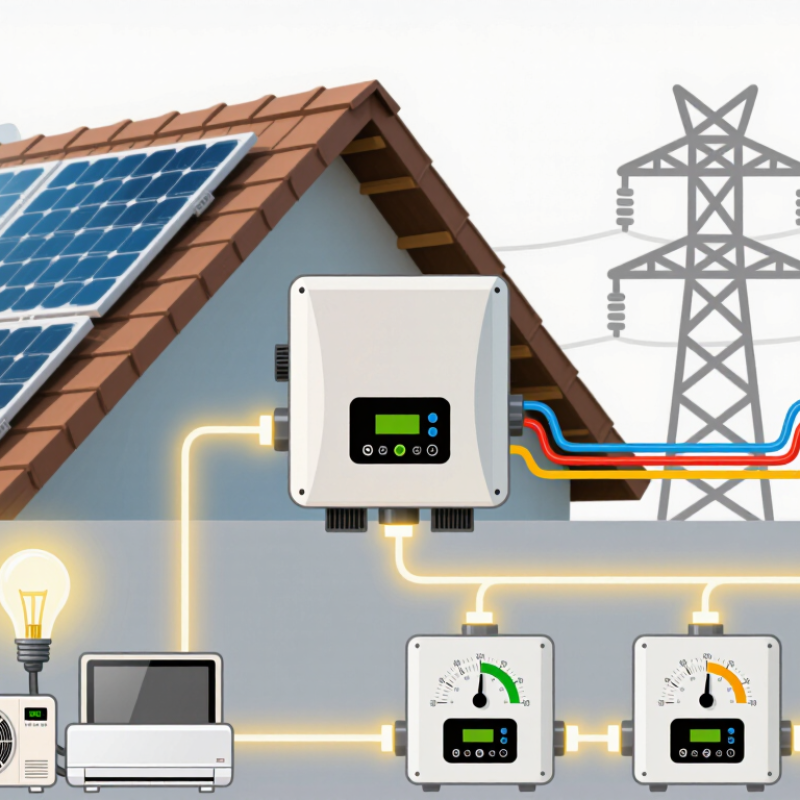
Choosing a Hybrid Solar Inverter starts with mapping four power paths: PV, battery, grid, and backup loads. The inverter converts solar DC into usable AC power for household circuits. It can also route surplus PV energy into a battery. When solar production falls, stored energy supports selected loads.

The grid path manages imports, exports, and charging support when permitted. A reliable unit should include anti-islanding protection, adjustable export control, and clear battery state-of-charge settings.

The backup path is different. During an outage, the inverter must isolate the home from the grid and energize a dedicated backup panel. This process requires fast transfer, stable voltage, and enough surge capacity for pumps, refrigerators, or communication equipment.

Industry scale makes this decision more important. IEA PVPS Trends 2024 reported about 447 GW of new photovoltaic capacity installed worldwide in 2023. That growth increases the value of flexible storage and controlled power paths. IRENA’s Renewable Capacity Statistics 2024 recorded 345.5 GW of solar additions during the same year. The figures are not perfectly aligned, because reporting methods differ. That deserves attention.

From field evaluations, installers should compare usable battery energy, continuous output, peak surge, MPPT voltage range, and backup switching time. A larger battery is not automatically better. Poor load planning can drain it before sunrise. I would also inspect monitoring accuracy and local service procedures. Marketing claims sometimes simplify real operating conditions. Verify them against measured efficiency, temperature limits, and the installation’s actual load profile before selecting a Hybrid Solar Inverter.

Size Inverter Capacity: Match kW Output to Peak Loads and Surge Demands

Choosing a hybrid solar inverter starts with load behavior, not panel count. Record the highest simultaneous load, then add motor or compressor surges. A refrigerator may run near 0.2 kW but briefly demand 1 kW. Pumps, air conditioners, and workshop tools can create sharper spikes.

For example, a 6 kW peak load with a 10 kW starting surge needs an inverter supporting at least 6 kW continuously and 10 kW briefly. Add practical headroom, often 20–25%. Oversizing slightly is usually safer than operating at the limit.

Panel capacity also matters. NREL’s PVWatts guidance commonly evaluates DC-to-AC ratios near 1.2–1.3, allowing panels to exceed inverter output during weak sunlight. However, this creates some clipping during bright midday hours.

The IEA PVPS Trends in Photovoltaic Applications 2024 report recorded more than 1.6 terawatts of global PV capacity by the end of 2023. That scale shows why correct inverter sizing matters across varied climates and household profiles.

Yet, battery power is easy to overlook. The battery, cables, and protection devices must also deliver the inverter’s surge demand.

Tips: List every appliance and its starting watts. Measure real loads when possible. Check continuous and surge ratings separately. Confirm surge duration, not only peak numbers. Leave space for future loads, but avoid paying for unused capacity. My own design reviews sometimes reveal one uncomfortable truth: estimated loads are often too optimistic. Test the largest motor before final selection.

Compare Efficiency: Check 95–98% Peak Efficiency and Euro Weighted Ratings

When choosing a hybrid solar inverter, do not trust peak efficiency alone. A 98% figure usually describes ideal laboratory conditions. Real homes operate across changing sunlight, battery levels, and household loads.

The Fraunhofer ISE Photovoltaics Report 2024 notes that modern inverters can approach 99% peak conversion efficiency. However, daily performance is often lower. Compare the Euro weighted efficiency rating, defined under several operating points in European testing procedures. This value better reflects morning, midday, and evening operation. A 95% rating may outperform a 98% model if it works efficiently at low loads. The difference matters. With 10 kWh passing through the inverter, 95% efficiency loses about 0.5 kWh. At 98%, the loss is about 0.2 kWh. Battery conversion losses remain separate.

Tips: Request both peak and Euro weighted ratings. Check efficiency graphs at 5%, 10%, and 50% load. Ask whether the figures include standby consumption. The EU Joint Research Centre’s PV Status Report supports comparing measured system performance rather than relying only on catalogue claims. I have seen installations produce disappointing results because the inverter was oversized for winter loads. That is easy to miss. A rating alone cannot predict your home’s annual yield. Review independent test documents, operating temperature ranges, and warranty conditions before deciding. Industry data is useful, but site measurements are better.

Select Battery Voltage: Evaluate 48 V Systems Versus High-Voltage Battery Banks

Battery voltage shapes how a hybrid solar system performs every day.

A 48v Hybrid Solar Inverter usually suits small and medium homes. Its batteries are widely available, easier to inspect, and often simpler to replace.

At 5 kW, a 48 V battery draws about 104 amps. That requires thick cables, secure terminals, and careful heat management.

High-voltage battery banks use higher battery voltage and lower current.

This can reduce cable size and improve efficiency over longer distances. They may also support larger systems with cleaner cabinet layouts. However, installation becomes more specialized.

Communication settings, battery compatibility, insulation checks, and shutdown procedures need close attention.
A small configuration mistake can stop the inverter from charging.

I have seen compact 48 V systems perform reliably in workshops and rural homes. I have also seen undersized cables become warm under heavy evening loads. That detail is easy to overlook.

High-voltage systems can be excellent, but replacement planning may be less flexible. Availability varies by region and installer experience.

Do not choose voltage from the inverter label alone. Compare daily loads, peak motor starting currents, cable distance, battery expansion plans, and local technical support.
A 48 V design may be inefficient for a large property.
A high-voltage bank may be unnecessary for a small cabin.

My own early preference for higher voltage was too broad; system size and maintenance access matter more than appearance.

Verify MPPT Design: Review 2+ Trackers, Voltage Windows, and PV Oversizing Limits

Choosing a Hybrid Solar Inverter 48v requires more than checking its advertised power rating. Inspect the MPPT design closely. Two or more independent trackers can reduce mismatch when roof planes face different directions. They also help when shade crosses only one string.

Confirm each tracker’s operating voltage window. The cold-weather open-circuit voltage must stay below the maximum input limit. At high module temperatures, the string voltage must still reach the tracker’s startup threshold. This detail is easy to miss. A simple paper check can prevent unstable production.

PV oversizing limits deserve equal attention. Some inverters accept more panel capacity than their output rating, but the allowed ratio varies. Never treat a common percentage as universal. Compare the datasheet’s maximum short-circuit current, operating current, and total PV wattage. IEA PVPS reported global photovoltaic capacity exceeded 1.6 terawatts in 2023, increasing the importance of careful system matching as installations become more varied. IRENA recorded about 1,419 gigawatts of solar capacity at the end of 2023, confirming the technology’s broad deployment.

In practice, measure cable runs and record the lowest local temperature before selecting strings. Leave practical headroom, not just theoretical compliance. A two-MPPT inverter may still perform poorly if one tracker is overloaded. I would recheck the design after shading analysis; assumptions often look convincing until winter arrives.

Hybrid Solar Inverter MPPT Design Check

Generic three-tracker example showing hot-condition operating voltage, cold-condition open-circuit voltage, and the inverter voltage limits. The design uses a 130% DC-to-AC PV ratio target, which must remain within the inverter's stated oversizing limit.

MPPT review
Three independent trackers are shown; two or more should be reviewed when roof orientations or string lengths differ.
Voltage calculation
Values use 41.5 V Vmp, 49.5 V Voc modules, a −0.35% Vmp coefficient, and a −0.29% Voc coefficient.
Oversizing check
A 130% DC-to-AC ratio is a design target, not a universal limit; confirm the permitted PV input power before installation.

Assess Safety and Compliance: Confirm IEC 62109, UL 1741, and IP65 Protection

A hybrid solar inverter should be judged by more than its efficiency rating. Safety certification is a practical starting point. IEC 62109 addresses protection against electrical and mechanical hazards in power converters. Check whether the certificate covers the exact inverter model, not only a similar product family. A printed logo is not enough evidence.

UL 1741 indicates that the inverter has been evaluated against important North American safety and grid-interconnection requirements. Requirements can change, so request current test reports and installation instructions. Confirm that the permitted grid profile matches your local utility rules. This detail is easy to underestimate. A qualified electrician should also inspect wiring clearances, grounding, disconnects, and accessible terminals.

IP65 protection means the enclosure resists dust and water jets from any direction. It does not mean the inverter can be submerged or exposed carelessly to standing water. Look for sealed cable glands, intact gaskets, and a dry mounting location under an appropriate shelter. During site checks, small installation errors often matter more than the rating itself. Dust around a loose connector can reveal a future maintenance problem. I would also question unclear documents or missing revision dates. Certification builds confidence, but careful installation preserves it.

Calculate Lifetime Value: Compare Battery DoD, 10–15-Year Warranties, and ROI

Choosing a hybrid inverter requires more than comparing today’s purchase price. Calculate lifetime value from usable energy, warranty coverage, and replacement risk. A 10 kWh battery rated at 80% depth of discharge provides 8 kWh per cycle. At 300 cycles annually, that equals about 2,400 kWh of annual storage, before losses. Deeper discharge can increase daily savings, but it may accelerate degradation. Check the manufacturer’s tested cycle limit, not only the advertised capacity.

The International Energy Agency reported that battery pack prices fell 14% in 2023, yet installation and replacement costs still influence payback. A practical worksheet should include electricity-price inflation, round-trip efficiency, backup value, and warranty duration. The U.S. Department of Energy identifies 10–15 years as a common planning horizon for modern energy-storage systems.

A 3kw Hybrid Solar Inverter may suit a small household, but its lifetime value depends on peak loads and battery cycling. An oversized system can sit underused. That is wasted capital.

Compare warranties carefully.

Some cover capacity retention, while others limit throughput or exclude frequent deep cycling. A 15-year warranty sounds stronger than a 10-year warranty, but only if the capacity guarantee remains useful. For example, 70% retained capacity after year fifteen may still cover evening lighting, refrigeration, and internet equipment. It may not support heavy heating loads. The calculation is imperfect. Real weather, tariffs, and user habits will change the result. Recheck the assumptions annually.

How a Wind-Solar Hybrid Low-Frequency All-in-One Inverter Controller Simplifies Off-Grid Power Systems

A wind-solar hybrid low-frequency all-in-one inverter controller simplifies off-grid power systems by bringing several essential functions into one integrated unit. It combines wind turbine control, photovoltaic charging, and low-frequency inversion, reducing installation complexity and saving valuable space. Built-in MPPT technology continuously adjusts energy harvesting to improve charging performance in changing wind and sunlight conditions, while the inverter provides stable pure sine-wave AC power for household equipment and other off-grid loads.

Real-time monitoring makes daily operation more convenient. Users can check charging current, voltage, temperature, output power, and other key parameters directly through the intuitive display. Automatic cooling fans start according to internal temperature and load levels, helping control heat during demanding operation. Designed for 48V gel battery systems, the controller can support residential electricity, remote communication sites, and independent renewable energy stations in varied environments.

Optional RS485 communication expands system connectivity and can support IoT-based remote monitoring through dedicated platforms. Operators may review equipment status, operating data, and performance without being physically present at the installation site. Integrated protection functions help guard against overcharge, over-discharge, overvoltage, overcurrent, and overheating, supporting safer and more dependable operation across the entire off-grid energy system.

FAQS

What are the four main power paths in a hybrid inverter?

They are PV, battery, grid, and backup loads. The inverter converts solar DC into household AC power. Surplus energy can charge the battery.

How does battery storage support household loads?

The battery supplies selected circuits when solar output declines. It may support lights, refrigerators, pumps, or communication equipment. A large battery is not always better.

What happens during a grid outage?

The inverter must isolate the home from the grid. It then energizes a dedicated backup panel. Fast transfer and stable voltage matter.

Which inverter ratings should installers compare?

Compare continuous output, peak surge, usable battery energy, and switching time. Also check MPPT voltage range and temperature limits. Marketing numbers can oversimplify real conditions.

How should inverter capacity match household loads?

Record the highest simultaneous load, then add motor starting surges. A refrigerator might use 0.2 kW while running and briefly demand 1 kW. Leave practical headroom.

Why do pumps and compressors require special attention?

Motors can create sharp starting spikes. A system may handle normal operation but fail during startup. Test the largest motor before final selection.

Can solar panel capacity exceed inverter output?

A moderate DC-to-AC ratio can improve production during weak sunlight. However, bright midday conditions may cause some energy clipping. That trade-off needs checking.

What protection and control features are important?

Look for anti-islanding protection, adjustable export control, and clear battery settings. The battery, cables, and protection devices must support surge demand. Small details matter.

How can homeowners avoid incorrect system sizing?

List every appliance and its starting watts. Measure actual loads when possible. Estimated loads are often too optimistic. That mistake is common.

Conclusion

Choosing the best Hybrid Solar Inverter requires evaluating how effectively it manages power from solar panels, batteries, the utility grid, and backup circuits. Begin by matching the inverter’s continuous kW output to your normal demand, while allowing extra capacity for motor starts and other surge loads. Compare peak and weighted efficiency, ideally targeting strong performance in the 95–98% range. Battery compatibility is also important: 48 V systems may offer simpler installation, while high-voltage banks can improve efficiency in larger systems.

Review the MPPT design, including the number of trackers, operating voltage windows, and permitted PV oversizing, to ensure the inverter can handle your array under changing conditions. Safety should be confirmed through recognized standards such as IEC 62109 and UL 1741, along with suitable IP65 protection where applicable. Finally, assess long-term value by comparing battery depth of discharge, expected service life, warranty coverage of 10–15 years, and the potential return on investment.

Lila

Lila

Lila is a dedicated marketing professional at a leading high-tech enterprise specializing in the research, development, manufacturing, and global sales of new energy products. With a deep understanding of the company's innovations, she plays a crucial role in communicating the benefits and features......
Previous Why Choose an Island Solar Inverter for Off Grid Power?