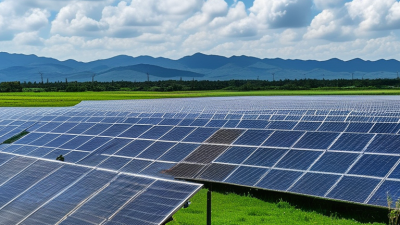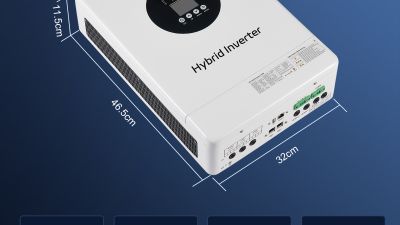
An Off-Grid PV Inverter is basically the heart of a solar power setup when you don’t have access to the main electrical grid. Think of it as the device that takes the direct current (DC) from your solar panels or batteries and turns it into the alternating current (AC) you need to run lights, pumps, fridges, and tools around your place. Unlike the ones plugged into the grid, this inverter has to generate a stable electrical reference on its own since it has no support from a public grid.
Dr. Joshua M. Pearce, a notable researcher in renewable energy, sums it up pretty well: “Reliability isn’t something you throw in at the end; it’s built into the system from the ground up.” That’s really important when you're dealing with remote cabins, farms, or emergency backup setups. A good inverter doesn’t just convert power; it also keeps an eye on your batteries’ voltage, handles charging, and disconnects major loads when your energy supply gets tight. Some models even coordinate with generators or connect to multiple battery banks. Brands like Victron Energy and Schneider Electric have systems that do all of this—pretty neat, right?
The basic sequence of how these inverters operate might seem simple, but real-world conditions can complicate things. Solar panels don’t produce a steady flow of power—they fluctuate with the weather and sunlight. Batteries behave differently in cold weather, and those long cable runs can cause voltage drops that mess with performance. So, the inverter has to react quickly, balancing all these variables within seconds. During the day, it provides clean power, stores the excess energy for later, and switches over to the batteries when the sun goes down.
But it’s the little things that really matter. For example, a refrigerator’s compressor can sometimes need several times more power when it kicks in. Or a cloudy day might reveal that your battery bank isn’t big enough. An On Grid Off Grid Hybrid Solar Inverter gives you a lot of flexibility, but it also means more controls and, potentially, more points where things could go wrong. That’s a trade-off worth thinking about. No system is perfect. The best setup depends on your actual loads, climate conditions, the type of batteries you use, how much maintenance you’re willing to do, and how long you want to be independent from the grid.
This guide is meant to walk you through how an Off-Grid PV Inverter works and what practical decisions you'll need to make along the way.
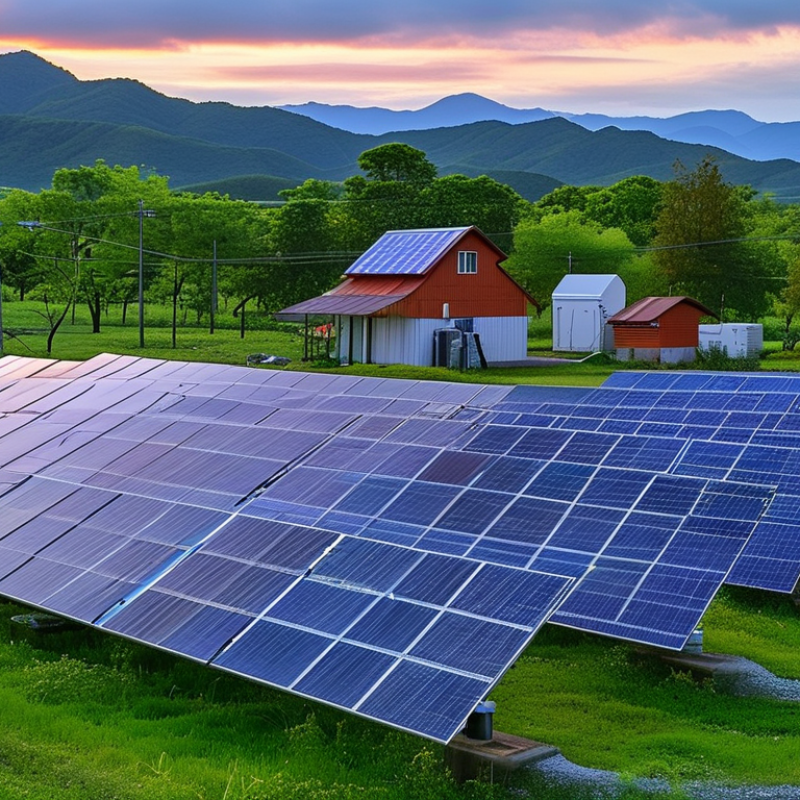
An Off-Grid Pv Inverter converts electricity from solar panels into usable power for appliances. Solar panels produce direct current, or DC. Most household equipment needs alternating current, or AC. The inverter performs this conversion without relying on a public utility connection. Its core purpose is to create a stable local power supply for cabins, remote homes, workshops, and emergency systems.
It usually works with a battery bank and a solar charge controller. During sunlight, the panels supply energy to the inverter and batteries. The batteries store extra power for evening use or cloudy weather. When a refrigerator starts, the inverter must handle its brief surge, not just its normal running wattage. That small detail matters. A weakly sized unit may shut down, even when the daily energy calculation looks acceptable.
Real installations are less tidy than diagrams. Cable length, heat, dust, battery temperature, and uneven sunlight can affect performance. A practical inspection should check terminal tightness, ventilation, protective devices, and the inverter’s output waveform. Pure sine wave output is generally safer for sensitive electronics and motor-driven loads. Yet sizing only for today’s appliances can be a mistake. People often add pumps, tools, or communication equipment later. The system may function at first, but limited battery capacity can quickly expose poor planning. Careful load measurements and qualified electrical work remain important.
An Off Grid Solar Inverter converts solar energy into usable electricity when no utility grid is available. Its main components must coordinate carefully, because a small failure can interrupt lights, refrigeration, or water pumps.
The PV input stage receives direct current from solar panels. An MPPT controller adjusts voltage and current to harvest energy under changing sunlight. The battery charger then stores surplus power safely. It also manages charging stages and limits excessive current. A battery management connection may monitor temperature, voltage, and cell balance. Small details matter here.
Inside the inverter bridge, electronic switches change battery DC into alternating current. A transformer or high-frequency circuit can raise voltage and provide isolation. The output filter removes unwanted electrical noise before power reaches household loads. Protection circuits watch for overloads, short circuits, overheating, and low battery voltage. Clear displays or remote monitoring show solar input, battery level, and active loads. I have found that these readings help locate problems before an evening outage. Still, monitoring is not perfect. Sensors can drift, and cables may loosen. The enclosure, cooling fan, terminals, and grounding path also deserve regular inspection. An Off Grid Solar Inverter works as one system, not as a single black box.
| Main Component | Primary Function | Main Electrical Input | Main Electrical Output | Typical Characteristics and Design Considerations |
|---|---|---|---|---|
| PV Input Terminals | Provide the connection point between the solar array and the inverter. | Variable direct current from photovoltaic modules or strings. | DC power delivered to the MPPT stage or DC bus. | Must be rated for the array's maximum operating voltage, short-circuit current, and polarity. String fuses or DC disconnects may be installed externally or internally. |
| MPPT Charge Controller | Tracks the PV array's maximum power point and regulates charging power for the battery bank. | PV voltage and current that vary with sunlight, temperature, and load conditions. | Controlled DC charging current and voltage. | Improves energy harvest compared with direct, unregulated charging. Common charge stages include bulk, absorption, and float, depending on battery chemistry and system settings. |
| DC-DC Converter | Raises or lowers the PV or battery voltage to match the internal DC bus or charging requirements. | Unregulated or variable DC from the PV array or battery. | Regulated DC at the required voltage level. | May be isolated or non-isolated. Its design affects conversion efficiency, thermal performance, voltage range, and maximum usable PV power. |
| DC Link and Capacitors | Stabilize the internal DC voltage and provide short-term energy buffering between conversion stages. | DC from the MPPT stage, battery interface, or rectifier. | A relatively stable DC bus for the inverter bridge. | Capacitors reduce voltage ripple and help handle rapid changes in power demand. Their voltage, ripple-current, and temperature ratings are important for reliability. |
| Battery Interface | Controls energy flow between the inverter and the battery bank during charging and discharging. | Battery voltage and bidirectional DC current. | Regulated battery charge current or DC power supplied to the inverter stage. | Must match the battery bank's nominal voltage, allowable current, charge limits, and chemistry. Lithium battery systems may require communication with a battery management system. |
| Battery Management System Interface | Exchanges battery status and safety limits with the inverter when supported by the battery system. | State-of-charge, temperature, voltage, current, and protection information. | Charge and discharge limits or enable/disable commands. | Communication can help prevent overcharge, excessive discharge, overheating, and operation outside the battery manufacturer's limits. The exact protocol depends on the system design. |
| Inverter Power Bridge | Converts DC power into an alternating-current waveform for household or off-grid loads. | Stable DC from the DC link or battery path. | High-frequency switched AC waveform. | Usually uses power semiconductor switches controlled by pulse-width modulation. Switching frequency, device ratings, and control quality affect efficiency and waveform performance. |
| Output Filter | Removes high-frequency switching components and shapes the output into a clean AC waveform. | Pulsed AC waveform from the power bridge. | Low-distortion AC for connected loads. | Common elements include inductors, capacitors, and damping components. Filter design influences total harmonic distortion, audible noise, and transient response. |
| Voltage and Frequency Controller | Maintains the required output voltage and frequency as solar input, battery voltage, and load demand change. | Voltage, current, frequency, temperature, and load feedback signals. | Gate-drive commands for the power switches. | An off-grid inverter must create its own AC reference because it does not depend on a utility grid. Typical single-phase systems operate at either 120 V/60 Hz or 230 V/50 Hz, depending on the region. |
| AC Output Stage | Delivers usable AC power to stand-alone loads and, where supported, to a local off-grid distribution panel. | Filtered AC generated by the inverter. | Rated AC voltage, frequency, and current for connected equipment. | Output capacity is defined by continuous power, short-term surge power, power factor, and allowable overload duration. Motors, pumps, and compressors may require substantial starting current. |
| Transfer or Bypass Circuit | Switches selected loads between the inverter output and an approved auxiliary AC source, when the system includes one. | Inverter AC output and auxiliary AC input. | Selected source delivered to the load panel. | This feature is optional in a strictly solar-and-battery system. Interlocking and switching controls are required to prevent unsafe parallel connection with an unsuitable source. |
| Protection and Isolation Devices | Protect people and equipment from abnormal current, voltage, temperature, and isolation conditions. | PV, battery, DC-bus, and AC circuit conditions. | Fault interruption, shutdown commands, or isolated circuits. | Typical functions include overcurrent protection, short-circuit protection, overvoltage protection, reverse-polarity protection, ground-fault detection, overtemperature shutdown, and DC/AC isolation. |
| Cooling System | Removes heat produced by semiconductor switches, inductors, transformers, and other power components. | Thermal energy generated during conversion. | Heat transferred to the surrounding environment. | Cooling may use natural convection, heat sinks, or controlled fans. Continuous output power is often reduced at high ambient temperatures or when ventilation is restricted. |
| Control Processor and Firmware | Coordinates MPPT, battery charging, waveform generation, protection functions, and operating modes. | Sensor measurements, user settings, battery data, and fault signals. | Control commands, alarms, shutdown actions, and operating-status data. | Operating modes may include solar priority, battery priority, load support, low-voltage shutdown, restart, and generator-assist functions, depending on the inverter architecture. |
| Monitoring and Communication Interface | Displays system status and enables configuration, diagnostics, or remote monitoring. | Measurements such as PV power, battery voltage, load power, temperature, and fault codes. | Screen data, communication messages, alarms, or remote control commands. | Interfaces may include a local display, wired communication, wireless communication, or a dry-contact signal. Monitoring capabilities vary by system design. |
How the system works: Solar panels produce DC electricity, the MPPT stage extracts available PV power, and the battery interface stores or supplies energy. The inverter power bridge then converts DC into controlled AC, while the output filter, controller, protection circuits, and cooling system maintain safe and stable operation for off-grid loads.
What Is an Off Grid PV Inverter and How Does It Work?
Solar panels produce direct current, but most household appliances require alternating current. An Inverter Solar Off Grid system manages this conversion without relying on a utility connection. Panels send variable DC electricity to the inverter. A maximum power point tracker adjusts the operating voltage as sunlight changes.
The inverter then converts DC into stable AC power for lights, pumps, refrigerators, and other loads. When production exceeds demand, a battery can store the surplus for evening use. During cloudy periods, stored energy flows back through the inverter. The control process happens continuously. It is faster than most people notice.
In practical installations, battery voltage, cable length, and appliance starting current matter greatly. A refrigerator may draw several times its normal power for a few seconds. Ignoring that detail can cause shutdowns, even when the daily energy estimate looks adequate. Safety features may include overload protection, short-circuit protection, temperature monitoring, and low-voltage disconnects. Correct grounding and ventilation also deserve attention.
A neat diagram can hide real weaknesses. Weather changes, dust, aging batteries, and occasional user errors affect performance. I would not size an off-grid system from panel wattage alone. Actual load measurements provide better evidence. A qualified installer should verify the design, wiring, protection devices, and local electrical requirements before commissioning.
How Solar Energy Is Converted into Usable Power
In a representative 5 kW off-grid solar system, photovoltaic panels produce direct-current power. The inverter's MPPT controller optimizes the panel output, while the inverter converts DC electricity into alternating-current power for household loads. Typical conversion and wiring losses reduce 5.00 kW of array power to approximately 4.52 kW of usable AC power. Batteries can store surplus energy and supply power when solar production is low.
Representative operating-point data; actual values vary with irradiance, temperature, battery state, cable length, and load conditions.
An off-grid PV inverter converts solar energy from panels into usable household electricity. It also manages battery charging when solar production exceeds current demand. In practical installations, this balance changes every few minutes. Clouds pass. Pumps start. Refrigerators cycle.
The inverter usually follows several charging stages. Bulk charging sends higher current to restore the battery quickly. Absorption charging then reduces current as voltage approaches its safe limit. Float charging maintains the battery without continuous overcharging. Modern systems monitor battery voltage, temperature, current, and estimated state of charge. Temperature matters greatly. A cold battery may require different charging limits than a warm one.
Energy storage management also protects power for essential loads. The inverter can reserve capacity for lighting, communication equipment, or medical devices. During weak sunlight, it may reduce optional loads before reaching a damagingly low battery level. Lithium batteries and lead-acid batteries need different settings, so incorrect programming can shorten service life. Real-world readings are not always perfect. State-of-charge estimates can drift over time, especially when the battery rarely reaches a full charge. Installers should review historical data, cable connections, ventilation, and seasonal demand rather than trusting one screen value. A small mistake in the settings can become a large outage.
An Off Grid Hybrid Inverter converts electricity from solar panels or batteries into usable alternating current for household loads. Solar panels produce variable direct current, so the inverter tracks the maximum power point as sunlight changes. It then delivers stable voltage and frequency to lights, refrigerators, pumps, and communication equipment.
The supply path is practical and controlled. During bright sunlight, solar power normally serves active loads first. Extra energy charges the battery. When clouds arrive, the battery responds within milliseconds, reducing noticeable interruptions. If demand suddenly rises, the inverter manages the surge or disconnects nonessential circuits. A refrigerator may need several times its running power during startup. That detail is easy to miss.
The IEA PVPS Trends in Photovoltaic Applications 2024 report recorded more than 1.6 terawatts of global PV capacity by the end of 2023. More solar installations also increase the need for dependable load management. IRENA’s Renewable Power Generation Costs in 2023 reported a major long-term decline in solar PV electricity costs, but lower generation costs do not remove installation risks. In field commissioning, cable size, battery temperature, and grounding errors can still cause voltage drops or shutdowns. The system may look correctly wired, yet a weak terminal can heat under load. Engineers should verify continuous power, peak surge capacity, protection settings, and battery reserve with measured data, not assumptions.
An off-grid PV inverter converts variable DC power from solar modules into stable AC power for homes, workshops, or remote facilities. It also manages batteries, loads, and backup generators without a utility connection. The scale matters: IEA PVPS reported more than 400 GW of new photovoltaic capacity worldwide in 2023, yet remote systems still face unstable sunlight and limited storage. An off-grid inverter must therefore make decisions every second.
In normal solar-priority mode, PV power serves active loads first, then charges the battery. When clouds arrive, battery mode supplies the shortfall.
A generator-support mode can start backup generation when voltage or state of charge falls below a defined threshold. Some systems also use load-shedding mode. Non-critical circuits disconnect first. Refrigeration may remain powered.
Protection functions are less visible, but more important.
Overload protection limits excessive current during motor starts. Short-circuit protection disconnects a fault quickly. Undervoltage protection prevents deep battery discharge, while overvoltage protection shields sensitive appliances. Thermal sensors reduce output when internal temperatures rise. Many systems also monitor reverse polarity, insulation faults, and frequency drift. IEC 62109 addresses inverter safety requirements, while IEA PVPS field guidance stresses correct installation and maintenance. Battery efficiency is not perfect; NREL’s 2024 Annual Technology Baseline commonly models lithium-ion storage round-trip efficiency near 85% to 90%. That loss is easy to underestimate. In practice, cable sizing, ventilation, and incorrect battery settings can defeat an otherwise capable inverter.
As solar deployment accelerates, flexible energy storage is becoming essential for households and small businesses. The IEA’s *Renewables 2024* report states that global renewable capacity additions reached nearly 510 GW in 2023, with solar PV accounting for about three-quarters of new capacity. Against this backdrop, the 3.5kW, 6.5kW, and 12kW hybrid inverter series provides a practical way to convert growing PV production into dependable electricity. Multi-channel MPPT technology supports a broad PV voltage range and different panel configurations, while accepting input from solar panels, the utility grid, or a diesel generator.
Designed for 230Vac single-phase systems, the inverter enables smooth energy switching among PV, batteries, and mains power. An external CT sensor supports anti-backflow control and helps manage surplus generation without limiting connected load capacity. Compatible with 24V or 48V lead-acid and BMS-equipped lithium batteries, it offers high charging current for faster storage and peak-load reduction. The IEA’s *Batteries and Secure Energy Transitions* analysis highlights the growing importance of battery storage in integrating variable renewable power, making this hybrid architecture especially relevant for resilient home energy systems.
For larger applications, the 12kW model can connect up to six units in parallel, supporting residential PV, whole-home backup, and small commercial loads. A built-in display provides real-time operating data, while the optional IP66 outdoor version enables installation in demanding environments.
: It converts solar-panel or battery direct current into usable alternating current. It supplies lights, refrigerators, pumps, and communication equipment. It works without a utility grid.
The photovoltaic input stage receives electricity from solar panels. An MPPT controller adjusts voltage and current as sunlight changes. Clouds can alter the available power quickly.
The battery charger directs extra solar power into the battery. It controls charging stages and limits excessive current. Temperature, voltage, and cell balance should also be monitored.
Solar power usually serves active loads during bright sunlight. Surplus energy charges the battery. When clouds arrive, battery power can respond within milliseconds.
A refrigerator may need several times its normal running power during startup. This temporary surge can overload an undersized inverter. Continuous power alone is not enough.
The inverter may manage the surge or disconnect nonessential circuits. Protection systems watch for overloads, short circuits, overheating, and low battery voltage. A design can still fail.
Electronic switches in the inverter bridge change battery direct current into alternating current. A transformer or high-frequency circuit can increase voltage and provide isolation. An output filter reduces unwanted electrical noise.
Useful readings include solar input, battery level, and active loads. These details can reveal trouble before evening power loss. Monitoring is not perfect. Sensors can drift.
Inspect cables, terminals, cooling fans, enclosure surfaces, and grounding paths. A loose terminal may heat under heavy load. Measure cable voltage drops instead of trusting appearances.
Check continuous power, peak surge capacity, protection settings, and battery reserve. Use measured data, especially during high-demand periods. Assumptions can be wrong.
An Off-Grid Pv Inverter is a key device in an independent solar power system. It converts the direct current generated by solar panels into stable alternating current for household appliances, tools, and other electrical loads. Its main components typically include a power conversion circuit, control system, monitoring interface, cooling structure, and protective devices. By adjusting voltage and frequency, the inverter makes solar energy suitable for everyday use while maintaining reliable system performance.
The inverter also manages battery charging and energy storage by directing surplus solar power into the battery and controlling charging current to help prevent overcharging or excessive discharge. When solar production is insufficient, stored energy can be converted into usable electricity for connected loads. Depending on system conditions, it may operate in solar priority, battery priority, or backup modes. Important protection functions include overload, short-circuit, over-temperature, low-voltage, and reverse-polarity protection, helping improve safety, efficiency, and overall system stability.