Get in Touch
Leave Your Message
0%

Picking out a lithium solar charge controller isn’t just about comparing prices—that’s only part of the story. Things like battery chemistry, system voltage, charging profiles, and communication features can all impact how well your setup performs day to day. In this guide—called “Top 10 Lithium Solar Charge Controllers for Global Buyers”—we look at products through practical, real-world criteria. We consider factors like MPPT efficiency, compatibility with lithium batteries, temperature sensing, how clear the display is, and how good the installation support is. A solid Lithium Charge Controller Solar system should handle changing sunlight and varying loads without missing a beat, keeping your charging performance steady.

We focus on trusted brands like Victron Energy, Renogy, EPEVER, Morningstar, OutBack Power, and Schneider Electric. Each of these has its own strengths, whether you’re powering a home, a mobile setup, a remote cabin, or a commercial project. We pay attention to the nitty-gritty stuff—terminal quality, enclosure design, how much power the controller consumes when idle, and whether it features Bluetooth or RS485 monitoring. Sometimes, a controller can look really impressive on paper, but if the wiring instructions are sketchy, it can lead to headaches during installation.

For buyers around the world, it’s also crucial to check regional voltage requirements, warranty details, the availability of tech support, and ensure that the product has the right certifications—don’t just take it for granted, verify through official sources first. Of course, no list is perfect. Battery brands, climates, and how you install can all make a difference. A controller that performs great in a cool workshop might act differently on a hot rooftop. And honestly, we might even overlook some good options. That’s why I see this list more as a practical starting point, not the ultimate verdict. Make sure you compare datasheets, double-check the lithium charging settings, and chat with a qualified installer when you’re dealing with bigger systems—little details really do matter.
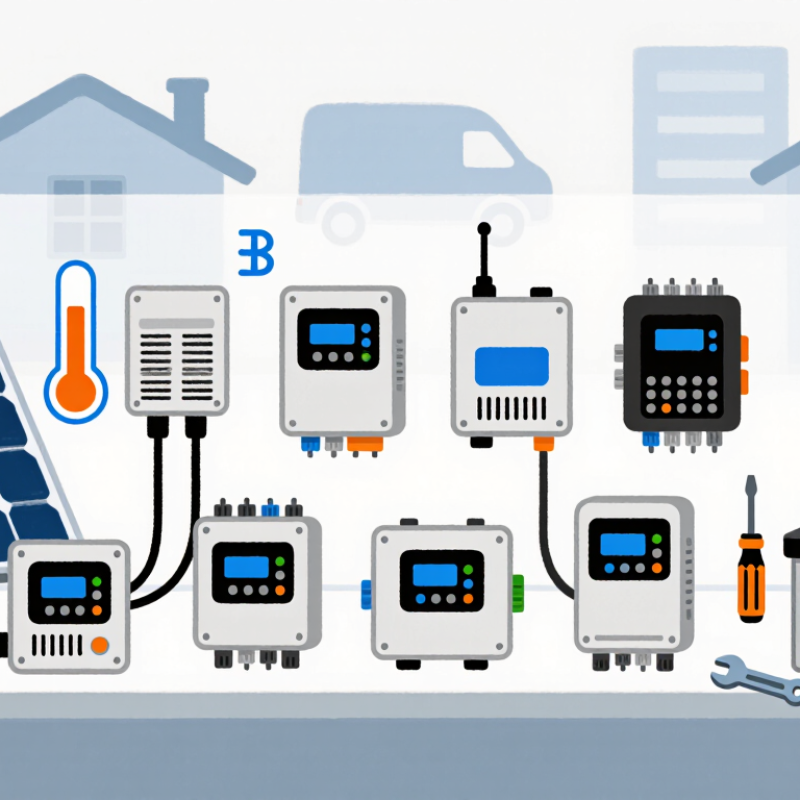
Top 10 Lithium Solar Charge Controllers for Global Buyers

What Lithium Solar Charge Controllers Are and How They Work

A Lithium Solar Charge Controller manages electricity between solar panels and a lithium battery. It prevents excessive voltage, controls charging current, and protects stored energy from unsafe discharge. Unlike older lead-acid systems, lithium batteries need more precise voltage limits. Their charging profile is narrower. Small errors matter.

Most modern controllers use maximum power point tracking, or MPPT, to convert changing panel voltage into useful battery current. In bright sunlight, MPPT can extract more energy than basic PWM control. The International Energy Agency reported that global battery storage additions reached about 42 gigawatts in 2023, rising sharply from the previous year. This growth increases demand for accurate solar charging equipment. A controller may also communicate with the battery management system, monitor temperature, and disconnect loads during abnormal conditions.

In practical use, wiring size and heat matter. A controller mounted inside a hot metal cabinet may reduce performance, even when its screen looks normal. Lithium batteries often accept high charging current, but the battery management system can suddenly stop charging. That event can confuse poorly configured equipment. The International Renewable Energy Agency recorded global solar capacity above 1.4 terawatts at the end of 2023, showing how quickly solar systems are expanding. Still, higher capacity does not guarantee better charging. Installers should verify battery voltage, charge limits, temperature settings, and communication compatibility. I have found that manuals sometimes leave these details unclear. That deserves more skepticism.

Top 10 Lithium Solar Charge Controllers for Global Buyers

What Lithium Solar Charge Controllers Are and How They Work

Lithium solar charge controllers regulate photovoltaic power to prevent overcharging and apply the correct voltage profile to the battery. The chart compares typical nominal voltage and maximum charging voltage per cell for common lithium-ion chemistries. For a battery pack, multiply the cell voltage by the number of cells connected in series. Actual settings must always follow the battery manufacturer’s specifications and the selected battery management system.

Key Features Global Buyers Should Compare Before Purchasing

Global solar deployment is accelerating, making controller selection more technical than it appears. The IEA PVPS Trends 2024 report recorded more than 440 GW of new photovoltaic capacity in 2023. This growth exposes weak assumptions in product comparisons. A Lithium Ion Solar Charge Controller should match the battery’s chemistry, nominal voltage, charging profile, and BMS requirements. “Lithium compatible” is not enough. Ask for adjustable absorption voltage, charge termination settings, low-temperature charging protection, and recovery behavior after a BMS shutdown.

Compare the controller’s maximum PV voltage and current with real site conditions, not only panel labels. Cold climates can raise open-circuit voltage sharply. Hot roofs can reduce output. MPPT efficiency, idle consumption, and thermal derating also matter. The BNEF Battery Price Survey 2024 reported average lithium-ion pack prices of 115 dollars per kWh, increasing the value of reliable battery protection. Still, cheaper hardware may hide poor logging or limited service support. That risk is easy to underestimate.

For global buyers, inspect operating temperature, enclosure protection, corrosion resistance, and surge protection. Check whether the unit supports local grid-independent systems and common communication protocols. Safety documentation should reference relevant requirements, including IEC 62109 and IEC 62509 where applicable. Field technicians often value readable fault codes more than decorative displays. I would also question impressive efficiency claims without test conditions. Certification can be genuine, yet installation quality still decides performance. Language support, replacement access, and warranty terms deserve equal attention. Something may be missed.

Battery Chemistry, Voltage, and System Compatibility Explained

Choosing among the top 10 lithium solar charge controllers starts with battery chemistry, not marketing claims. Lithium iron phosphate batteries require accurate charging limits and dependable temperature protection. A Lithium Mppt Solar Charge Controller should support the battery manufacturer’s voltage profile. Generic lithium settings can create trouble.

Check the battery’s nominal voltage first. A 12-volt battery usually charges near 14 volts, while a 24-volt system needs roughly twice that level. Confirm the controller supports the panel’s open-circuit voltage, especially on cold mornings. I have seen small systems fail because installers checked operating voltage only. That mistake is easy to repeat.

Communication compatibility also matters. Some batteries need a signal from the controller before charging begins. Others rely on fixed settings and external protection. Confirm maximum charging current, low-temperature cut-off, load output limits, and cable size. A 40-amp controller may not suit a compact battery bank. More capacity is not always safer.

Installation details reveal practical quality. Tight terminals, short cables, ventilation, and visible error codes simplify maintenance. Use the battery datasheet, not assumptions. Even experienced technicians occasionally overlook standby consumption or unsuitable firmware. Leave room for correction. A controller that supports future battery expansion may justify a higher cost, but only when its voltage range and communication features truly match the system.

Top 10 Lithium Solar Charge Controllers for Different Applications

Top 10 Lithium Solar Charge Controllers for Different Applications

Choosing among the top ten lithium solar charge controllers depends on the battery, load, and installation environment. An Mppt Lithium Solar Charge Controller suits home systems because it extracts more energy during weak sunlight. For RVs, a compact controller with low standby consumption protects battery capacity overnight. Remote cabins need simple displays, reliable fault alarms, and easy reset access.

Marine installations require corrosion-resistant housings and sealed terminals. Agricultural pumps benefit from high-current models with stable thermal performance. Telecom stations usually need remote monitoring and dependable operation during long cloudy periods. Portable solar kits favor lightweight units, while cold-climate systems need carefully configured charging limits. Large commercial battery banks require accurate current measurement and communication with the battery management system.

A controller should match the lithium battery’s charging voltage, maximum current, and BMS requirements. Do not select capacity by panel wattage alone. Cable length, ventilation, and afternoon heat can change real performance. A useful review also checks reverse-polarity protection, enclosure rating, and standby draw. Some impressive specifications remain unclear under partial shade. That matters.

Field installers often leave extra current capacity for future panels, but excessive oversizing can increase cost without improving daily output. Temperature sensors also need correct placement; attaching one to a warm metal surface can distort readings. I have found that simple interfaces are often more dependable for remote users, although advanced monitoring helps commercial operators identify faults earlier. Performance is not always perfect.

Top 10 Lithium Solar Charge Controllers for Global Buyers – Top 10 Lithium Solar Charge Controllers for Different Applications

Rank Controller Category Recommended Application Battery Chemistry System Voltage Charging Method Rated Charge Current Maximum PV Voltage Typical Protection Key Selection Advantage
1 Compact MPPT Controller Small cabins, vans and portable solar systems LiFePO4 / Lithium-ion 12/24 V auto-detect MPPT 10–20 A 50–100 V DC Over-current, over-temperature, reverse polarity Low installation space and efficient charging under changing sunlight
2 Mid-Range MPPT Controller Residential backup systems and small off-grid homes LiFePO4 / Lithium-ion 12/24/48 V MPPT 30–50 A 100–150 V DC Short-circuit, surge, thermal and battery over-voltage protection Good balance between PV capacity, efficiency and system cost
3 High-Current MPPT Controller Large lithium battery banks and off-grid residences LiFePO4 12/24/48 V MPPT 60–100 A 150–250 V DC Overload, over-voltage, overheating and PV reverse-current protection Supports higher solar input without using multiple low-current units
4 High-Voltage MPPT Controller Long PV cable runs and ground-mounted solar arrays LiFePO4 / Lithium-ion 24/48 V MPPT 60–100 A 250–450 V DC High-PV-voltage, surge, thermal and isolation monitoring Reduces array-side current and voltage drop over distance
5 Dual-Input MPPT Controller Mobile systems using roof-mounted and auxiliary panels LiFePO4 12/24 V MPPT with dual inputs 30–50 A solar input 50–100 V DC Input isolation, reverse polarity and temperature protection Combines multiple solar sources while keeping installation organized
6 Marine-Grade MPPT Controller Boats, coastal equipment and humid environments LiFePO4 / Lithium-ion 12/24 V MPPT 20–60 A 75–150 V DC Conformal coating, sealed housing and corrosion resistance Better durability in salt air, condensation and vibration
7 Outdoor-Rated MPPT Controller Telecom sites, security systems and remote monitoring stations LiFePO4 12/24/48 V MPPT 20–60 A 100–250 V DC IP65 or higher enclosure, lightning and load protection Designed for unattended operation and exposure to dust or rain
8 Hybrid Solar-and-Alternator Controller Recreational vehicles, work vehicles and emergency power kits LiFePO4 12/24 V MPPT plus DC-DC charging 30–60 A combined 50–100 V DC Vehicle transient, thermal, fuse and reverse-current protection Charges from solar panels and an engine-driven electrical system
9 Commercial Modular MPPT Controller Microgrids, agricultural facilities and small commercial sites LiFePO4 / Lithium-ion 24/48 V MPPT with parallel operation 80–100 A per unit 150–250 V DC Current limiting, surge, thermal and communication-fault protection Scales capacity by adding matched controller units
10 Remote-Monitoring MPPT Controller Internationally deployed systems requiring centralized maintenance LiFePO4 / Lithium-ion 12/24/48 V MPPT 20–100 A 100–250 V DC Electrical protection plus data logging and alarm functions Enables remote review of charging status, energy yield and fault events

Note: Specifications are representative selection ranges for lithium-compatible controller categories. Actual limits, enclosure ratings, charging profiles and communication features must be verified in the final product datasheet. Lithium battery installations should use a battery management system (BMS) and a controller profile approved for the selected battery.

Safety Standards, Certifications, and Regional Buying Requirements

Top 10 Lithium Solar Charge Controllers for Global Buyers

Safety documentation matters more than a polished product page. IRENA’s Renewable Capacity Statistics 2024 reported 345 gigawatts of new solar capacity worldwide in 2023. That growth increases demand for reliable lithium charging equipment, but certification quality still varies. Look for IEC 62109-1 and IEC 62109-2 safety testing, especially for insulation, temperature rise, and abnormal operation. The controller should also support lithium-specific voltage profiles, low-temperature charging protection, and battery-management communication.

Regional rules can change the buying decision. In the European Union, verify CE conformity, electromagnetic compatibility, low-voltage requirements, and RoHS documentation. CE is a manufacturer declaration, not automatically an independent safety certificate. In the United States and Canada, ask for certification from an accredited testing organization against applicable requirements, including UL 1741 where relevant. Check installation instructions, conductor ratings, fusing, and grounding details. Small omissions become expensive during inspection.

Australia and New Zealand may require RCM marking and applicable AS/NZS standards. Tropical buyers should examine IP ratings under IEC 60529, corrosion resistance, and operating temperature. A desert installation may face a 60°C enclosure surface. A coastal system may encounter salt mist within months. I would not trust a certificate without a traceable report number and matching model identifier. Certification is useful evidence, not proof of perfect field performance. Even reputable testing can miss poor wiring, firmware mistakes, or an incorrectly configured lithium battery.

Installation, Maintenance, and Long-Term Performance Considerations

A lithium solar charge controller must match the battery’s chemistry, voltage, and battery management system. Before installation, verify the controller’s charging profile and low-temperature protection. Lithium batteries can suffer permanent damage when charged below freezing. Check the battery manual, not only the controller display. Small differences matter.

Mount the controller on a dry, shaded surface with clear airflow around its heat sink. Keep cable runs short, and select wire sizes based on current, distance, and local electrical requirements. Install correctly rated fuses close to the battery. Tighten terminals carefully, then inspect them after several operating cycles. Loose connections create heat quietly. They are easy to miss.

Long-term performance depends on simple routines. Record charging voltage, solar input, and fault codes during the first month. Later, compare those readings after dusty weather or seasonal temperature changes. Clean vents with a dry brush, and inspect cables for discoloration, cracks, or brittle insulation. Firmware updates may improve protection, but compatibility should be confirmed before changing settings. A common mistake is trusting an attractive screen reading without testing the battery itself. Controllers also fail when installed in sealed, hot boxes. That choice may look tidy, but it often shortens service life. Follow the manufacturer’s limits and applicable local electrical codes.

FAQS

Why should battery chemistry guide solar charge controller selection?

Battery chemistry determines charging limits, voltage settings, and temperature protection. Lithium iron phosphate batteries need accurate profiles. Generic settings can cause trouble.

How can I match the controller to my battery voltage?

Check the battery’s nominal voltage first. A 12-volt battery usually charges near 14 volts. A 24-volt system needs roughly twice that level. Confirm the controller supports the required range.

Why must I check panel open-circuit voltage?

The controller must tolerate the panel’s highest possible voltage. Cold mornings can increase open-circuit voltage. Checking operating voltage alone is not enough. That mistake is easy to repeat.

What communication features might a lithium battery system require?

Some batteries need a signal from the controller before charging begins. Others use fixed settings and external protection. Confirm communication requirements with the battery datasheet. Do not assume compatibility.

How should I choose a controller for different installations?

Home systems may benefit from strong energy harvesting during weak sunlight. RV systems need compact designs and low standby consumption. Marine systems need sealed terminals and corrosion-resistant housings. Remote cabins need simple displays and accessible reset controls.

Is a higher-current controller always safer?

No. A 40-amp controller may not suit a compact battery bank. Check maximum charging current, load limits, cable size, and battery capacity. More capacity is not always safer.

Which installation details affect real performance?

Use short, correctly sized cables and tighten every terminal. Provide ventilation, especially near warm equipment. Check enclosure protection, reverse-polarity protection, error codes, and standby draw. Small details matter.

Should I oversize the controller for future solar panels?

Extra current capacity can support future expansion. Excessive oversizing may increase cost without improving daily output. Confirm voltage and communication compatibility first. Leave room for correction.

Where should a temperature sensor be placed?

Attach it to a representative battery surface, not warm metal nearby. Incorrect placement can distort temperature readings. Recheck the sensor after installation. No setup is perfect.

What common mistakes deserve another review?

Installers sometimes overlook firmware, cable length, afternoon heat, or standby consumption. Partial shade can weaken impressive specifications. I would recheck every assumption against the datasheet. Performance is not always perfect.

Conclusion

This guide explains what a Lithium Charge Controller Solar is and how it regulates energy between solar panels and lithium batteries. It helps global buyers understand essential features such as charging profiles, voltage range, current capacity, efficiency, temperature monitoring, communication functions, and protection against overcharging, overheating, reverse polarity, and short circuits. The article also clarifies how battery chemistry, system voltage, panel configuration, and inverter compatibility affect controller selection.

A practical comparison of the top 10 lithium solar charge controllers highlights suitable options for residential, mobile, backup, and off-grid applications without focusing on specific brands. Buyers will also learn how to review safety standards, certifications, regional electrical requirements, warranty terms, and supplier support before purchasing. Finally, the guide covers proper installation, wiring, ventilation, configuration, routine inspection, firmware updates, and maintenance practices that can improve reliability, battery health, and long-term system performance.

Lila

Lila

Lila is a dedicated marketing professional at a leading high-tech enterprise specializing in the research, development, manufacturing, and global sales of new energy products. With a deep understanding of the company's innovations, she plays a crucial role in communicating the benefits and features......
Previous How to Choose a Dual Solar Charge Controller?