These days, reliable solar power isn't just for big utility projects anymore. According to IRENA’s Renewable Capacity Statistics 2025, the world’s renewable energy capacity hit around 4,448 GW by the end of 2024, with solar power making up roughly 1,865 GW of that. The IEA’s Renewables 2024 report also predicts that solar PV will be leading the charge in adding most of the new renewable capacity through 2030. All these numbers show a really strong market vibe, but let’s be honest—this doesn’t automatically mean power is dependable everywhere.
Think about remote homes, farms, clinics, or communication stations—these places face totally different hurdles. Dust can clog up vents, batteries could struggle in freezing temps, and a weak grid might cut out for hours at a time. That’s where an Off-Grid PV Inverter really enters the scene. It’s got the tough job of juggling solar input, charging batteries, handling varying load demands, and providing backup power—all while staying stable and reliable. Not all products are created equal, though. You’ll want to check things like surge capacity, MPPT efficiency, battery compatibility, protection features, monitoring options, and warranty support. Certification’s a big deal too.
In this guide, I’ve taken a close look at ten models from well-known brands like Victron Energy, Schneider Electric, Growatt, OutBack Power, and SMA. I based my choices on manufacturer info, technical specs, real-world experience, and what’s needed during installation. Oh—and don’t forget about the On Grid Off Grid Hybrid Solar Inverter category. That’s pretty important, especially if your area isn’t so reliable with utility service. But keep in mind—it’s not all sunshine and efficiency in real life. Labs might show high efficiency numbers, but the actual performance can vary, so it’s worth having an honest talk about that gap. No inverter’s perfect anyway. A model with top-notch software might struggle with local support, whereas a simpler unit could be tougher in rough conditions. These rankings are a good starting point, but your final call should depend on your specific needs—like load demands, the type of batteries you use, local climate, and someone experienced to install it right.
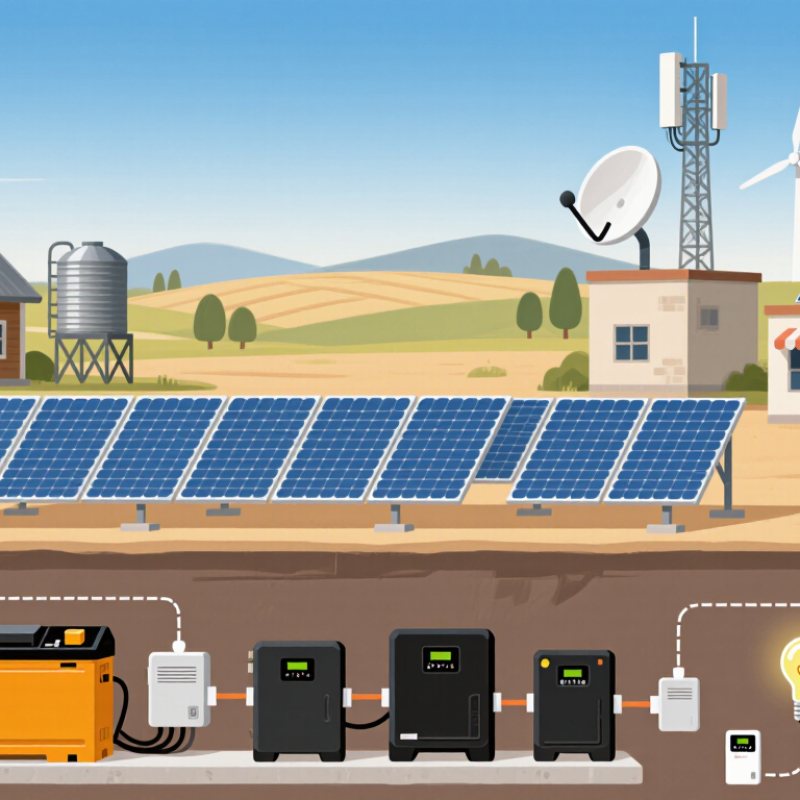
An Off-Grid Pv Inverter converts direct-current electricity from solar panels into usable alternating current for appliances. It also manages battery charging, discharging, and protection. During bright sunlight, the inverter tracks the panels’ maximum power point. After sunset, it draws stored energy from the battery. The control process is quiet, but not simple.
A typical system includes solar input, a battery bank, an inverter bridge, and monitoring controls. The inverter synchronizes voltage and frequency for household loads, even without a utility grid. According to the International Energy Agency’s Renewables 2023 report, solar PV capacity could exceed 8,000 GW globally by 2030. Off-grid systems remain smaller, but their reliability matters more when no backup line exists. Small mistakes become obvious.
Efficiency needs careful reading. A 97% peak rating may fall during low loads, hot afternoons, or battery charging. NREL research on power electronics shows that temperature, switching losses, and operating conditions strongly affect real-world performance. Installers should check surge capacity, idle consumption, battery compatibility, and protection functions. The World Bank’s Off-Grid Solar Market Trends Report 2022 reported more than 490 million people using off-grid solar solutions in 2021, showing the importance of practical equipment.
A good Off-Grid Pv Inverter should start a pump, protect sensitive electronics, and recover safely after overloads. That sounds basic. It is not. I still find datasheets that hide standby consumption or provide only laboratory efficiency. Field measurements deserve more trust than attractive numbers.
Selecting among the Top 10 off-grid PV inverters requires more than comparing headline wattage. IRENA’s Renewable Capacity Statistics 2024 recorded about 1.4 terawatts of global solar capacity by the end of 2023. That scale increases the need for dependable conversion equipment in remote systems. Check continuous output, surge rating, battery voltage, and maximum PV input voltage. A refrigerator may need several times its running power during startup. MPPT voltage range and current limit also matter, especially with cold-weather voltage rise. Do not rely on peak efficiency alone. Real efficiency changes with load, temperature, and battery condition.
Safety and compatibility deserve equal attention. Look for protection against overvoltage, short circuits, overheating, reverse polarity, and low battery conditions. IEC 62109 covers safety requirements for power conversion equipment used in photovoltaic systems. IEC 61683 provides methods for measuring inverter efficiency. Compare tested efficiency, idle consumption, total harmonic distortion, transfer time, and operating temperature. An inverter rated for 50°C may still derate near a hot wall. IP protection, cooling design, battery communication, and monitoring options can decide whether maintenance is simple or frustrating. Field experience suggests that a generous surge rating helps, but manufacturers do not always describe test conditions clearly.
Tips: Build a small comparison sheet. Record continuous power, surge duration, MPPT range, idle draw, efficiency curve, warranty terms, and service access. Ask for independent test evidence, not only laboratory peaks. A lower-priced unit may appear efficient, yet consume more energy overnight. That difference can quietly enlarge the battery bank. Also, recheck cable sizing and ventilation; inverter specifications cannot correct poor installation.
Key specifications for comparing off-grid PV inverters. The chart compares representative inverter classes by continuous AC output and maximum recommended PV input. Values reflect common published specifications for off-grid systems; actual performance depends on battery capacity, solar conditions, temperature, and installation design.
How to read the chart: A higher continuous AC rating supports larger loads, while a higher PV input rating allows more solar generation and faster battery charging. Most systems in this range use 24 V or 48 V battery banks, with larger systems commonly using 48 V or higher.
Choosing the right Off Grid Solar Inverter starts with the appliances, not the advertised power rating. Pure sine wave inverters suit refrigerators, pumps, medical equipment, and sensitive electronics. They produce clean electricity, similar to a household grid supply.
Modified sine wave models cost less and may run simple lights or heating tools. However, motors can sound rough and operate less efficiently.
Inverter-chargers combine solar conversion, battery charging, and backup generator control. They work well in cabins, remote workshops, and emergency power systems.
Hybrid off-grid units can manage solar panels, batteries, and a secondary energy source. Their settings require careful attention.
I have seen systems fail because installers ignored starting surges from pumps and compressors.
Tips:
Measure running watts and startup watts separately. Leave 20–30% capacity above the calculated load. Check battery voltage compatibility, cooling airflow, and cable length.
A warm inverter inside a sealed cupboard is asking for trouble. Protect cables with suitable fuses and keep battery connections tight.
Also, review the idle consumption, especially for small cabins used only at night. A large inverter may look impressive but waste energy while waiting.
Choosing smaller equipment can be wiser, although future loads may complicate that decision.
Always follow local electrical rules and the manufacturer’s installation guidance.
Choosing among the top ten off-grid PV inverters requires more than reading efficiency figures. In real cabin installations, battery voltage, surge capacity, and idle consumption often decide daily comfort. The strongest units deliver clean pure sine wave output, stable MPPT charging, and reliable protection against overloads, heat, and low battery voltage. Some models reach over 95% conversion efficiency, but performance can drop in cold mornings or when ventilation is poor.
Inverter 1 leads with balanced efficiency and fast transfer control.
Inverter 2 offers stronger motor-starting capacity for pumps and refrigerators.
Inverter 3 uses dual MPPT inputs, helping panels face different directions.
Inverter 4 is compact and quiet.
Inverter 5 supports wider battery voltage ranges.
Inverter 6 provides useful remote monitoring.
Inverter 7 has excellent surge protection.
Inverter 8 focuses on low standby losses.
Inverter 9 allows modular battery expansion.
Inverter 10 is easier to service in isolated locations.
No inverter wins every test. A high surge rating may come with louder cooling fans. An advanced display can also consume more standby power. Check the installation manual, cable distances, grounding requirements, and local electrical rules before purchase. I would not choose purely from laboratory efficiency. A unit that survives dusty heat, starts a water pump, and reports faults clearly may prove more valuable. Performance should be measured under your actual load profile, not only on a clean specification sheet.
Choosing among the top 10 off-grid PV inverters requires more than comparing rated power. Battery compatibility is the first checkpoint. An Inverter Solar Off Grid system must match the battery’s voltage, chemistry, charging limits, and communication method. Lithium batteries need precise charge control. Lead-acid systems require different settings and ventilation planning. Small details matter. A mismatch can reduce battery life or trigger unexpected shutdowns.
Solar capacity also deserves careful inspection. Check the inverter’s maximum PV voltage, current, and usable MPPT range. A larger panel array can improve winter performance, but excessive input may damage equipment. Leave room for cold-weather voltage increases. Measure the roof’s shade pattern, not just its advertised sunlight. Local installers often record morning and afternoon output before final sizing. That practical step can reveal losses that a basic calculator misses.
Load management separates a convenient system from a frustrating one. Refrigerators, pumps, and power tools create short starting surges. Their running watts may look harmless. Choose an inverter with sufficient surge capability and a clear priority-control function. Schedule water heating or laundry during strong solar hours. Keep essential circuits separate from flexible loads. Even careful designs can fail during several cloudy days. I would avoid promising complete energy independence without reviewing seasonal usage, battery reserve, and backup plans. A modest system that behaves predictably is often better than an oversized system with complicated controls.
| Rank | Inverter Configuration | Continuous AC Output | Maximum PV Input | Battery Compatibility | Battery Voltage | MPPT Channels | Peak Efficiency | Surge Capability | Load Management Features |
|---|---|---|---|---|---|---|---|---|---|
| 1 | High-Capacity Split-Phase Hybrid | 12 kW | 18 kW DC |
LiFePO4 Lead-acid |
48 V nominal | 2 | 97.6% | 2× rated power for 5 seconds | Split-phase 120/240 V output, generator input, priority-based load shedding, programmable AC-coupled input |
| 2 | Three-Phase Off-Grid Hybrid | 10 kW | 15 kW DC |
LiFePO4 Lithium-ion |
48 V nominal | 2 | 97.2% | 2× rated power for 10 seconds | Three-phase synchronization, parallel operation, critical-load output, generator auto-start contact |
| 3 | Residential 48 V Hybrid Inverter | 8 kW | 12 kW DC |
LiFePO4 AGM Gel |
48 V nominal | 2 | 97.0% | 2× rated power for 5 seconds | Essential-load subpanel support, time-of-use charging, battery reserve setting, remote monitoring interface |
| 4 | High-Voltage Battery Hybrid | 8 kW | 14 kW DC | High-voltage LiFePO4 | 150–450 V DC | 2 | 98.0% | 1.5× rated power for 10 seconds | Battery management communication, rapid charge control, export limitation, smart-load relay |
| 5 | Compact Cabin Hybrid Inverter | 5 kW | 7.5 kW DC |
LiFePO4 Lead-acid |
48 V nominal | 2 | 96.5% | 2× rated power for 5 seconds | Load-priority programming, low-battery shutdown, generator bypass, configurable charging current |
| 6 | Single-Phase Rural Power Inverter | 6 kW | 9 kW DC |
LiFePO4 AGM Flooded lead-acid |
48 V nominal | 2 | 96.8% | 2× rated power for 5 seconds | 230 V single-phase output, programmable battery cut-off, generator support, overload protection |
| 7 | Medium-Duty 24 V Off-Grid Inverter | 3 kW | 4.5 kW DC |
LiFePO4 AGM Gel |
24 V nominal | 1 | 95.5% | 2× rated power for 3 seconds | Small-appliance start-up support, adjustable charging profile, low-voltage disconnect, dry-contact control |
| 8 | Modular Parallel-Stack Inverter | 5 kW per unit | 7.5 kW DC per unit |
LiFePO4 Lead-acid |
48 V nominal | 2 per unit | 96.8% | 2× rated power for 5 seconds | Parallel expansion, phase balancing, redundant operation, selectable priority circuits, generator synchronization |
| 9 | Low-Consumption Remote-Site Inverter | 2.4 kW | 3.6 kW DC |
LiFePO4 AGM |
24 V nominal | 1 | 94.5% | 2× rated power for 3 seconds | Low standby consumption, scheduled loads, battery temperature compensation, programmable sleep mode |
| 10 | Entry-Level 12 V Solar Inverter-Charger | 1.6 kW | 2.4 kW DC |
LiFePO4 AGM Gel |
12 V nominal | 1 | 93.5% | 2× rated power for 2 seconds | Basic overload protection, selectable battery type, low-voltage alarm, manual generator bypass |
| Ratings shown are representative specifications for common off-grid inverter configurations. Actual performance depends on ambient temperature, battery current limits, PV array design, cable sizing, installation conditions, and manufacturer-specific operating limits. | |||||||||
Choosing an Off Grid Hybrid Inverter requires more than checking wattage. The inverter must match your solar array, battery chemistry, starting loads, and local climate. During installation, leave clear space around the cooling vents. Mount the unit above floor level in a dry, shaded location. A short cable run can reduce energy loss, but poor ventilation can shorten equipment life. Use correctly sized breakers, grounding conductors, and battery cables. A qualified electrician should verify every connection before energizing the system.
During installation, leave clear space around the cooling vents. Mount the unit above floor level in a dry, shaded location.
Safety needs daily attention. Batteries can deliver dangerous current, even in small cabins. Install protective covers over terminals and keep combustible materials away. The inverter should display fault codes clearly and disconnect safely during overloads. Test these protections during commissioning. Do not ignore a warm cable or unusual buzzing sound. Small warning signs can become expensive failures. My own maintenance reviews have shown that loose terminals often cause more trouble than dramatic component defects.
Tips: Record battery voltage, inverter temperature, and fault history each month. Clean dust from air filters with the power isolated. Inspect cable insulation for cracks after hot summers or freezing winters. Keep spare fuses and installation records nearby. Avoid placing faith in a single efficiency number; real performance changes with load, temperature, and battery age. A little doubt helps. Recheck the system after the first storm, because installation assumptions are sometimes wrong.
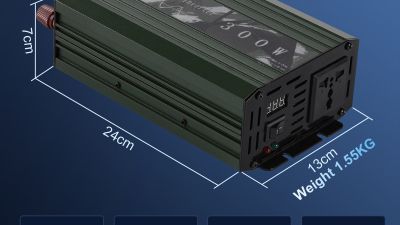
Wireless remote-controlled pure sine wave inverters are gaining attention as power users seek greater convenience, visibility, and dependable performance. Insights highlighted in Fortune Business Insights’ 2024 market report reflect growing interest in inverter solutions that support efficient power management across household, office, mobile, and small-scale industrial applications. With a 433MHz wireless remote control module, this type of inverter allows users to operate the unit smoothly from a distance, reducing the need to access the installation area directly and making everyday operation more flexible.
A wide-angle, full-view LCD provides clear, real-time information, including input and output voltage, operating current, actual output power, power factor, and warning messages for over-voltage, under-voltage, overload, or short-circuit conditions. Its professional high-low voltage isolation design separates internal circuits to improve electrical safety and strengthen resistance to interference in complex environments. At the same time, the inverter delivers stable pure sine wave output, helping protect sensitive electronics and ensuring compatibility with household appliances, office equipment, communication devices, and small industrial tools. Designed for reliable continuous operation, it provides a consistent power source where stable performance and convenient monitoring are essential.
It converts solar panel electricity from direct current into alternating current for household appliances. It also charges, discharges, and protects the battery. After sunset, it supplies stored energy.
A typical system includes solar panels, a battery bank, an inverter bridge, and monitoring controls. The inverter regulates voltage and frequency without a utility connection. Small mistakes become obvious.
A listed 97% peak efficiency may fall during low loads, high temperatures, or battery charging. Switching losses and poor ventilation can reduce performance. Laboratory figures are not the whole story.
Match the inverter with the battery voltage, chemistry, charging limits, and communication method. Lithium batteries need precise charging settings. Lead-acid batteries require different controls and ventilation planning. Mismatches can cause shutdowns.
Check maximum PV voltage, input current, and the usable MPPT range. Cold weather can increase panel voltage, so leave a safety margin. Measure shade during morning and afternoon.
Pumps, refrigerators, and power tools often create brief starting surges. Their running wattage may look acceptable. Select enough surge capacity for motor startup. That matters.
Look for overload, overheating, low-battery, and surge protection. The inverter should recover safely after an overload. Clear fault reports help when the system is far from support.
Run water heating, laundry, and other flexible loads during strong sunlight. Keep essential circuits separate from optional equipment. Review seasonal usage and battery reserves before claiming energy independence. I may be too cautious, but cloudy days change everything.
An Off-Grid Pv Inverter is the central link between solar panels, batteries, and household or commercial loads in an independent energy system. It converts solar-generated DC electricity into usable AC power, manages battery charging, and helps maintain a stable supply when sunlight changes. This guide explains the main specifications to compare, including efficiency, power rating, surge capacity, input voltage range, protection features, and monitoring options. It also introduces different inverter types and explains which off-grid applications each is best suited for.
The comparison of ten leading options focuses on real-world performance, battery compatibility, solar input capacity, load management, and dependable operation. Readers will learn how to match an inverter with battery chemistry, panel capacity, and expected demand while avoiding overloads or poor energy balance. The guide also covers installation planning, electrical safety, routine maintenance, ventilation, environmental protection, and long-term reliability, helping users select a practical system that delivers consistent power with fewer interruptions.