Leave Your Message
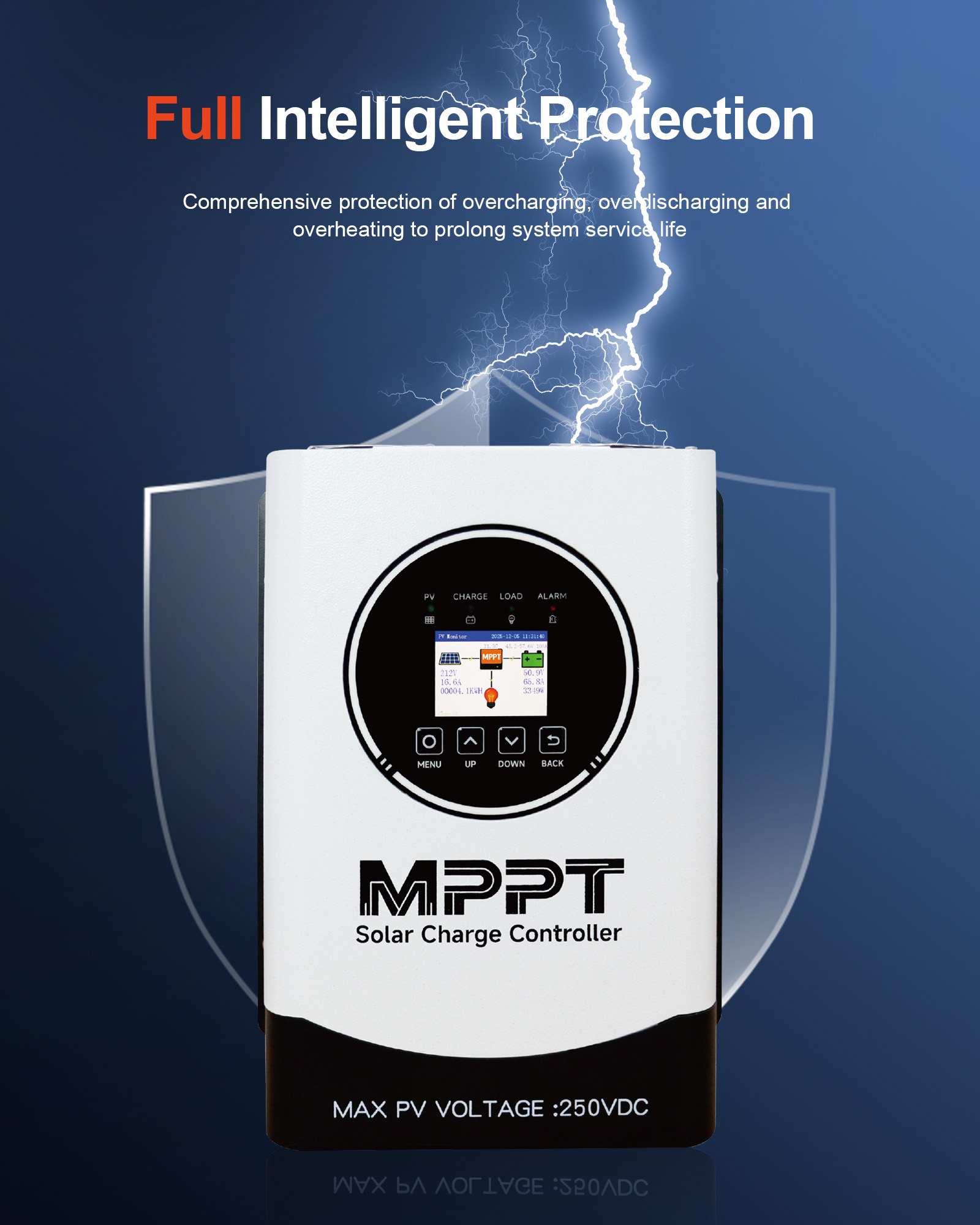
Explore our leading-edge MPPT solar charge regulators engineered for boats, yachts, and hybrid wind-solar street lighting systems. Built to withstand high moisture, salinity, and extreme weather conditions.
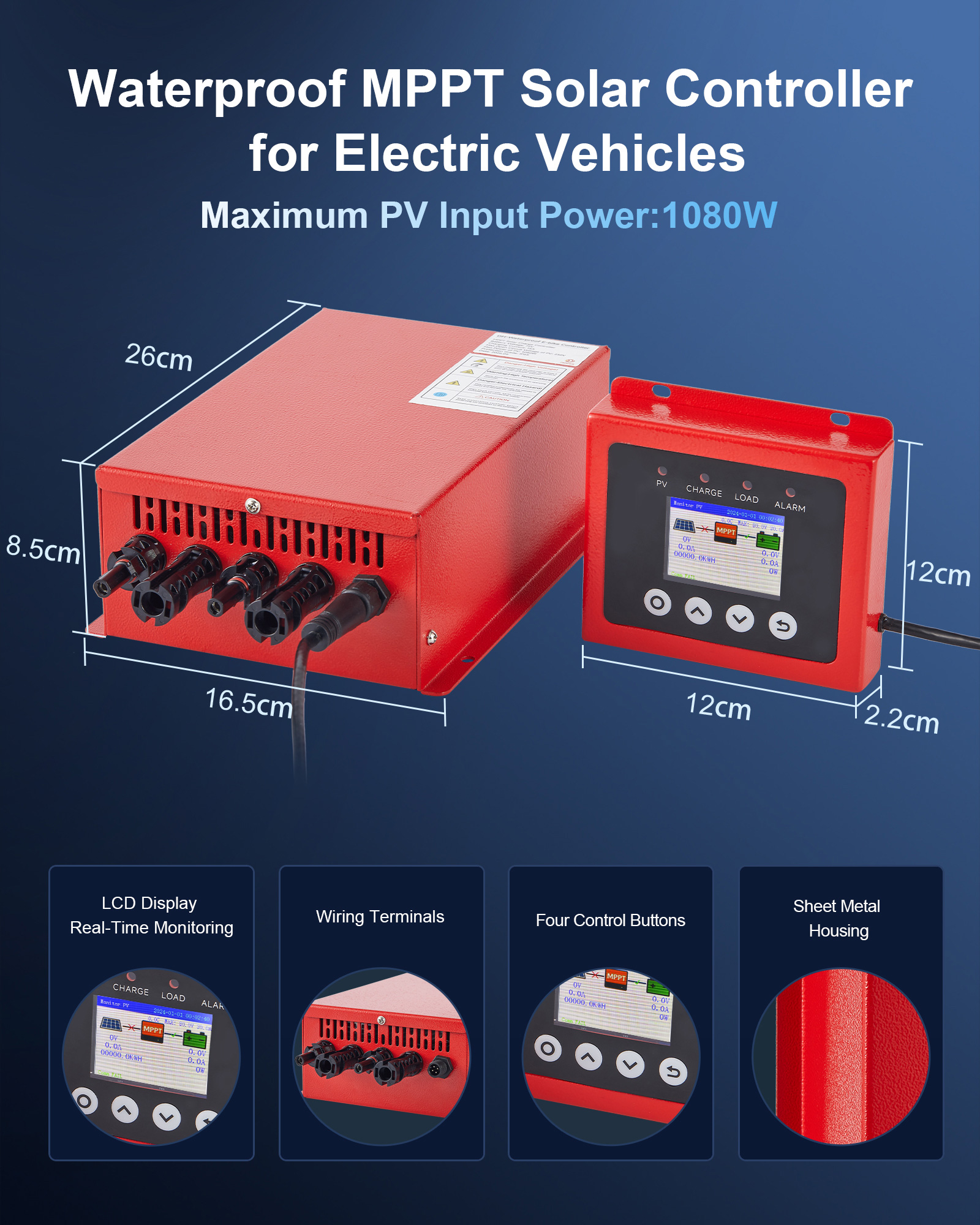
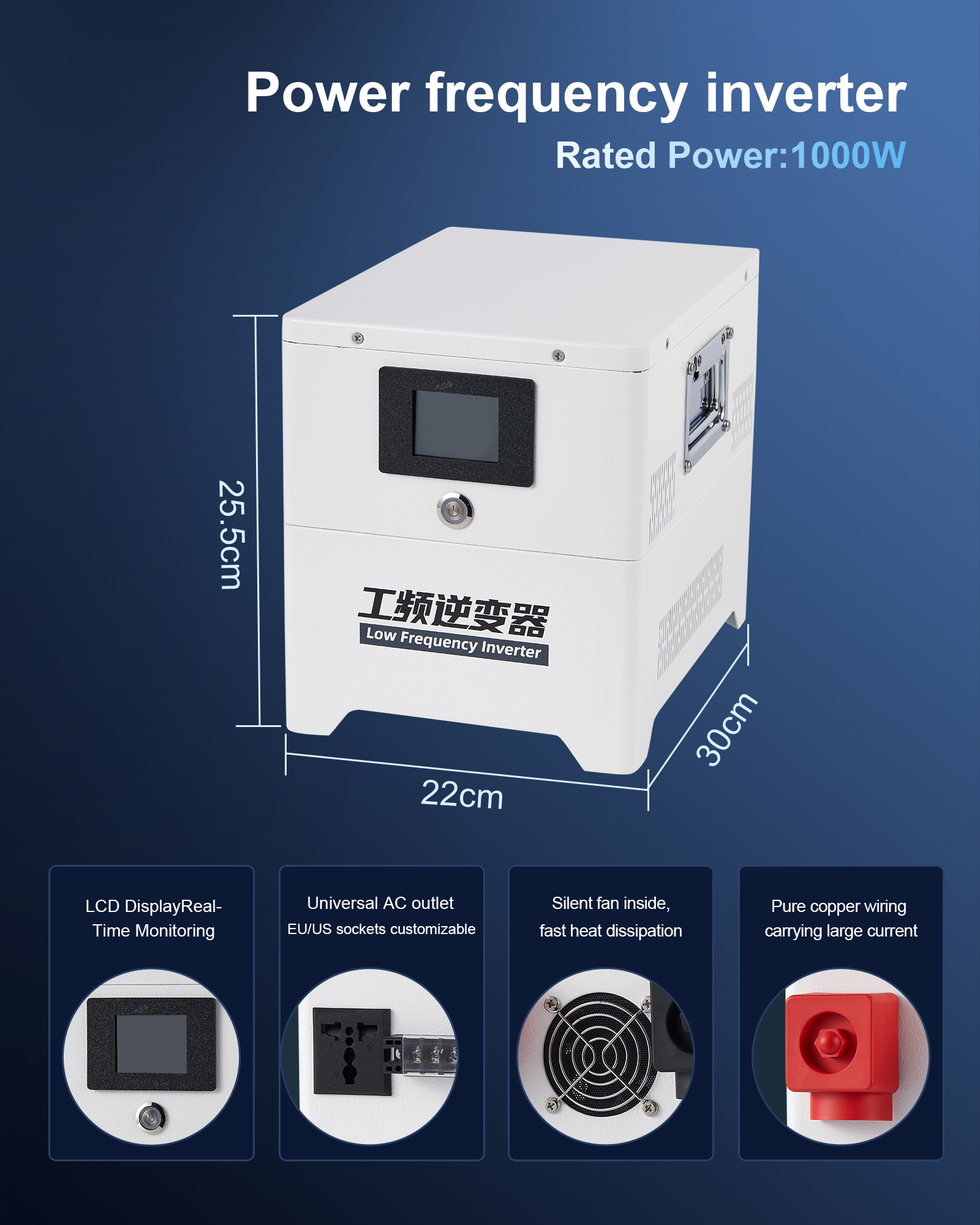
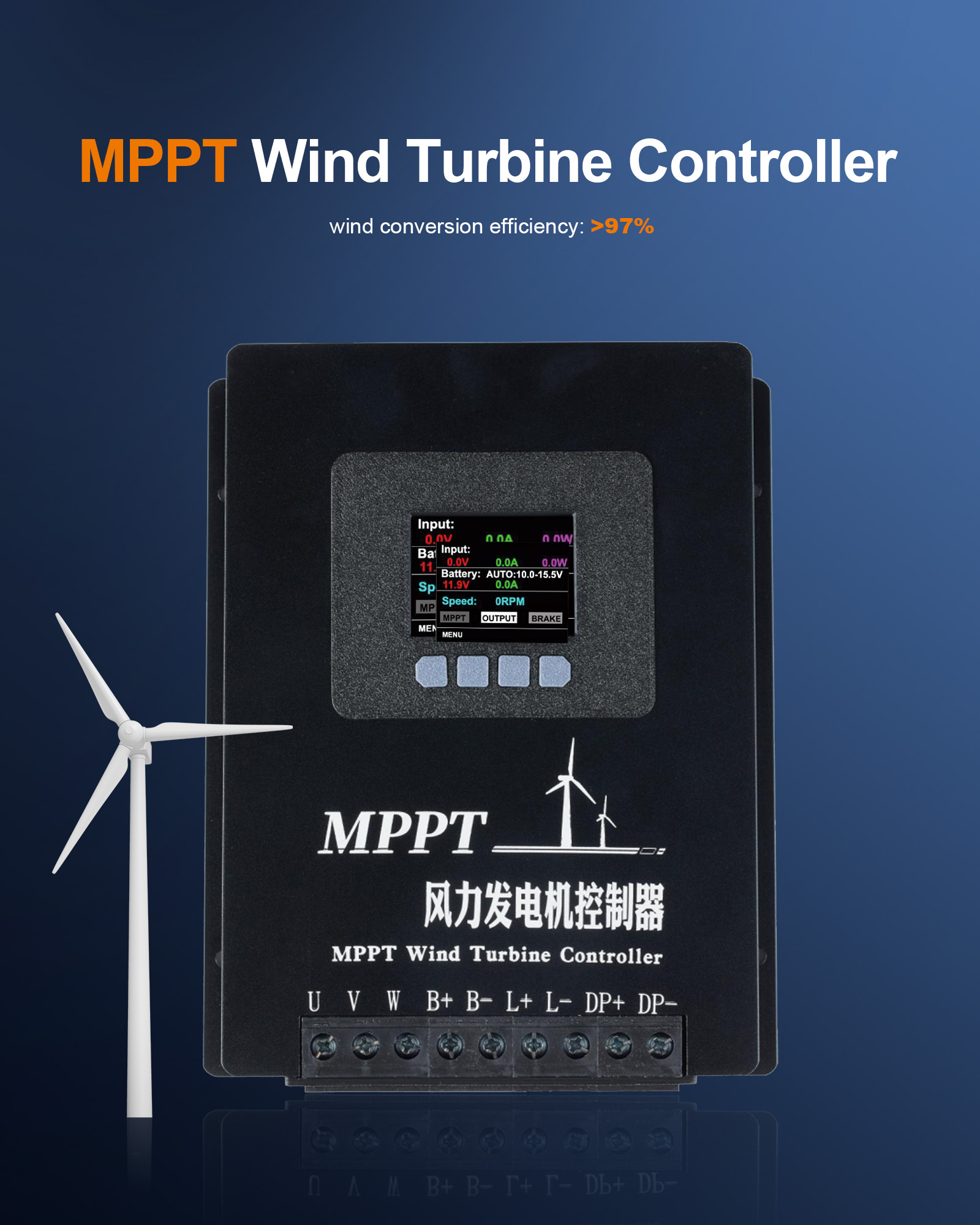
The intersection of maritime transit electrification and smart urban infrastructure has catalyzed a massive surge in demand for specialized energy management solutions. Specifically, the integration of Boat Solar MPPT Regulators with Hybrid Solar Wind Street Light Controllers represents a critical technological milestone. Historically, marine power systems and municipal street lighting existed as separate industries. Today, they share a common challenge: maximizing energy capture from highly volatile, space-constrained, and harsh environmental inputs.
In the commercial maritime sector, vessel operators are transitioning from auxiliary diesel generators to clean, hybrid energy systems. Solar panels installed on boat decks, biminis, and superstructures face severe dynamic shading, rapid movement, and constant exposure to corrosive salt spray. Standard solar regulators struggle under these conditions. On the other hand, modern hybrid wind-solar street lighting systems—installed along coastal highways, harbors, and remote islands—confront identical environmental stresses. By leveraging industrial-grade MPPT algorithms originally designed for rough sea voyages, hybrid street light controllers achieve unprecedented efficiency and uptime.
Market Insight: According to recent clean energy research, the global market for marine-grade charge controllers and hybrid off-grid controllers is projected to grow at a CAGR of 8.4% over the next decade. Industry leaders are prioritizing dynamic MPPT response times, dual-source power integration (wind and solar), and robust IP67/IP68 waterproofing to satisfy the demands of both commercial vessel operators and municipal smart-city developers.
Traditional Pulse Width Modulation (PWM) controllers are inadequate in marine and hybrid lighting scenarios. Because solar irradiance on a boat fluctuates constantly due to pitch, roll, and sail shadows, the Maximum Power Point (MPP) of the solar array changes in milliseconds. An advanced Boat Solar MPPT Regulator continuously tracks the optimal voltage and current parameters, harvesting up to 30% more energy compared to PWM devices. When integrated into a hybrid street light controller, this technology ensures that even during overcast winter days or heavy coastal storms, the system extracts every milliwatt of available power from both the solar panels and the micro wind turbine.
To understand the adaptability of these advanced controllers, we must examine their deployment in diverse, high-stakes environments. The convergence of wind and solar input management into a single, high-frequency or low-frequency unit allows designers to create self-sustaining power loops.
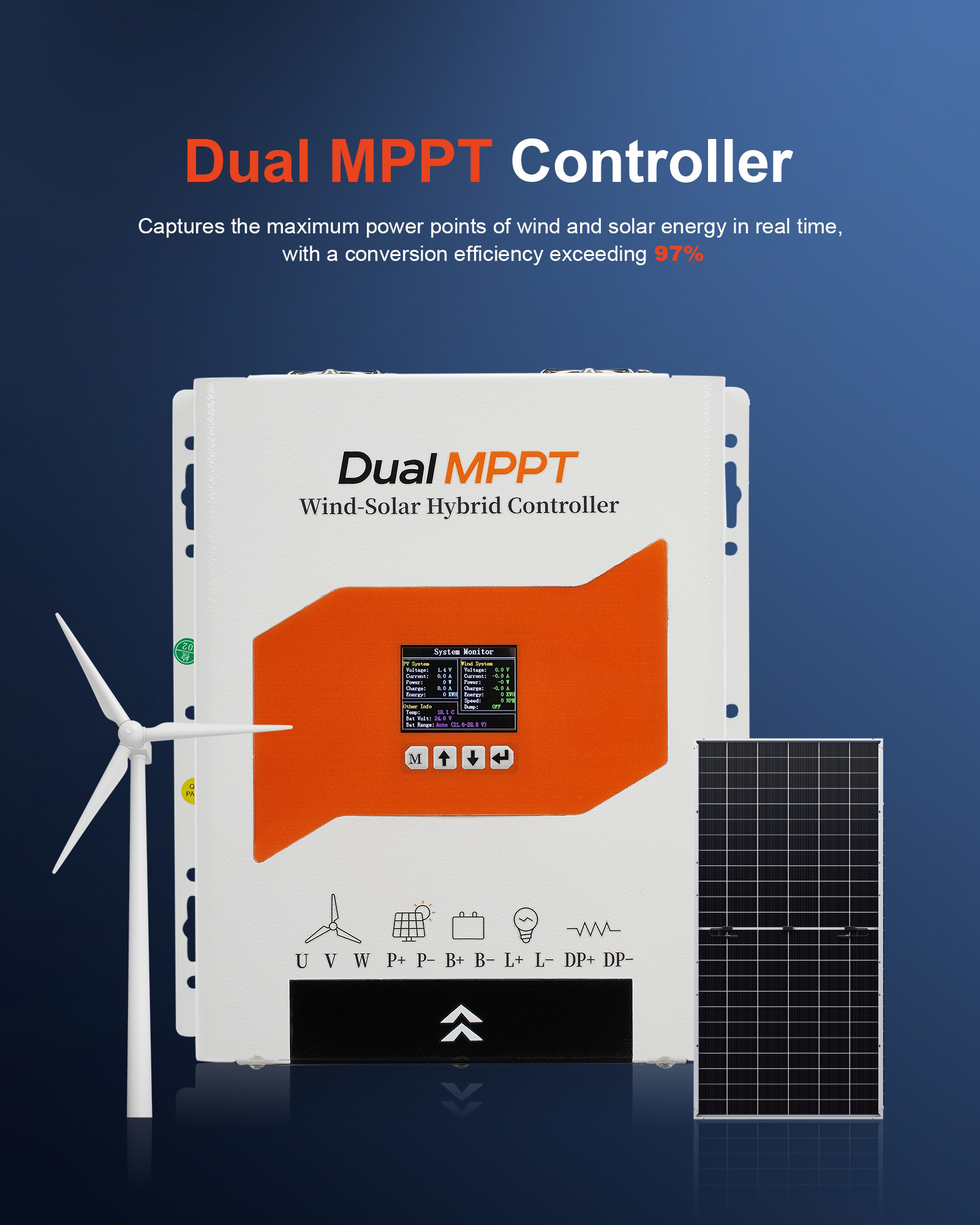
Boats operate in isolated environments where energy reliability is a matter of safety. An MPPT regulator manages solar input alongside wind generators, keeping the service battery banks charged for critical navigation, communication, and bilge pump systems, even when the main engine is offline.
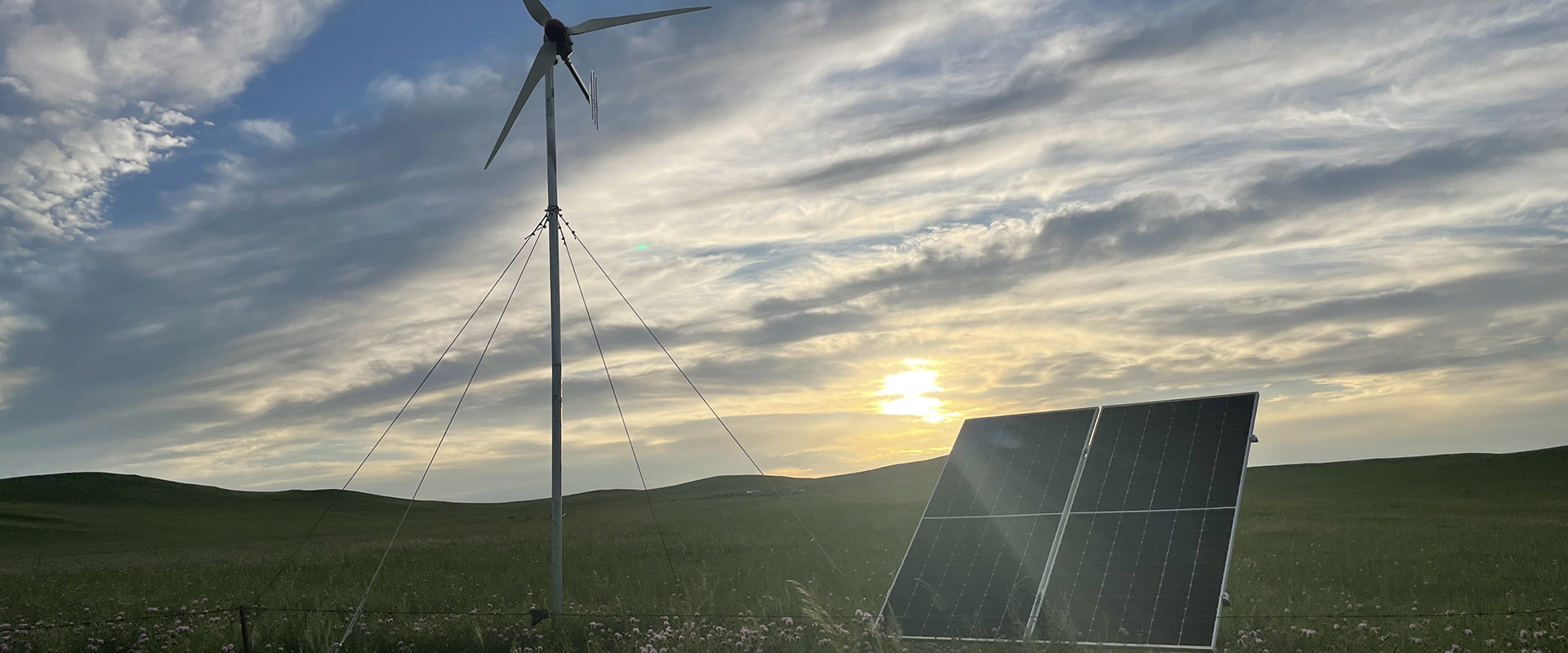
Coastal roads often experience high wind speeds at night and bright sunshine during the day. A hybrid wind-solar street light controller uses a dual-input MPPT system to harness solar energy by day and wind energy by night, ensuring 365-day autonomous operation without utility grid connection.
Scientific research buoys, oil rig telemetry stations, and offshore marine sanctuaries require constant power. Encased in waterproof, corrosion-resistant housings, our controllers manage wind and solar inputs to run sensors, cameras, and satellite transceivers continuously.
Selecting the right controller requires analyzing the electrical demands of your application. The table below outlines key engineering differences between standard marine MPPT regulators and comprehensive hybrid street light controllers:
| Feature / Parameter | Boat Solar MPPT Regulator | Hybrid Wind-Solar Controller |
|---|---|---|
| Primary Input Source | Photovoltaic (PV) Panels | PV Panels + Wind Turbine (AC/DC) |
| Waterproof Rating | IP67 / IP68 (Submersible-grade) | IP65 / IP67 (Weatherproof outdoor cabinet) |
| Wind Dump Load Control | Typically N/A | Integrated electronic & manual brake dump load |
| Battery Compatibility | LiFePO4, AGM, Gel, Lead-Acid | LiFePO4, Lithium-ion, Gel, Lead-Acid |
| Communication Protocols | RS485, Bluetooth, CAN-bus | RS485, GPRS/4G IoT, LoraWan |
As global energy grids decentralize, the technology powering off-grid regulators is evolving rapidly. We are witnessing three major trends that will define the next generation of hybrid controllers:
Next-generation controllers are moving beyond static sweep algorithms. Incorporating machine learning models, these regulators can predict weather patterns based on historical barometric, temperature, and voltage fluctuations. For instance, if a boat is approaching a storm front or a hybrid street light is installed in a monsoon-prone coastal area, the controller dynamically adjusts its charging profile to protect battery health and optimize storage capacity before the weather worsens.
The integration of Gallium Nitride (GaN) and Silicon Carbide (SiC) transistors allows controllers to operate at significantly higher switching frequencies. This drastically reduces the physical size and weight of internal inductors and capacitors. For boat owners, this means lighter, smaller units that generate less heat. For street light manufacturers, it allows the controller to be housed directly within the light pole or bracket without risk of thermal overload.
Modern municipal lighting networks require real-time monitoring. By integrating IoT modules (such as 4G, 5G, or LoRa) directly into the hybrid wind-solar controller, operators can monitor energy generation, battery state of charge (SoC), and system health remotely. On boats, this allows captain and crew to track energy reserves via a mobile app or integrate the regulator seamlessly into the vessel's NMEA 2000 network.
The company's core R&D strength is composed of a scientific research team led by senior doctors in the industry. It has long-term focus on the cutting-edge exploration and innovative application of new energy technologies, continues to increase investment in core R&D, and has formed deep technological accumulation and independent innovation capabilities in core areas such as efficient conversion of electric energy, intelligent system integration, and coordinated control of integrated wind, solar, and storage.
Relying on industry-leading automated production lines and high-precision full-dimensional testing equipment, the company has independently developed a number of intelligent new energy products with completely independent intellectual property rights, fully covering three major application scenarios: off-grid, grid-connected, and mixed grid.
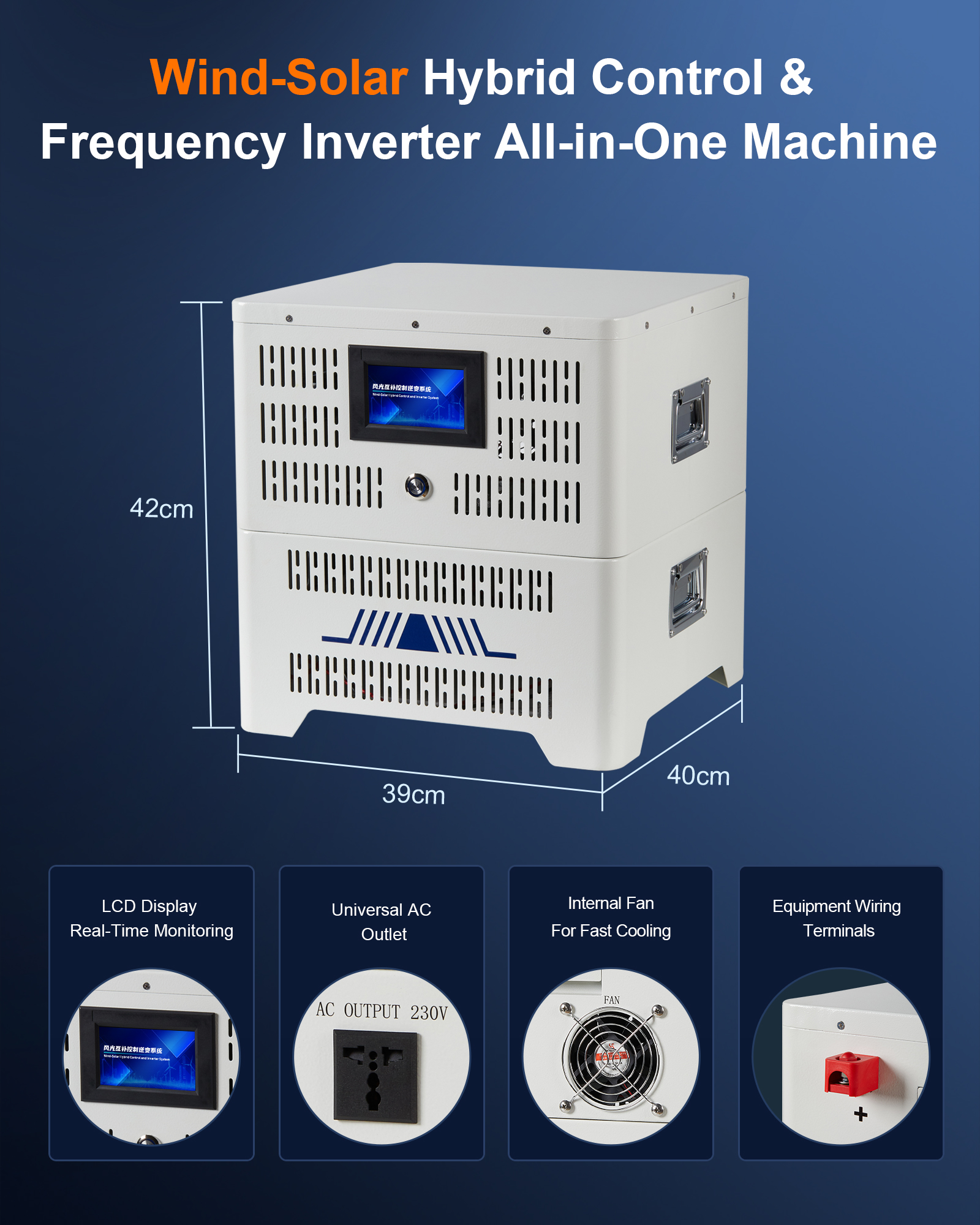
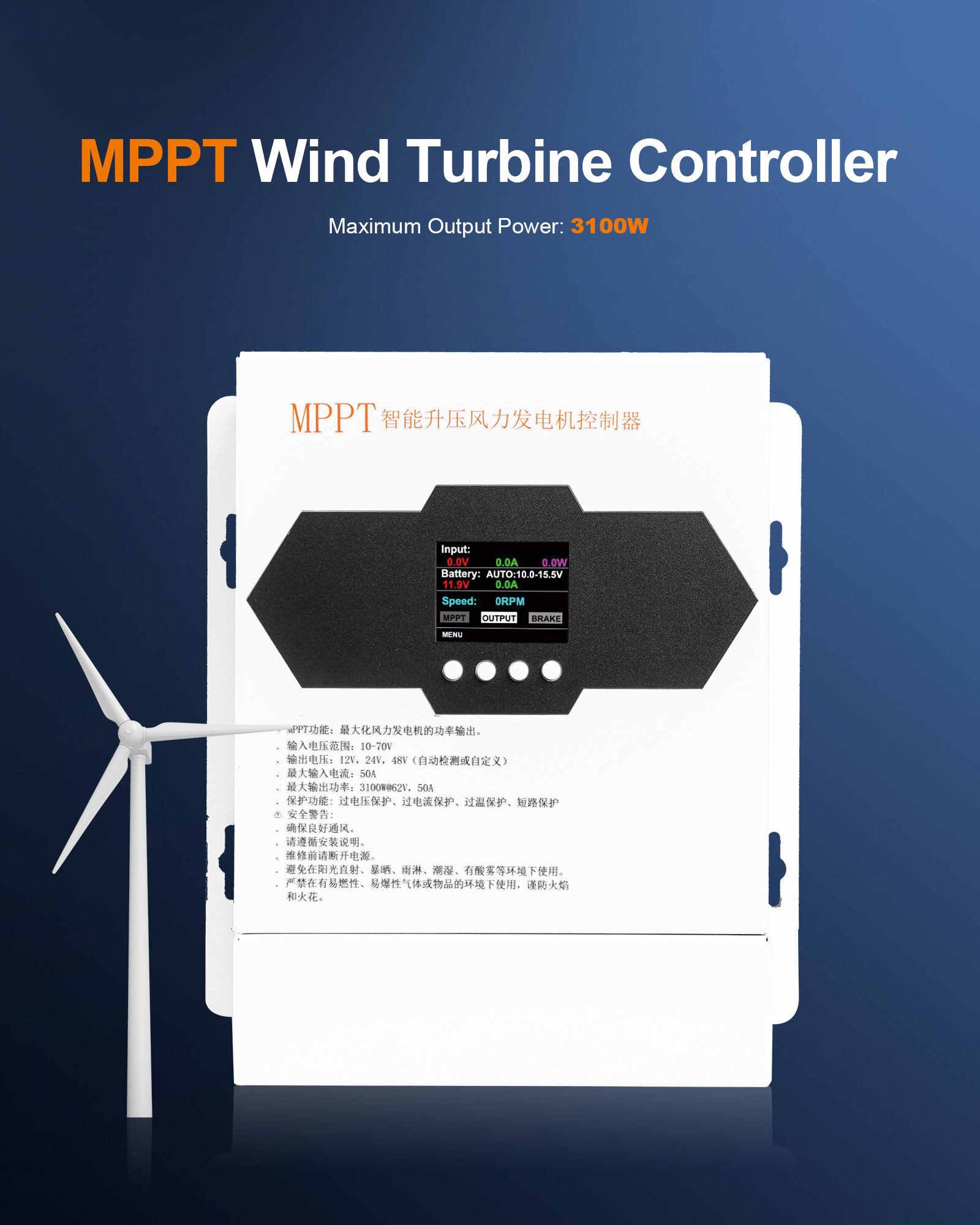
The product matrix includes core categories such as high-frequency/power frequency inverters, wind power controllers, photovoltaic controllers, wind-solar hybrid controllers, wind-solar storage-control-inverse integrated power generation systems, etc., which can be flexibly adapted to diversified power needs such as household use, industrial and commercial distributed, and off-grid independent power stations.




The company always adheres to the core business philosophy of "quality first, independent research and development", and regards product quality and technological innovation as the core driving force for corporate development. At present, it has obtained a number of international authoritative product certifications and ISO quality management system certifications, and has established a full-chain quality management system from raw material inspection, full-process control of the production process to multi-dimensional inspection of finished products. Product quality is strictly controlled throughout the entire process, and core product performance indicators are comprehensively better than industry standards, providing a solid guarantee for the long-term stable operation and reliable service life of the product.
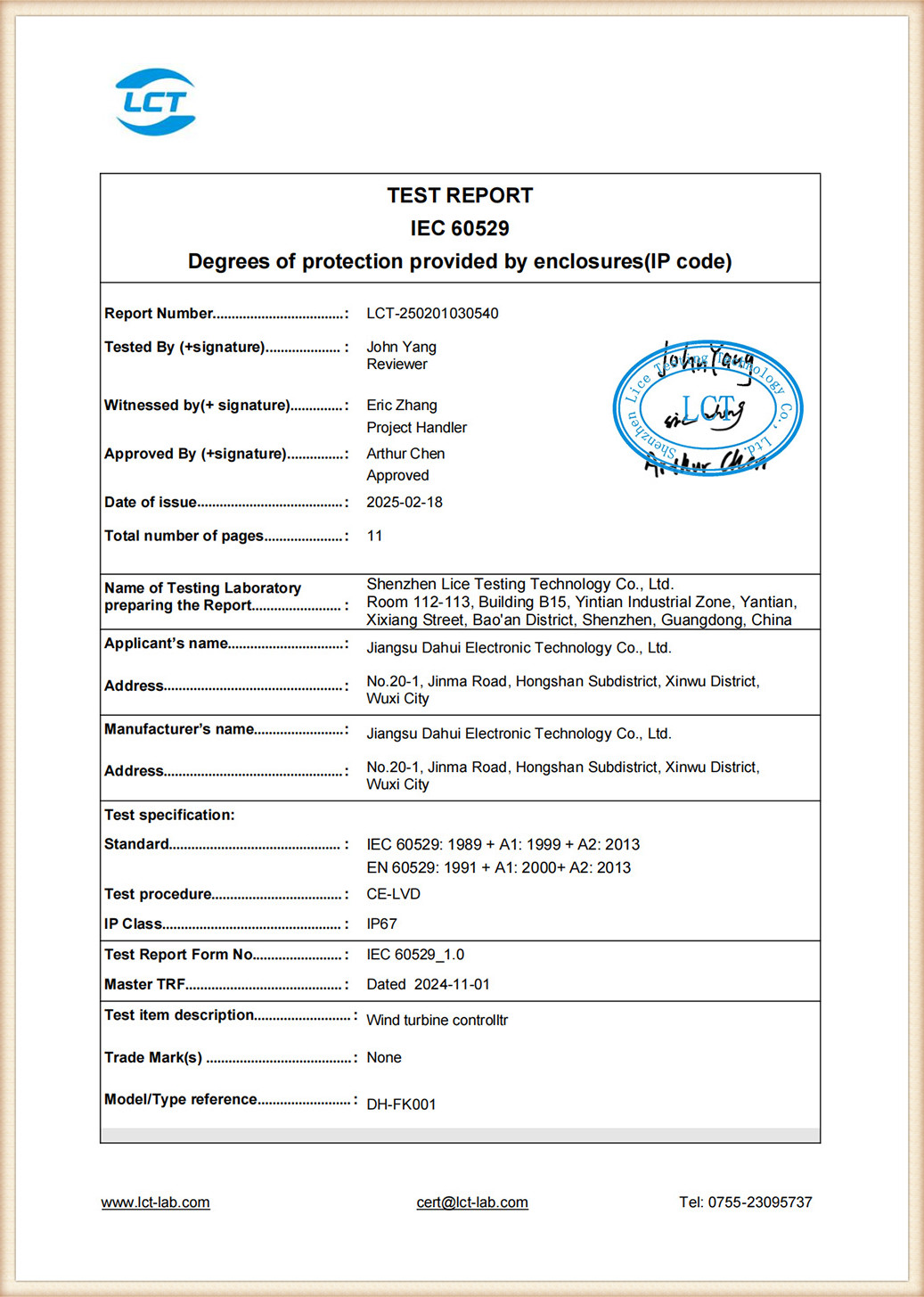
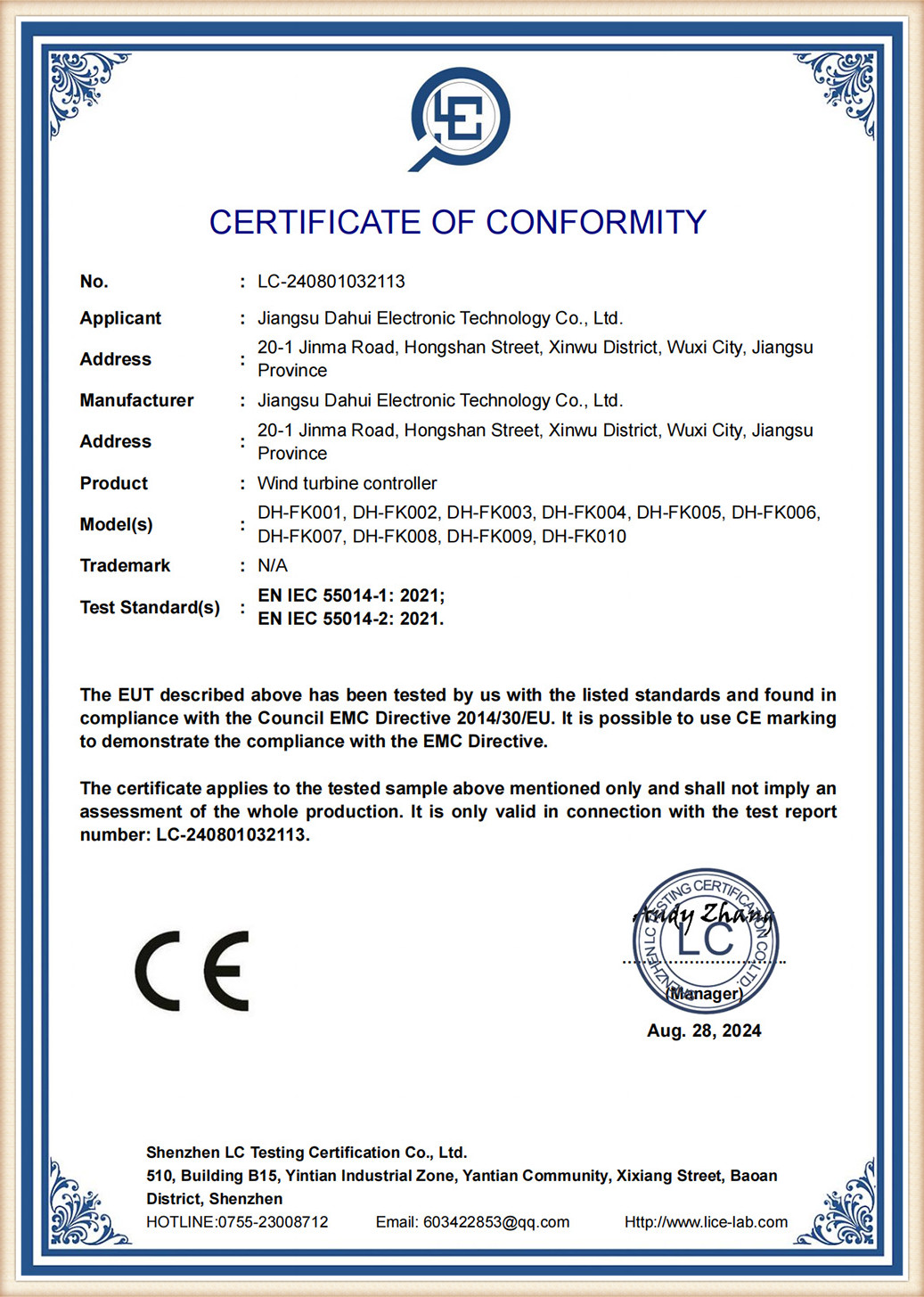
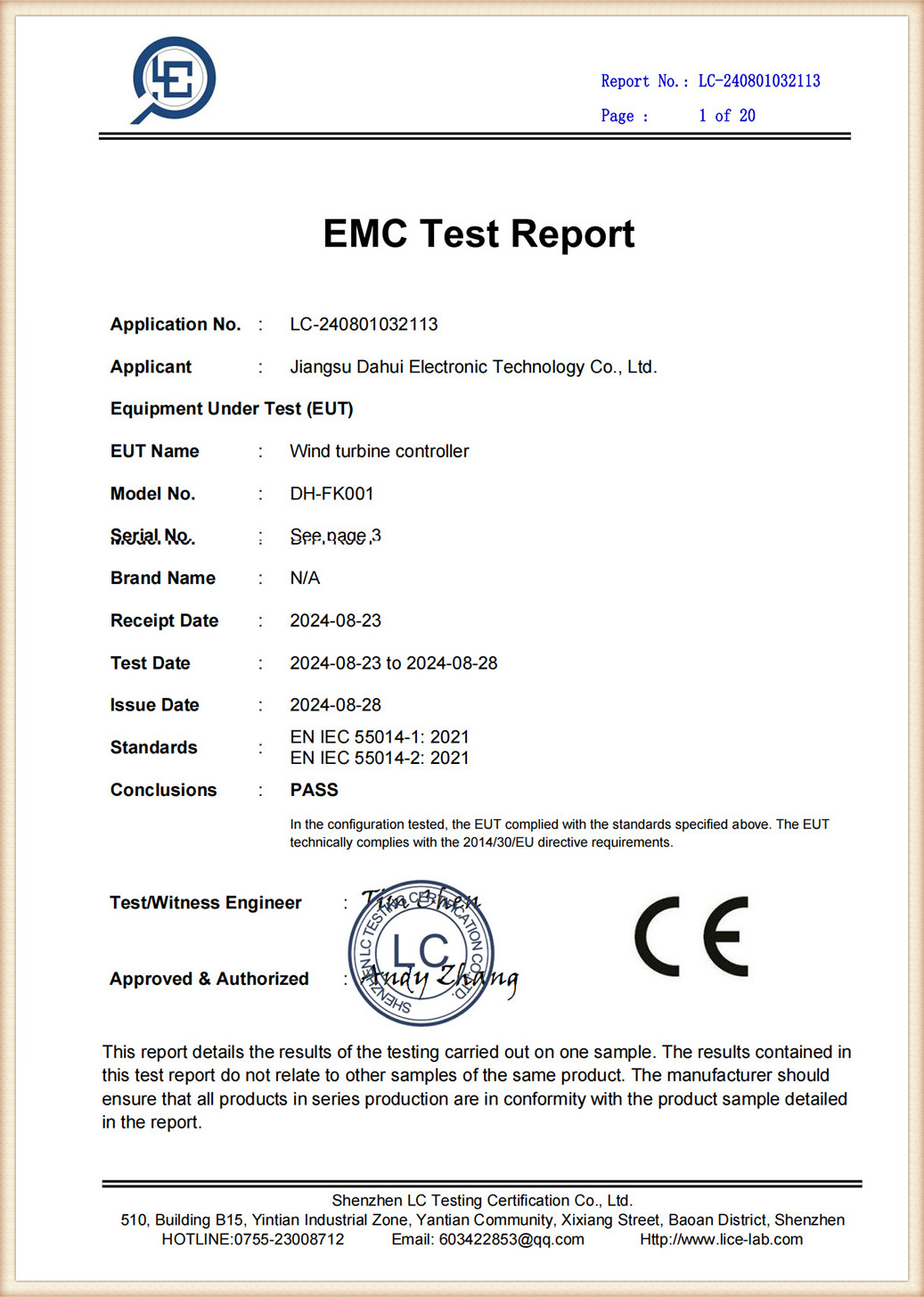
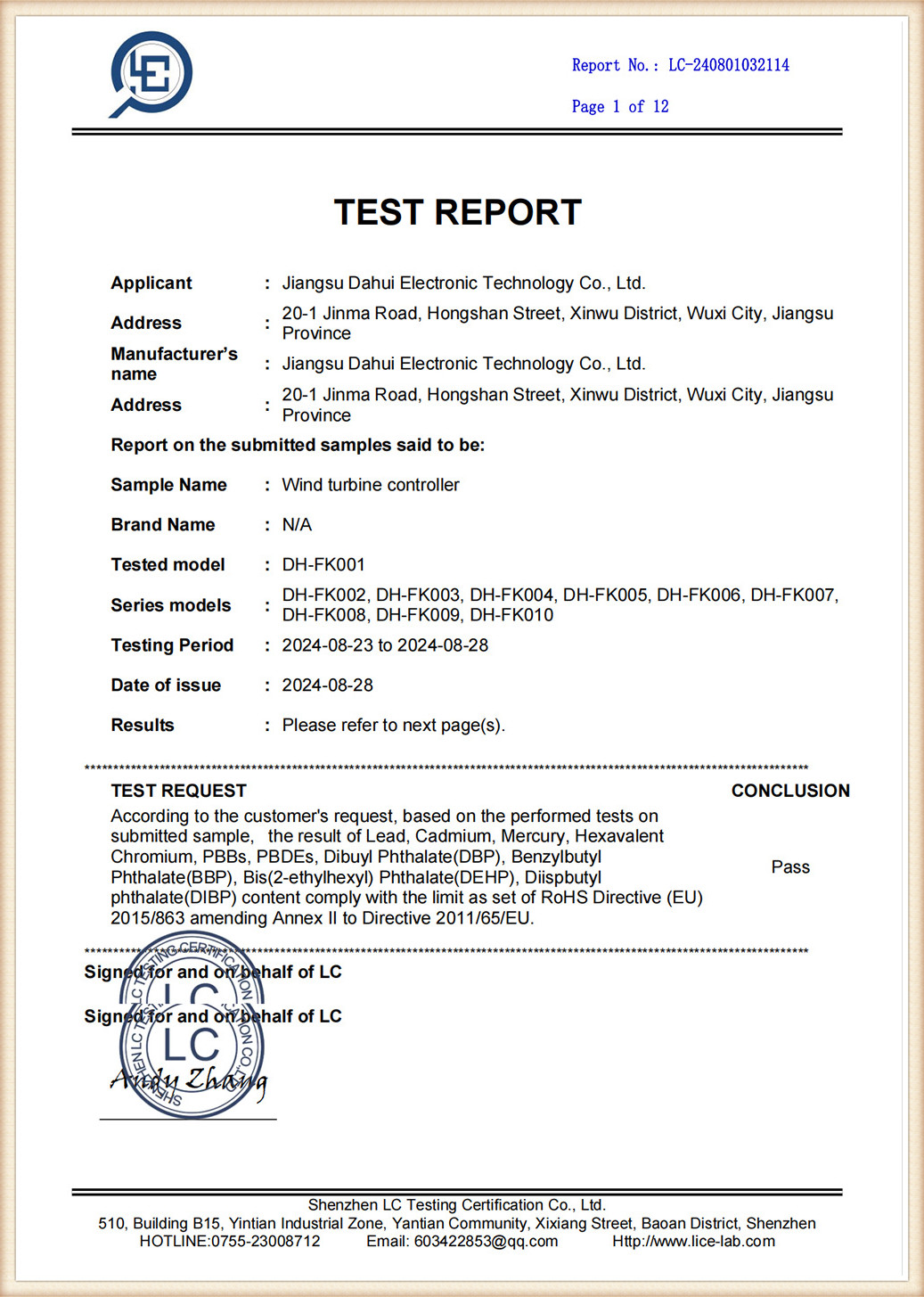
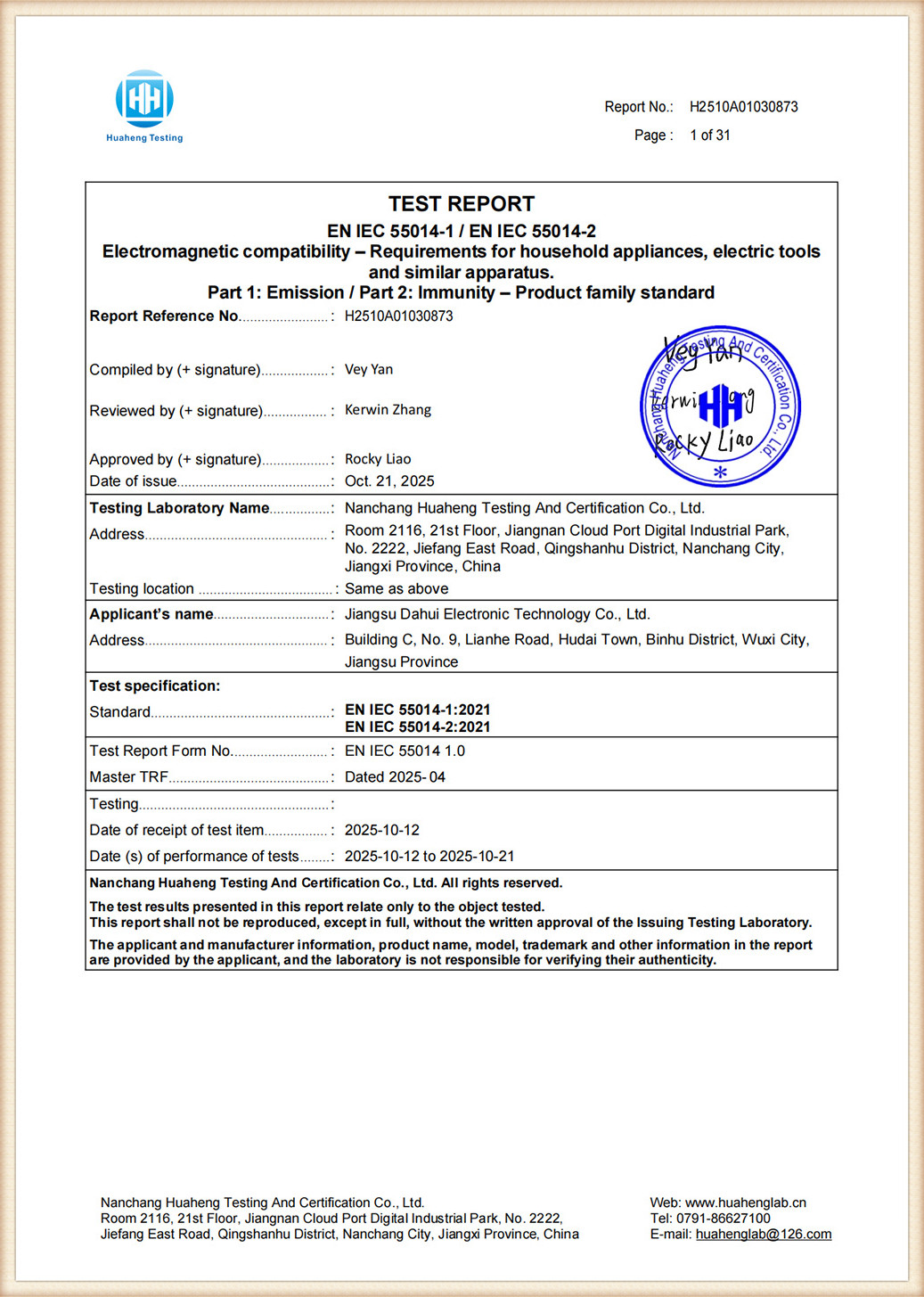
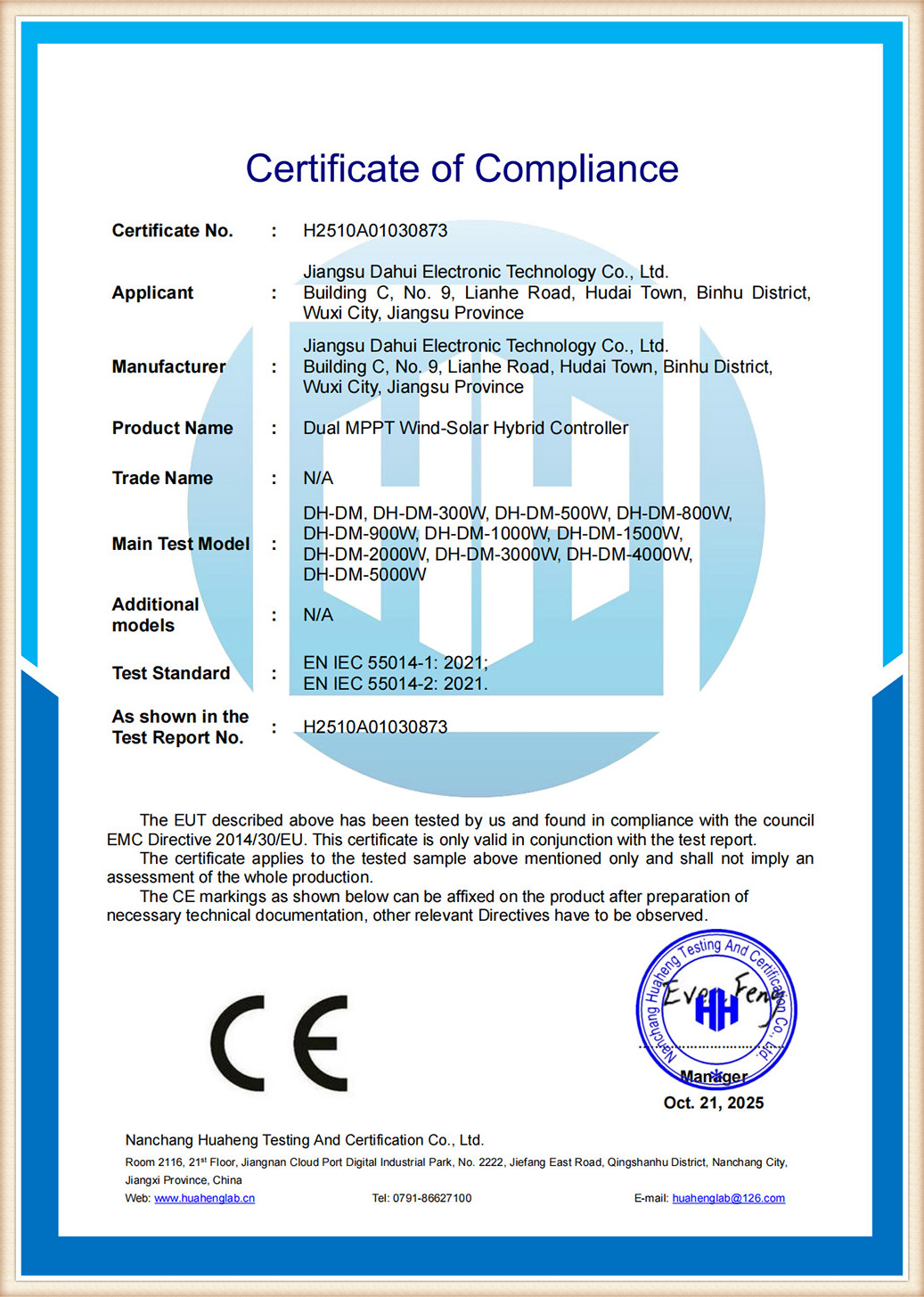
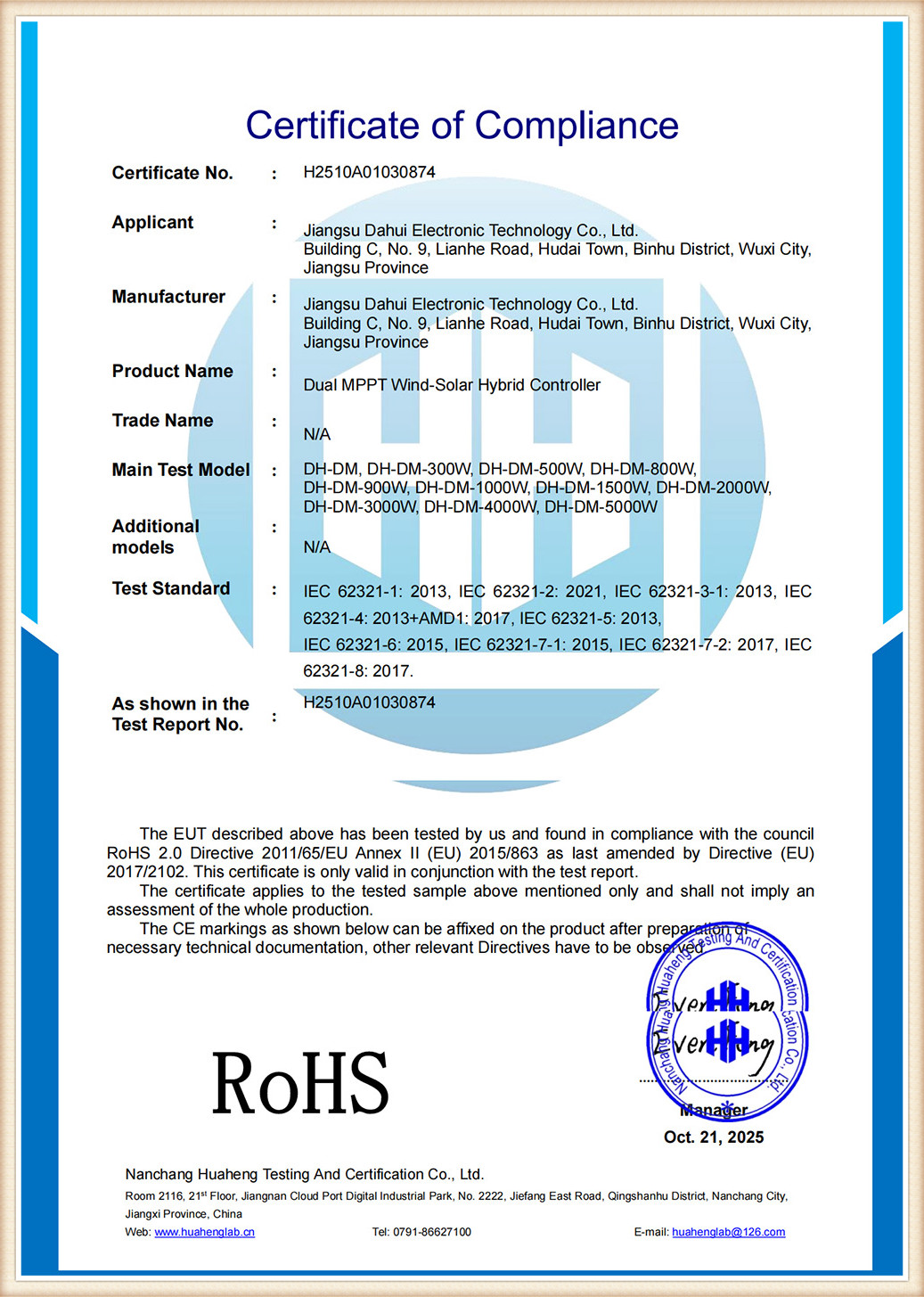
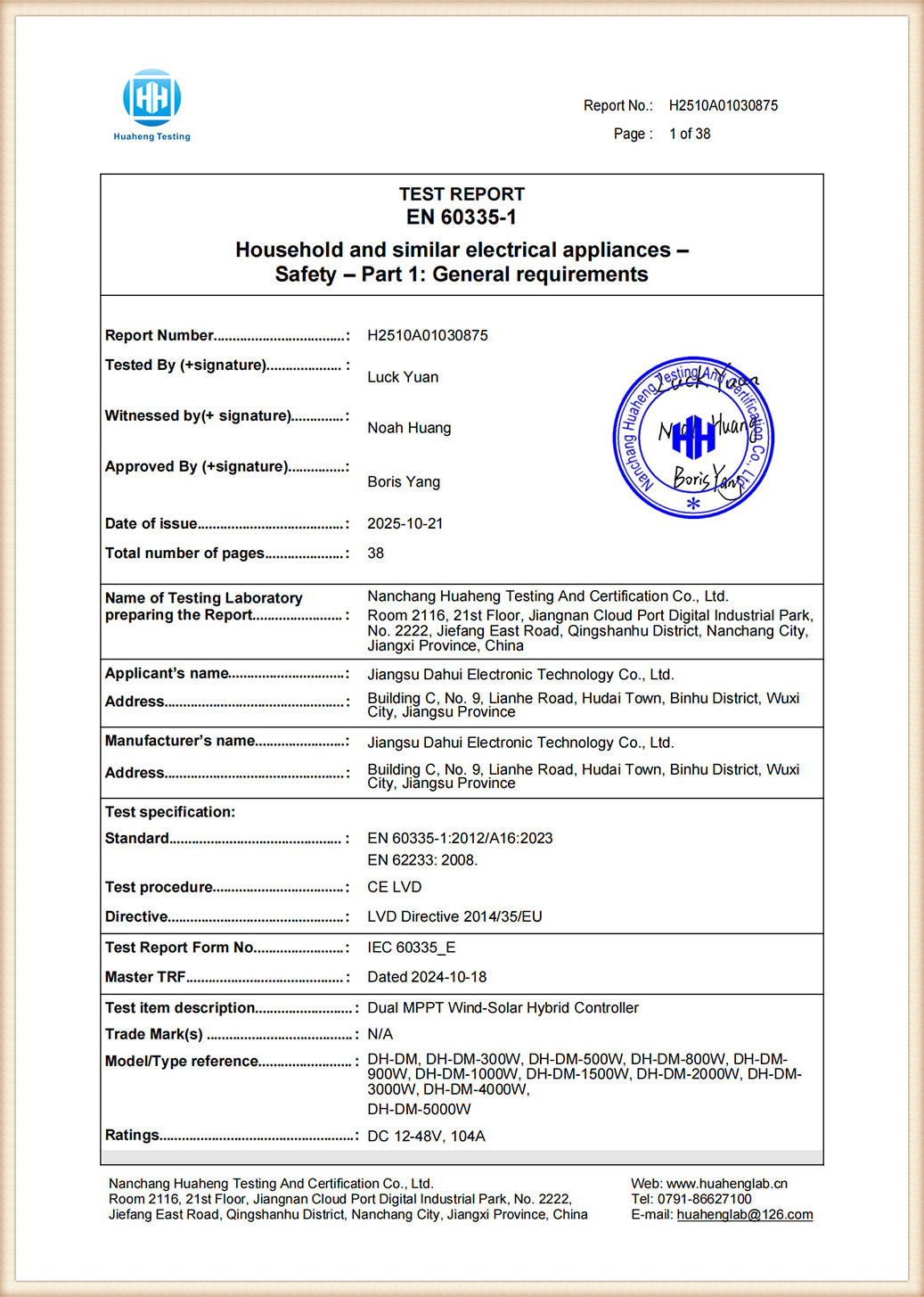
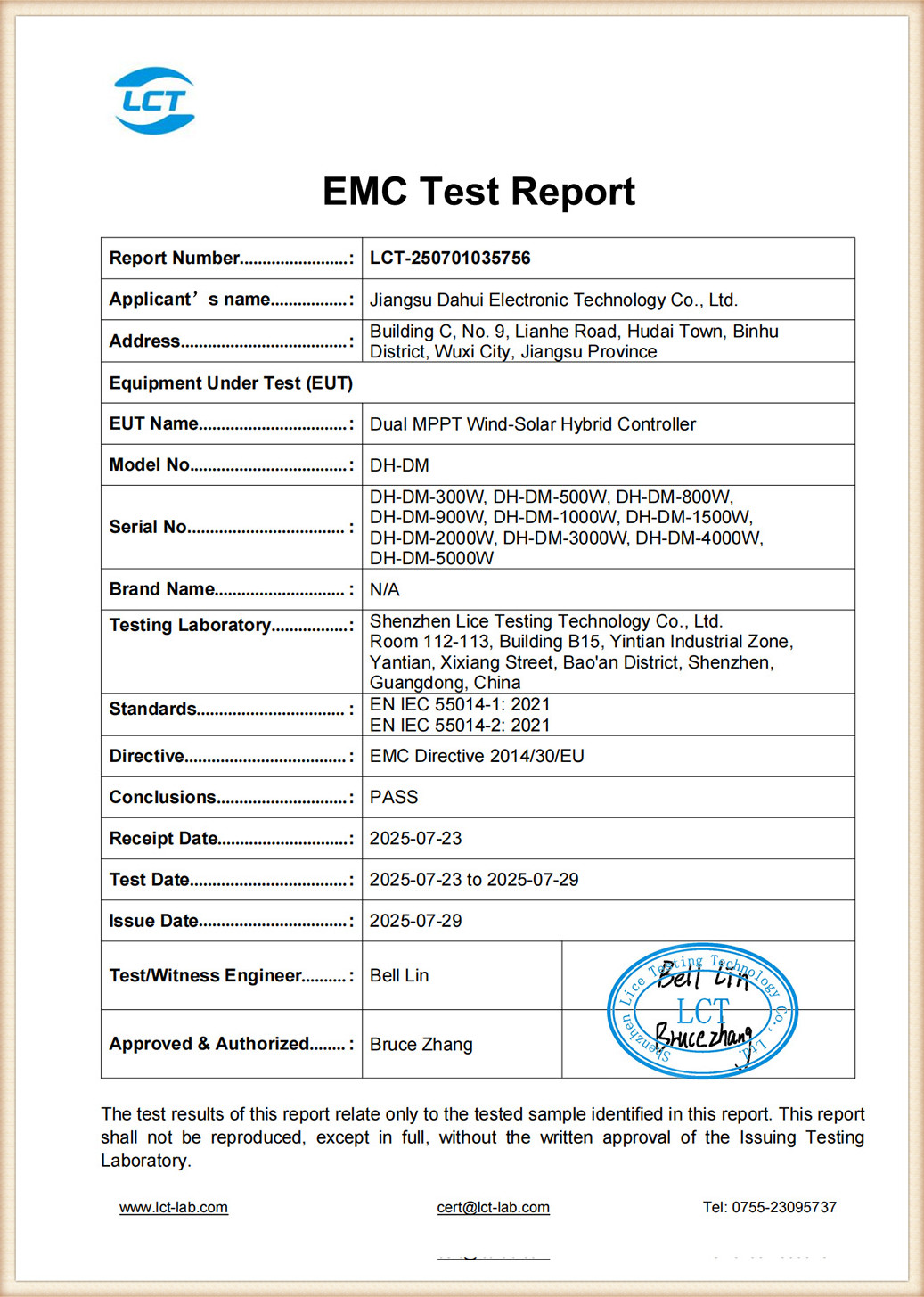
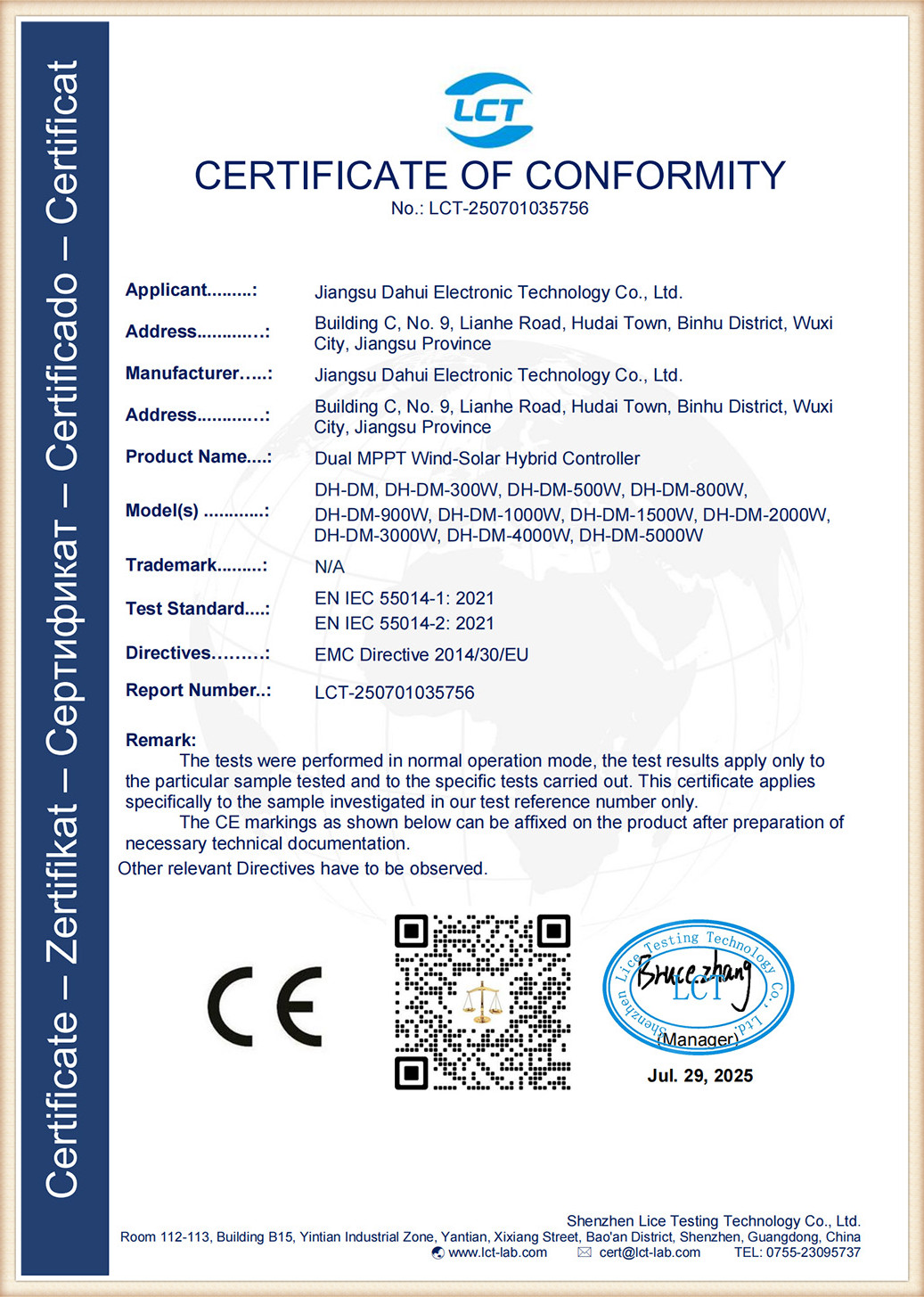
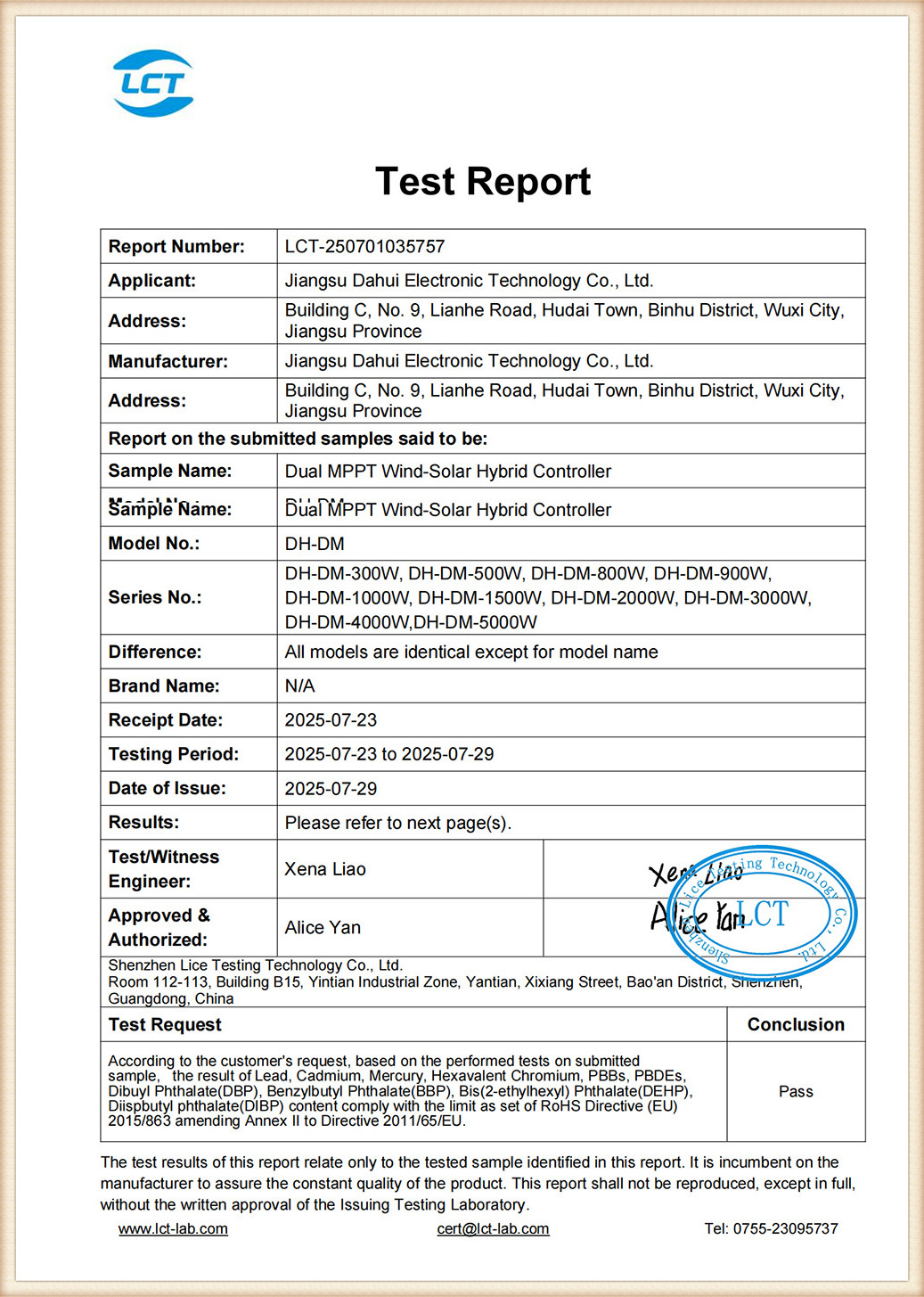
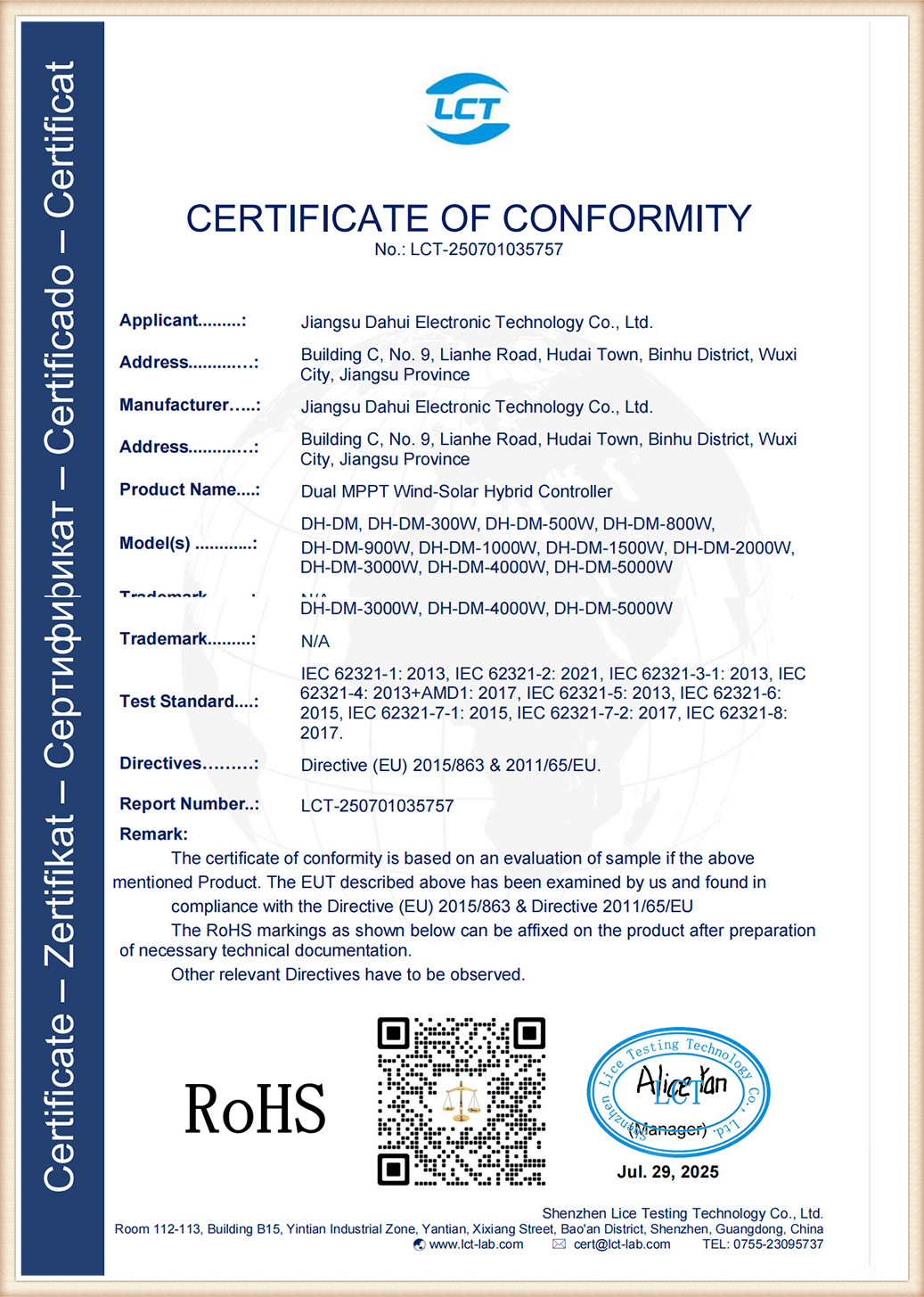
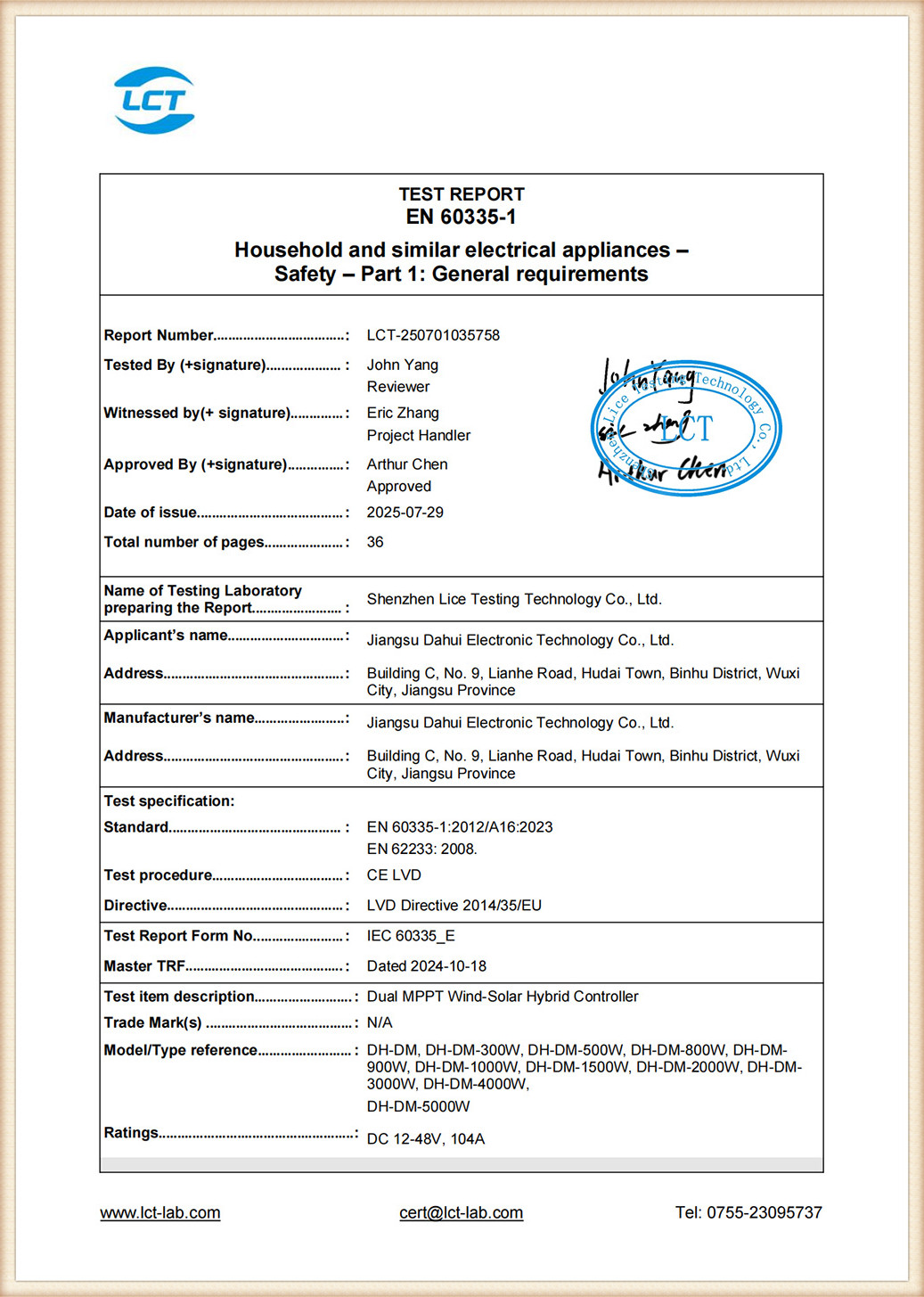
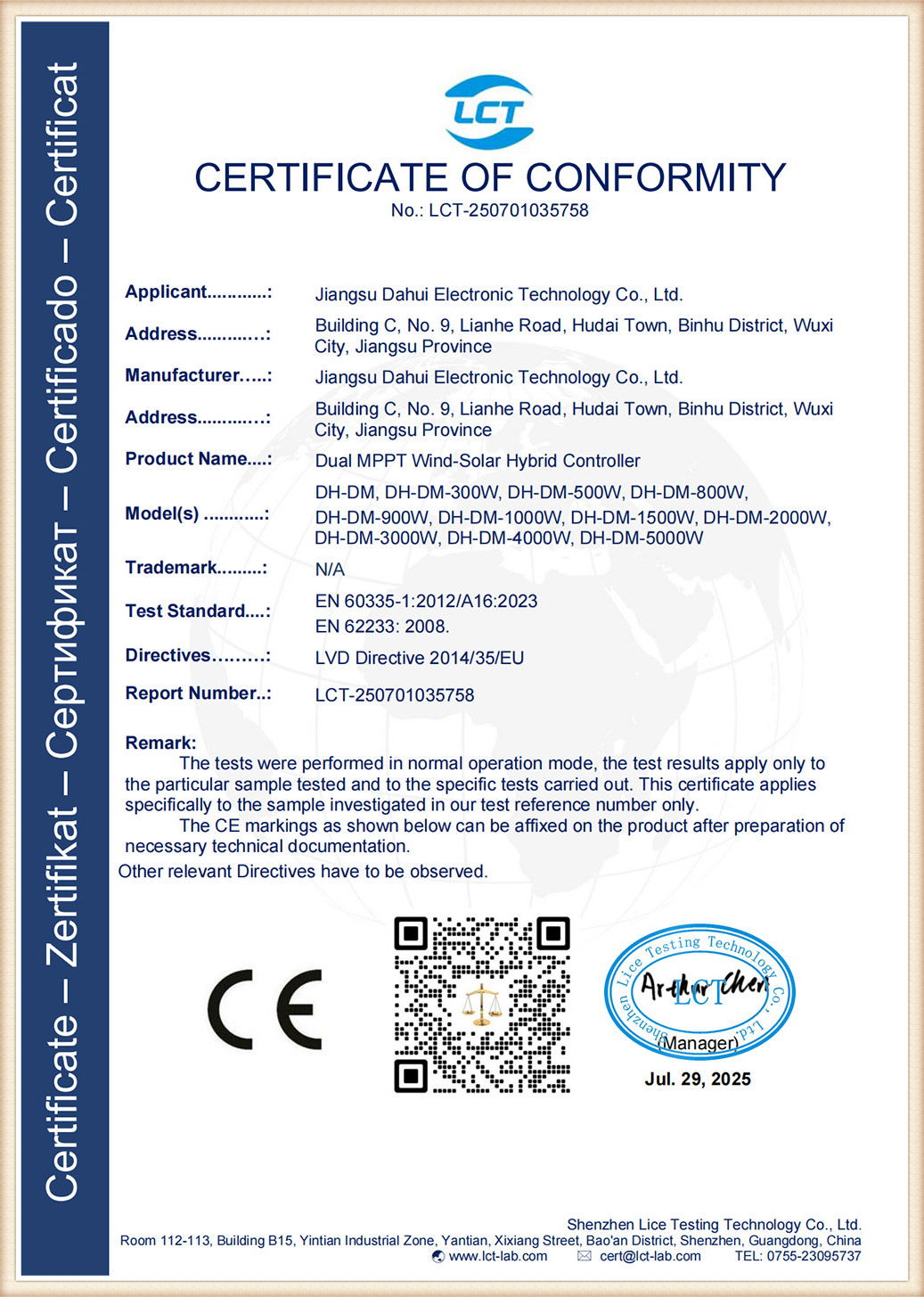
Browse our complete range of wind, solar, and hybrid controllers designed to satisfy the most demanding marine, residential, and industrial off-grid specifications.