- Home
- Products
- About Us
- News
- Contact Us
Leave Your Message
Engineered specifically for off-grid residential battery banks, high-surge renewable integration, and round-the-clock uninterrupted energy harvest.
In modern off-grid electrical engineering, the nominal 48V DC voltage architecture represents the undisputed gold standard for residential solar energy storage setups ranging from 3kW to 15kW capacity. Compared to legacy 12V or 24V installations, stepping up to a 48V (actual operational range 44V to 58.4V for LiFePO4 chemistry) dramatically reduces operating currents for identical power yields.
According to Joule's first law (Ploss = I2R), cutting line current by a factor of four slashes thermal resistive line losses by a factor of sixteen. This crucial efficiency benefit permits longer cabling runs between solar arrays, charge controllers, and battery banks without excessive voltage drops, all while utilizing cost-effective, manageable gauge copper conductors.
Furthermore, standard 48V configurations reside squarely within the International Electrotechnical Commission (IEC) Safety Extra Low Voltage (SELV) boundary of <60V DC. This strikes the optimal balance between high electrical transfer efficiency, minimal risk of hazardous electrocution during DIY or technician servicing, and direct compatibility with 15-cell or 16-cell series Lithium Iron Phosphate (LiFePO4) server-rack storage modules.
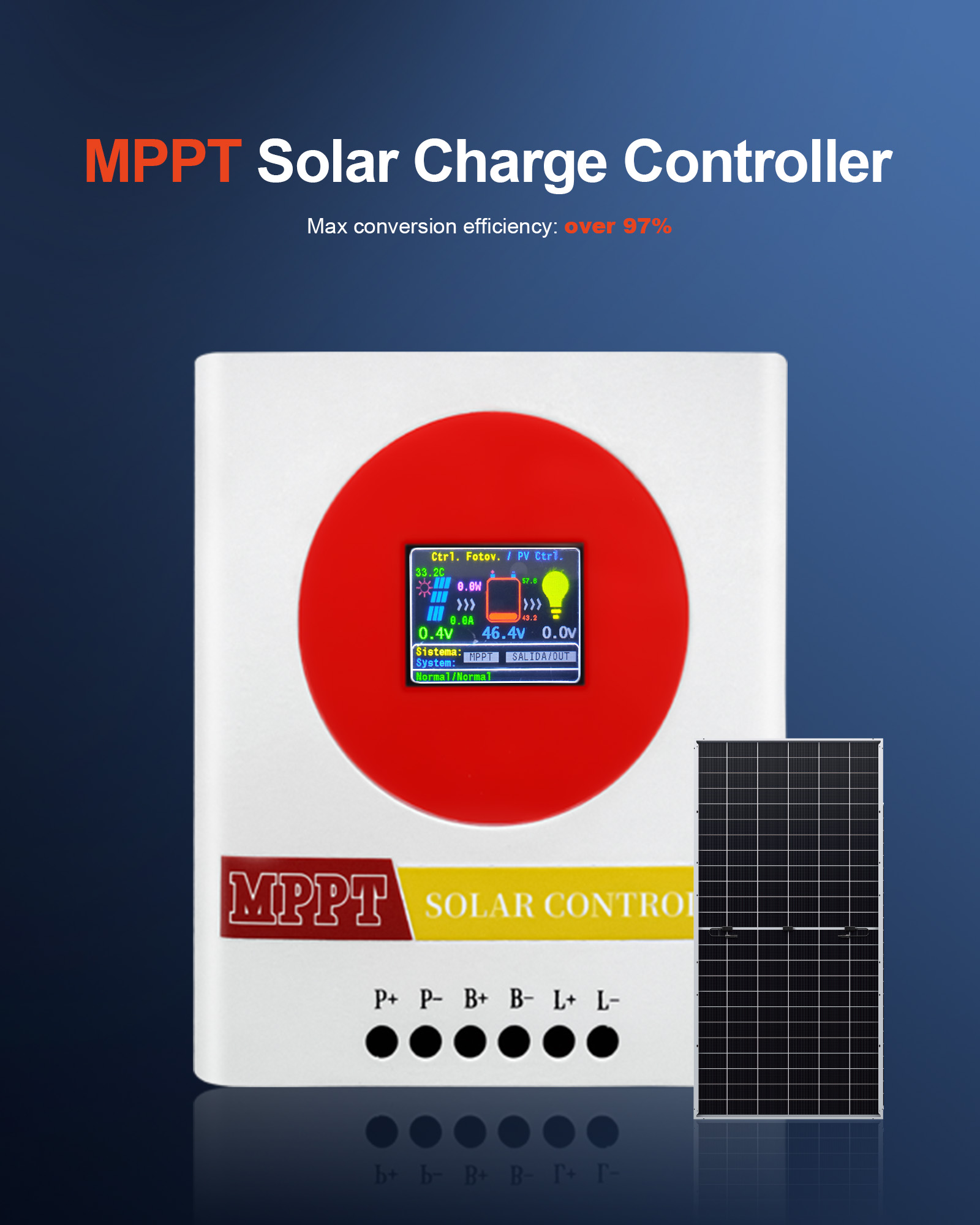
Unlike simplistic Pulse Width Modulation (PWM) regulators that artificially force high-voltage solar panels down to battery voltage levels—discarding up to 35% of array potential—an intelligent MPPT solar charge controller acts as an ultra-fast DC-to-DC buck converter.
By dynamically sweeping the photovoltaic I-V (current-voltage) curve thousands of times per second, the digital signal processor (DSP) continuously pins the operating voltage at the exact inflection point (Vmp × Imp) where maximum watts are produced. Even under partial cloud cover, dynamic ambient temperatures, or suboptimal morning irradiance, high-frequency MPPT harvesting converts excess PV voltage into additional charging amperage, guaranteeing that residential battery reserves replenish rapidly.
Combining adaptive algorithms, thermal endurance, and closed-loop BMS communication to guarantee energy security.
Traditional MPPT sweep methods like standard Perturb and Observe (P&O) frequently become trapped in local power maximums caused by chimney shadows, tree branch contours, or non-uniform cloud cover. Advanced multi-peak tracking algorithms execute global sweeps within 15 milliseconds, accurately identifying the true global peak and preventing up to 25% energy harvest losses in challenging roof layouts.
Modern off-grid homeowners have decisively transitioned away from flooded lead-acid batteries toward Lithium Iron Phosphate (LiFePO4) and next-generation solid-state chemistries. Our controllers feature integrated RS485 and CANbus interfaces that execute closed-loop communications with Battery Management Systems (BMS), guaranteeing strict adherence to multi-stage constant current (CC) and constant voltage (CV) curves without cell overstress.
By engineering high-voltage silicon carbide (SiC) MOSFET semiconductors, contemporary 48V MPPT units accept open-circuit solar string voltages (Voc) up to 150V, 250V, or even 500V. This allows long serial panel strings, drastically mitigating combiner box overhead, lowering installation labor costs, and enabling early-morning energy generation before ambient sunlight reaches full intensity.
Commercial drivers, climate volatility, grid vulnerability, and decentralized electrification across worldwide markets.
The global residential off-grid energy storage market has transitioned from a niche sector for remote cabins and survivalists into an expansive, multi-billion-dollar global industry. Mounting vulnerabilities in centralized utility grids—driven by extreme climate storms, aging distribution transformers, escalating kilowatt-hour tariffs, and wild-fire risk mitigation power shutoffs (PSPS)—have catalyzed severe interest in self-sufficient microgrids across North America, Australia, Southern Europe, and Latin America.
In this evolving landscape, the MPPT 48V Solar Charge Controller serves as the central circulatory system of the domestic microgrid. Rather than merely trickle-charging legacy battery banks, the contemporary 48V controller must orchestrate bidirectional power flow, interface with rooftop solar arrays, manage auxiliary DC wind turbine inputs, and communicate seamlessly with pure sine wave hybrid inverters to sustain high-surge residential loads such as geothermal heat pumps, well water pumps, and electric vehicle (EV) charging stations.
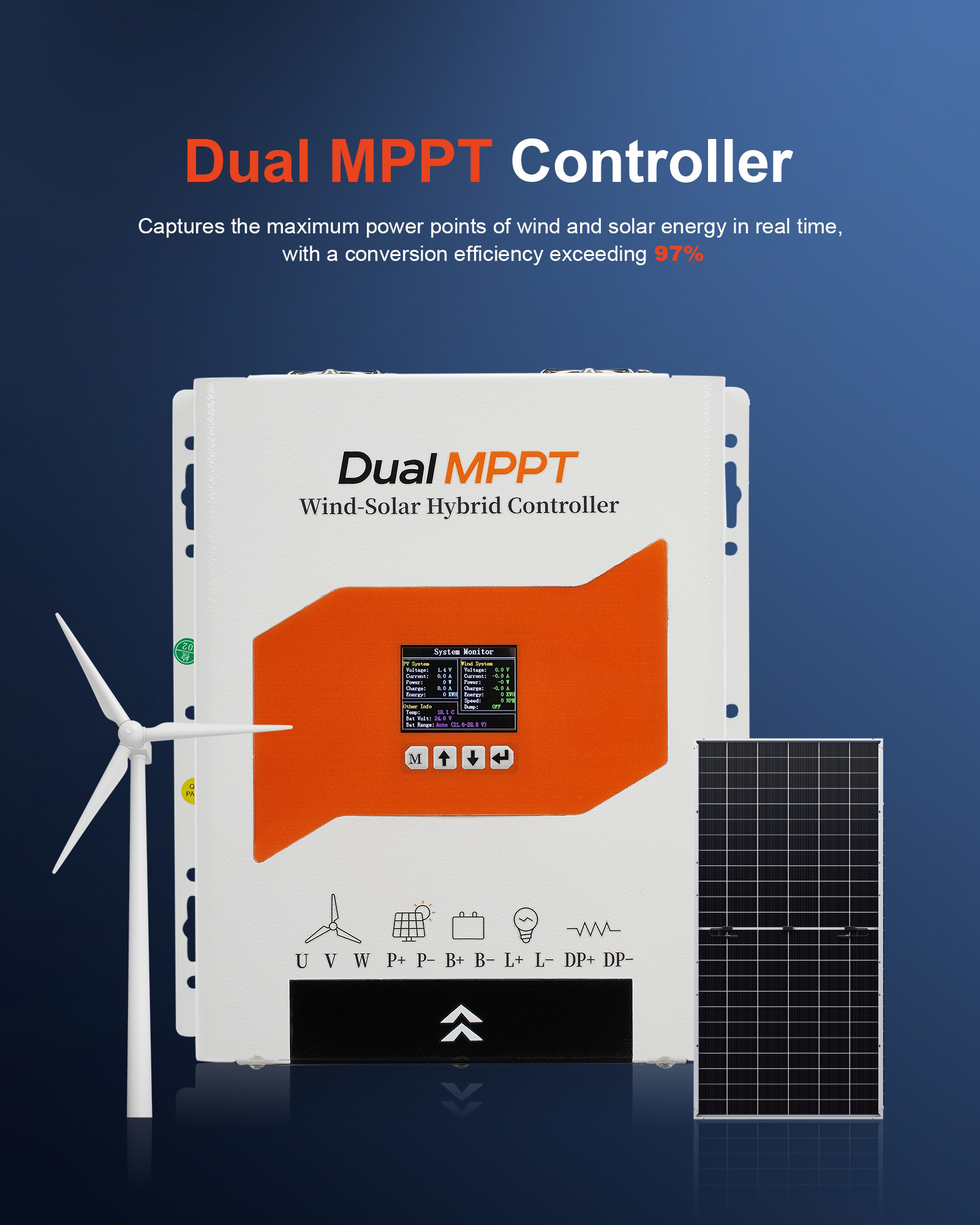
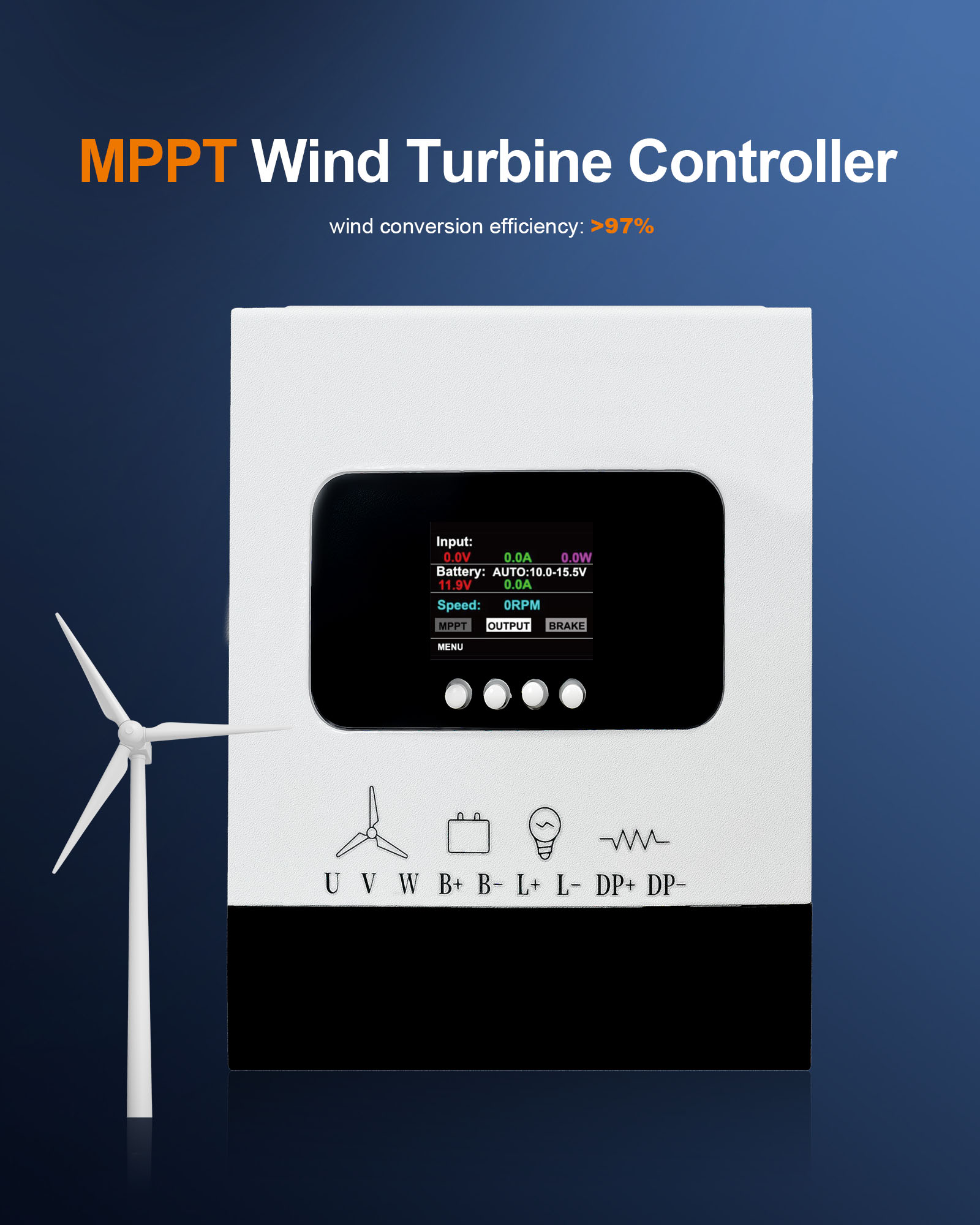
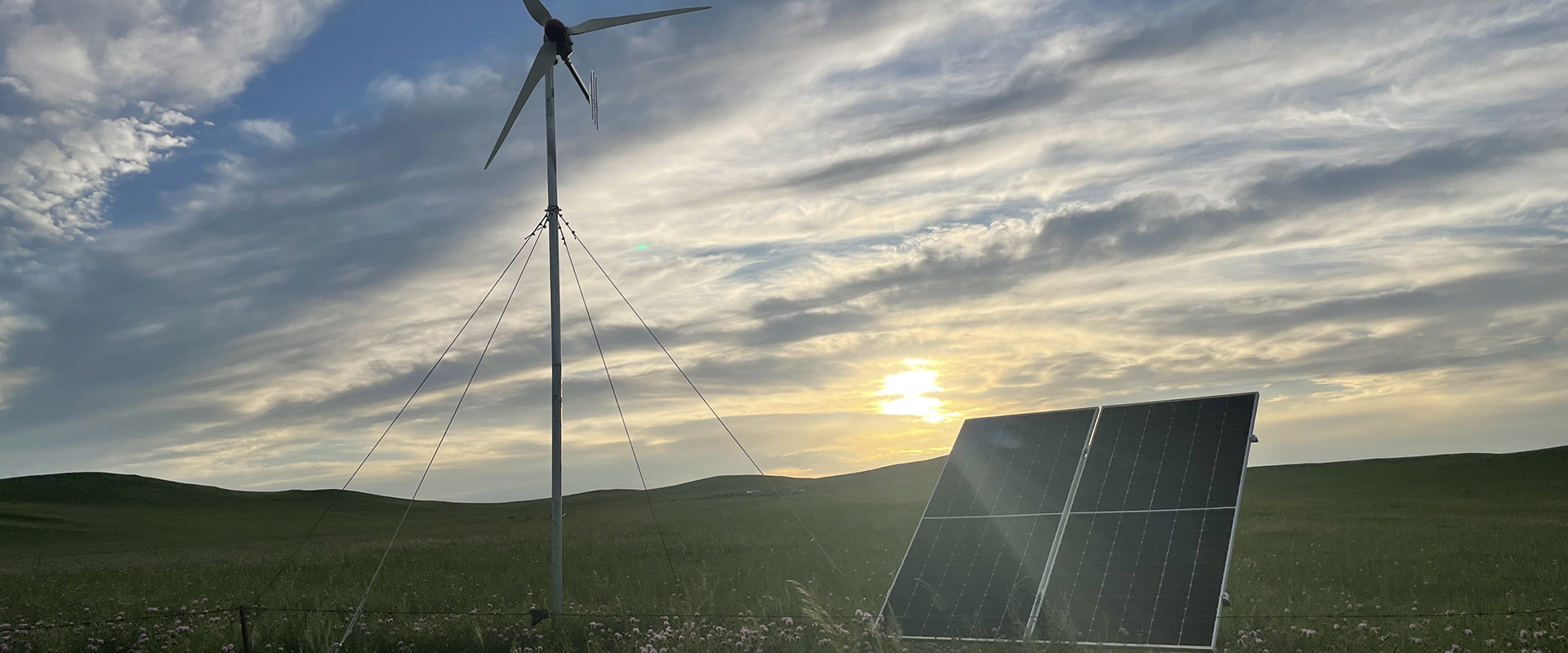
Solar energy alone frequently suffers from seasonal compression: winter days feature reduced daylight duration and diminished solar elevation angles. Industrial deployments and resilient off-grid residences increasingly pair photovoltaic arrays with micro-wind turbines (ranging from 1kW to 5kW) connected to specialized wind-solar hybrid MPPT controllers.
Because wind regimes frequently peak during cloudy storm fronts and overnight hours when solar irradiance is zero, dual-source hybrid MPPT architectures yield a remarkably flattened diurnal generation curve. This prevents excessive depth-of-discharge (DoD) cycling on 48V battery banks, extending lithium cell calendar life beyond 6,000 cycles (15+ operational years) and drastically minimizing the runtime of polluting diesel backup generators.
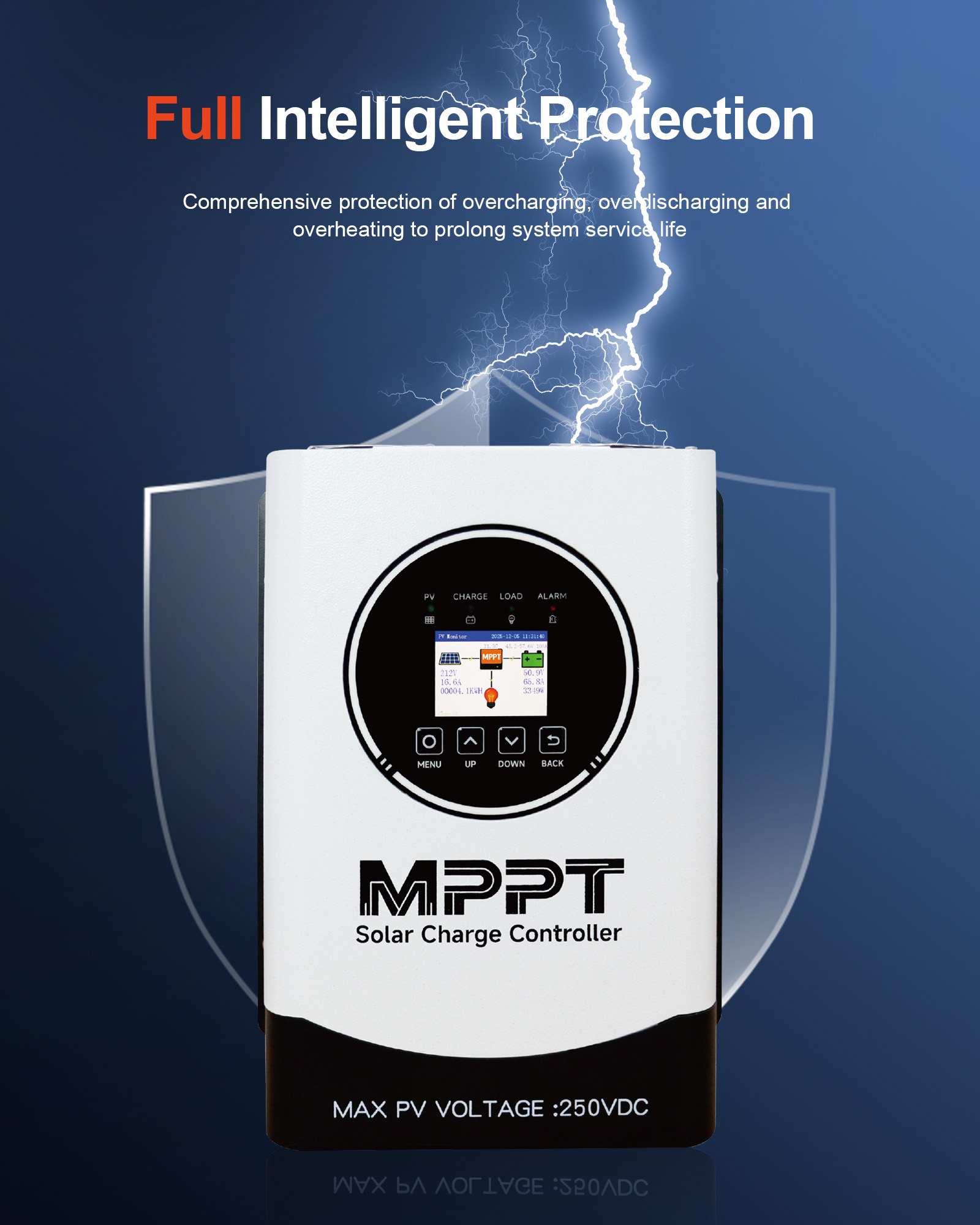
Historically, residential solar components relied on inexpensive consumer-grade electronics with electrolytic capacitors prone to degradation under sustained elevated thermal conditions. Today's commercial requirements demand industrial ruggedness: die-cast aluminum heat sinks, conformal-coated circuit boards resistant to salt fog and tropical humidity, fanless convection cooling architectures for zero-noise indoor operation, and comprehensive internal protection matrices (reverse polarity, PV short circuit, over-current, reverse night leakage, and transient TVS lightning suppression).
Explore how advanced 48V MPPT controllers power diverse off-grid living, agricultural operations, and remote communications.
Off-grid eco-resorts and luxury wilderness residences demand robust power without noisy generators. A 48V MPPT solar-storage architecture handles simultaneous running of refrigeration, split air-conditioning, induction cooktops, and Starlink internet stations without grid reliance or voltage sag.
Irrigation pumps and automated greenhouse aeration draw severe inductive start-up surges. 48V MPPT controllers rapidly replenish battery banks after cyclic motor draws, buffering peak currents and guaranteeing continuous crop hydration across isolated farmland.
Remote telecommunication towers, mountain weather observatories, and forest fire surveillance cameras require continuous 99.999% uptime. 48V DC is the native telecom standard, allowing direct DC bus powering without inverter conversion efficiency losses.





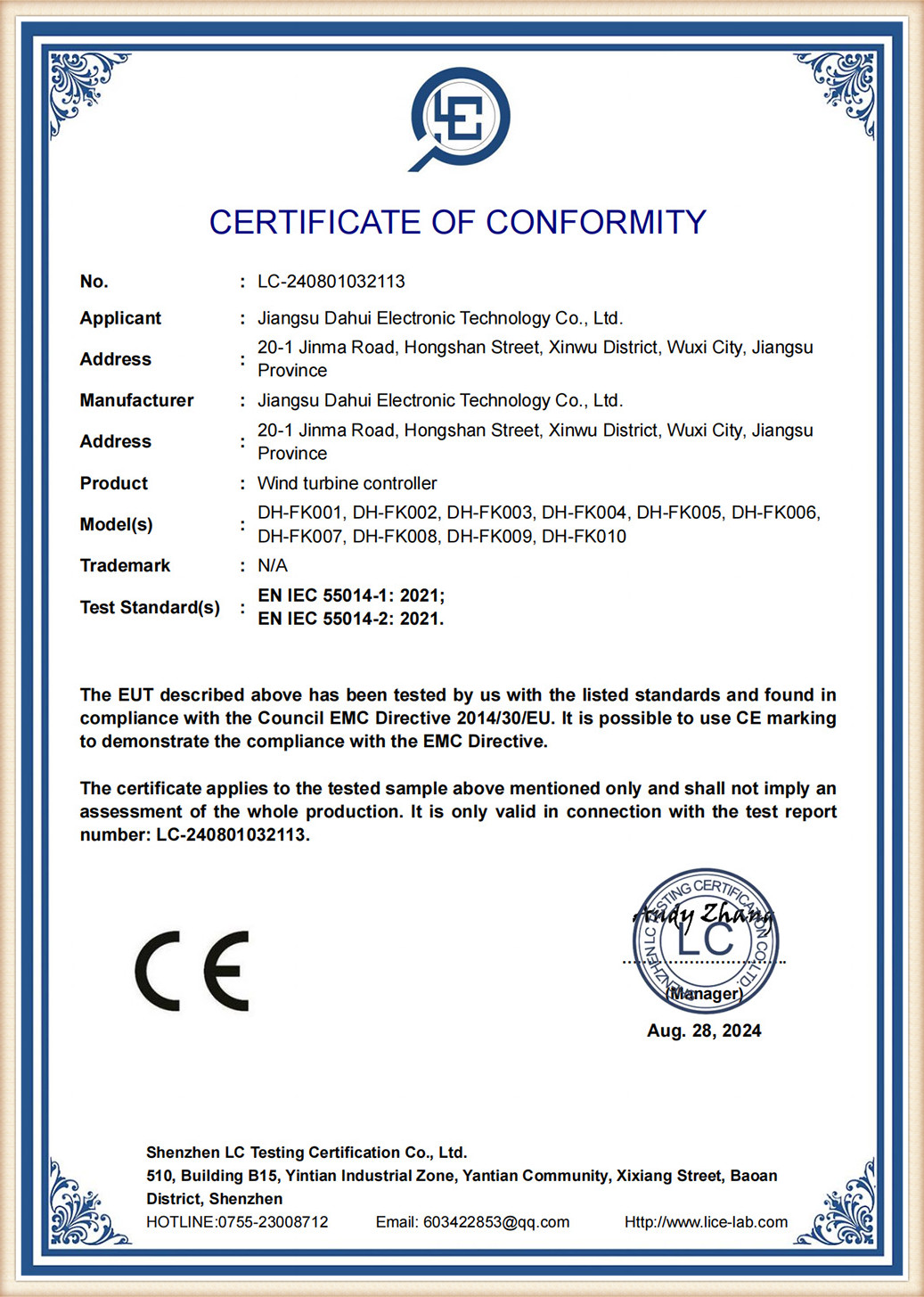







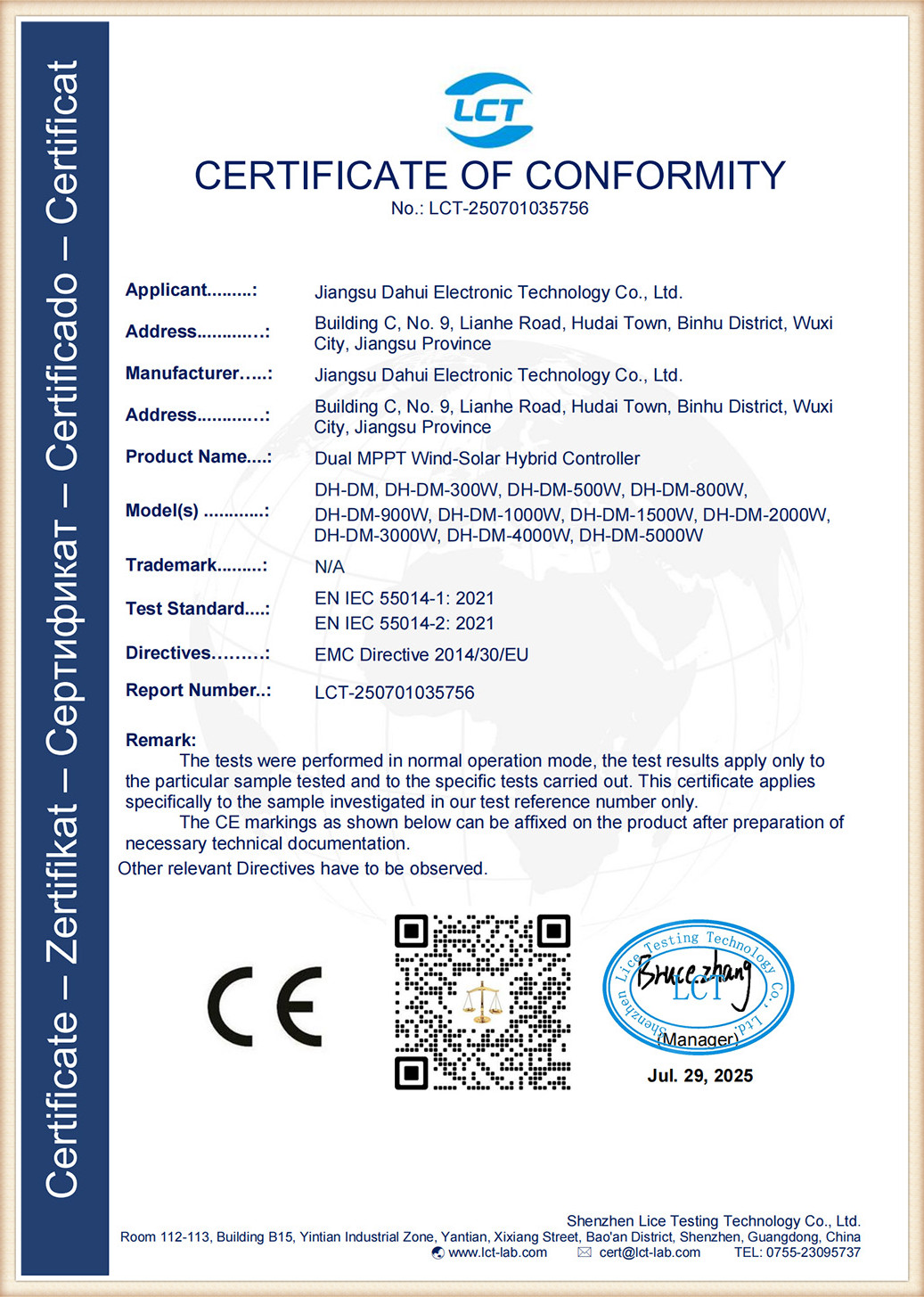




Field-proven controllers engineered to maximize solar yields, safeguard battery longevity, and maintain absolute off-grid resilience.
Calculating exact amperage, open circuit voltage overheads, and battery chemistry matching for zero-downtime off-grid autonomy.
When selecting your MPPT 48V Solar Charge Controller, design array strings so the maximum power point voltage (Vmp) remains at least 5V to 10V above the maximum battery absorption voltage under the highest expected ambient temperatures. Ensure that the total open-circuit voltage (Voc) corrected for record-cold temperatures (using the panel's negative temperature coefficient βVoc) never exceeds the controller's absolute maximum DC input limit.
For a standard 48V 100Ah (5.12 kWh) LiFePO4 rack battery, the recommended standard charge rate is 0.5C (50A). When designing multi-string solar arrays exceeding 3,000 Watts, pairing an 80A or 100A MPPT controller ensures that the battery bank charges rapidly without tripping internal BMS high-current lockouts, guaranteeing continuous energy harvest even during brief mid-day sun peaks.