Leave Your Message
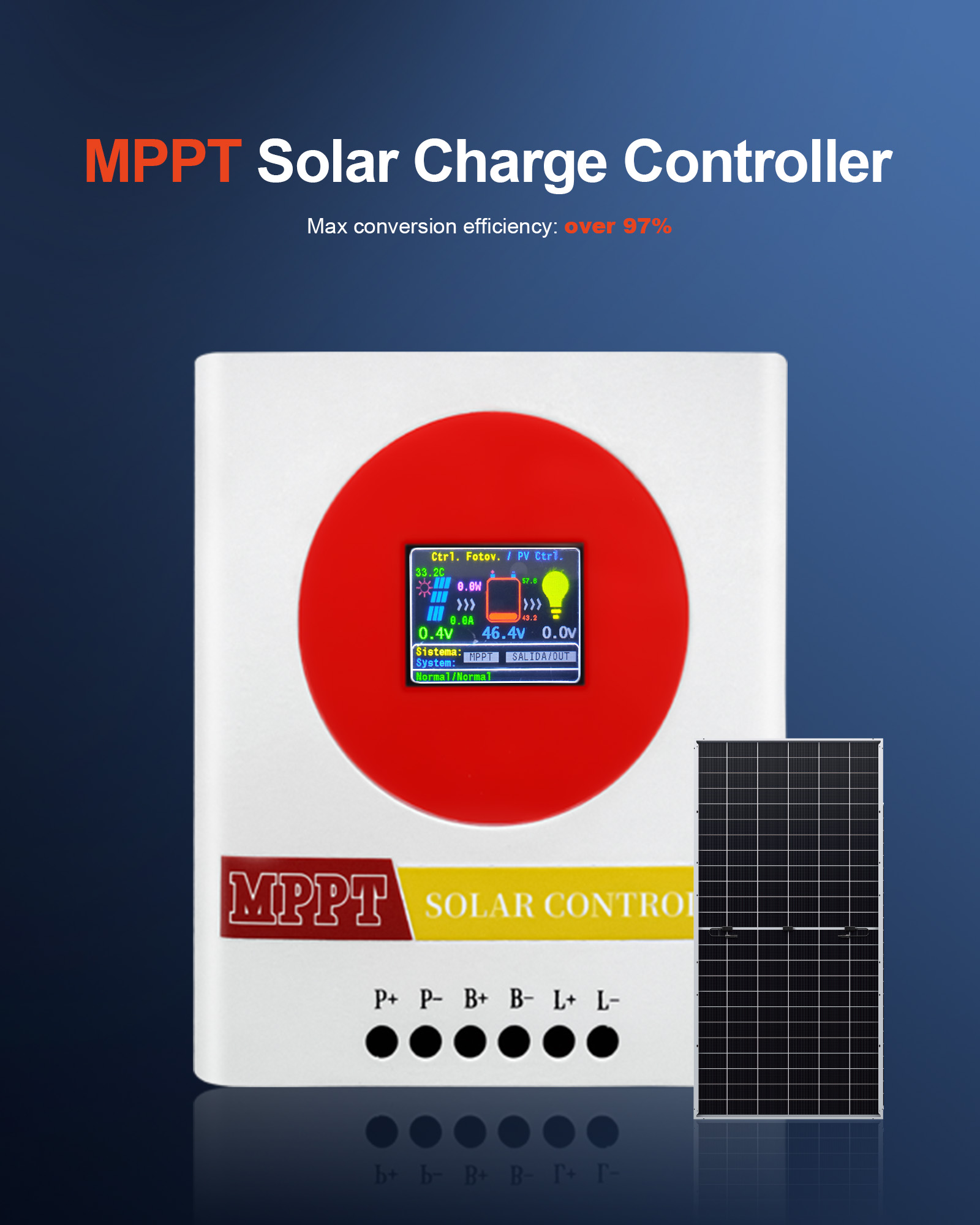
Modern outdoor exploration is undergoing a massive technological revolution. The traditional concept of roughing it out in the wild has transformed into a sophisticated blend of adventure and residential-grade comfort. Today's recreational vehicles (RVs), overland trucks, and remote base camps are equipped with power-hungry systems: from portable air conditioners, induction cooktops, and high-capacity 12V/24V/48V refrigerators to mobile satellite internet terminals (such as Starlink) and professional photography gear. Supporting this massive electrical load requires more than just standard batteries; it demands a robust, intelligent, and highly efficient energy management core. This is where the MPPT 80A Solar Charge Controller establishes itself as an indispensable component of modern off-grid power infrastructure.
At its core, an 80-amp Maximum Power Point Tracking (MPPT) controller acts as the smart gateway between the solar PV array and the battery storage system. Unlike older Pulse Width Modulation (PWM) controllers that simply clamp solar panel voltage down to match the battery, MPPT controllers constantly monitor and calculate the optimal voltage and current values to extract the absolute maximum wattage from the PV modules. Under shifting environmental conditions—such as passing clouds, forest canopy shade, or low-angle winter sunlight—the MPPT 80A controller dynamically adjusts to ensure that every ray of sunlight is captured and converted into usable power.
Captures maximum power point in milliseconds, even under rapid solar irradiance fluctuations characteristic of moving RVs.
Fully optimized charging profiles for LiFePO4, AGM, Gel, and flooded lead-acid batteries, ensuring prolonged battery lifecycle.
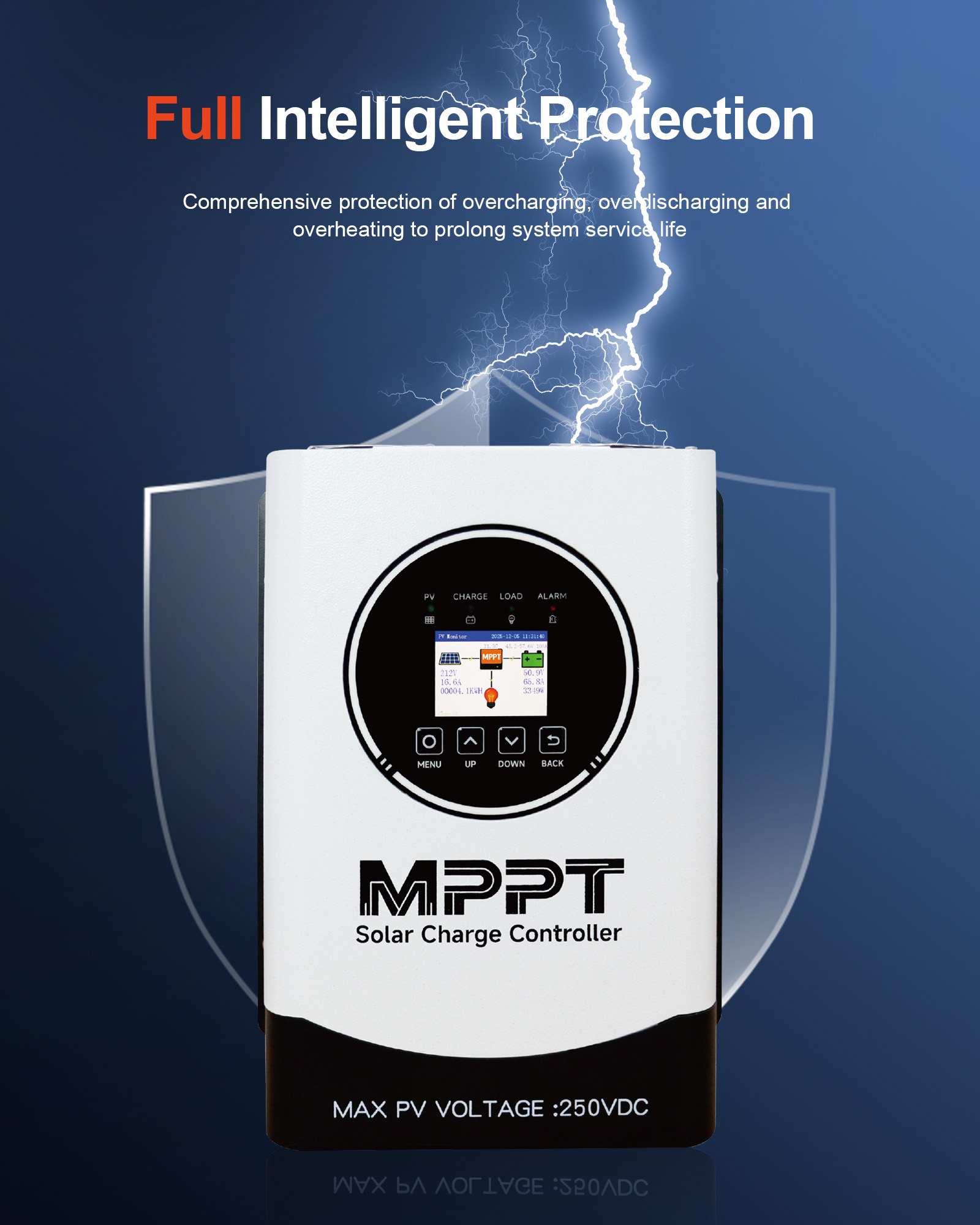
Integrated reverse-polarity, over-charge, short-circuit, and thermal throttling protections guarantee absolute safety in the wild.
The rating of "80A" denotes the maximum output charging current the controller can deliver to the battery bank. In the context of off-grid engineering, this capacity rating unlocks massive flexibility. Let's analyze the power potential across different system voltages:
By offering high current capacity, the 80A MPPT controller allows outdoor enthusiasts to scale their solar arrays without needing to purchase multiple smaller controllers, simplifying system wiring, reducing failure points, and optimizing valuable space inside RV electrical bays.
The global off-grid energy sector is experiencing rapid growth, driven by technological breakthroughs in lithium battery chemistry and power electronics. The modern industrial landscape of solar charge controllers is characterized by several major trends:
Historically, solar controllers were limited to low input voltages, requiring complex parallel wiring of solar panels. Modern industrial-grade 80A MPPT controllers now support PV input voltages up to 150V or even 250V. High-voltage input allows installers to wire multiple solar panels in series. This reduces the current flowing through the PV wires, allowing for much thinner, lighter, and more cost-effective cabling, while significantly reducing power loss over long wire runs. For an RV with limited space for thick wiring, this is a massive engineering advantage.
No longer is the solar controller a silent black box hidden under an RV seat. Today's commercial off-grid controllers feature integrated Bluetooth, Wi-Fi, or CAN-bus interfaces. Users can monitor real-time solar generation, battery state of charge (SoC), and load consumption directly from their smartphones or tablets. For industrial and commercial fleet operators (such as mobile medical vans, remote telecom stations, or outdoor research stations), these controllers stream data to cloud-based monitoring dashboards, enabling predictive maintenance and remote troubleshooting.
Outdoor camping and RV off-grid applications expose equipment to harsh vibration, dust, moisture, and extreme temperature variations. The latest industry standard focuses on fanless, die-cast aluminum heat sinks that rely on natural convection cooling. Eliminating moving parts (fans) dramatically increases the Mean Time Between Failures (MTBF). Furthermore, conformal coatings on internal circuit boards protect the delicate electronics from humidity and salt-mist corrosion, making them suitable for marine and coastal environments.
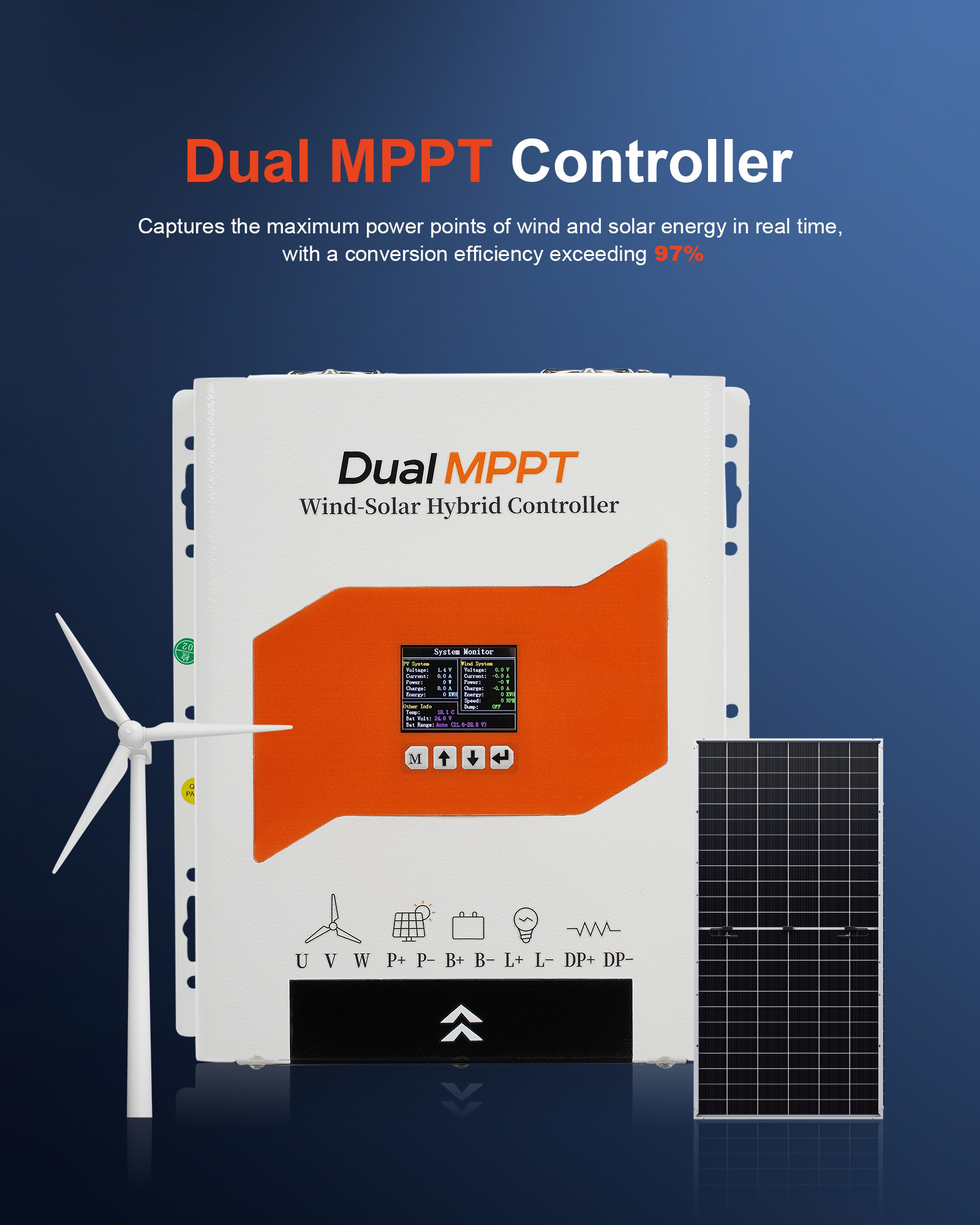
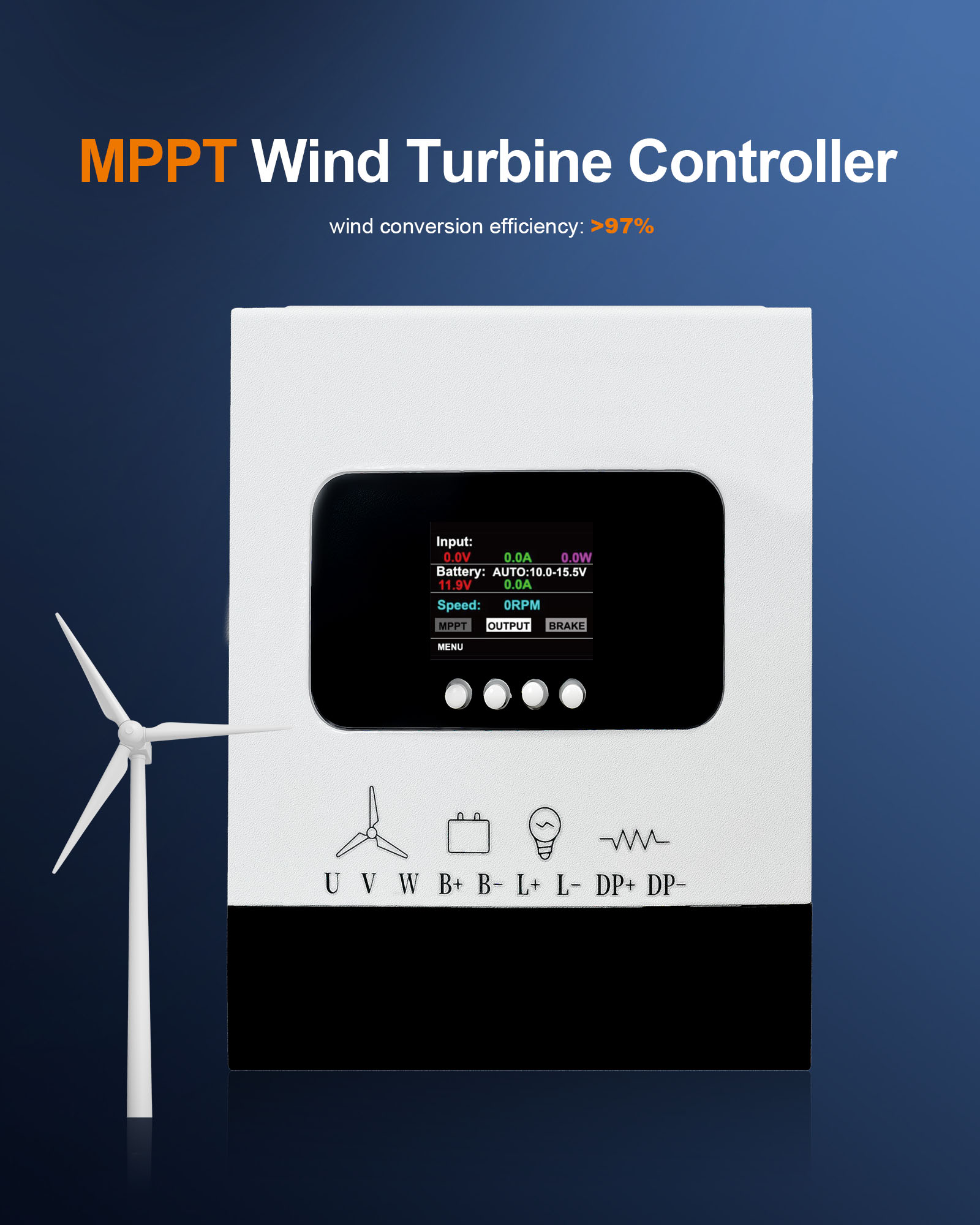
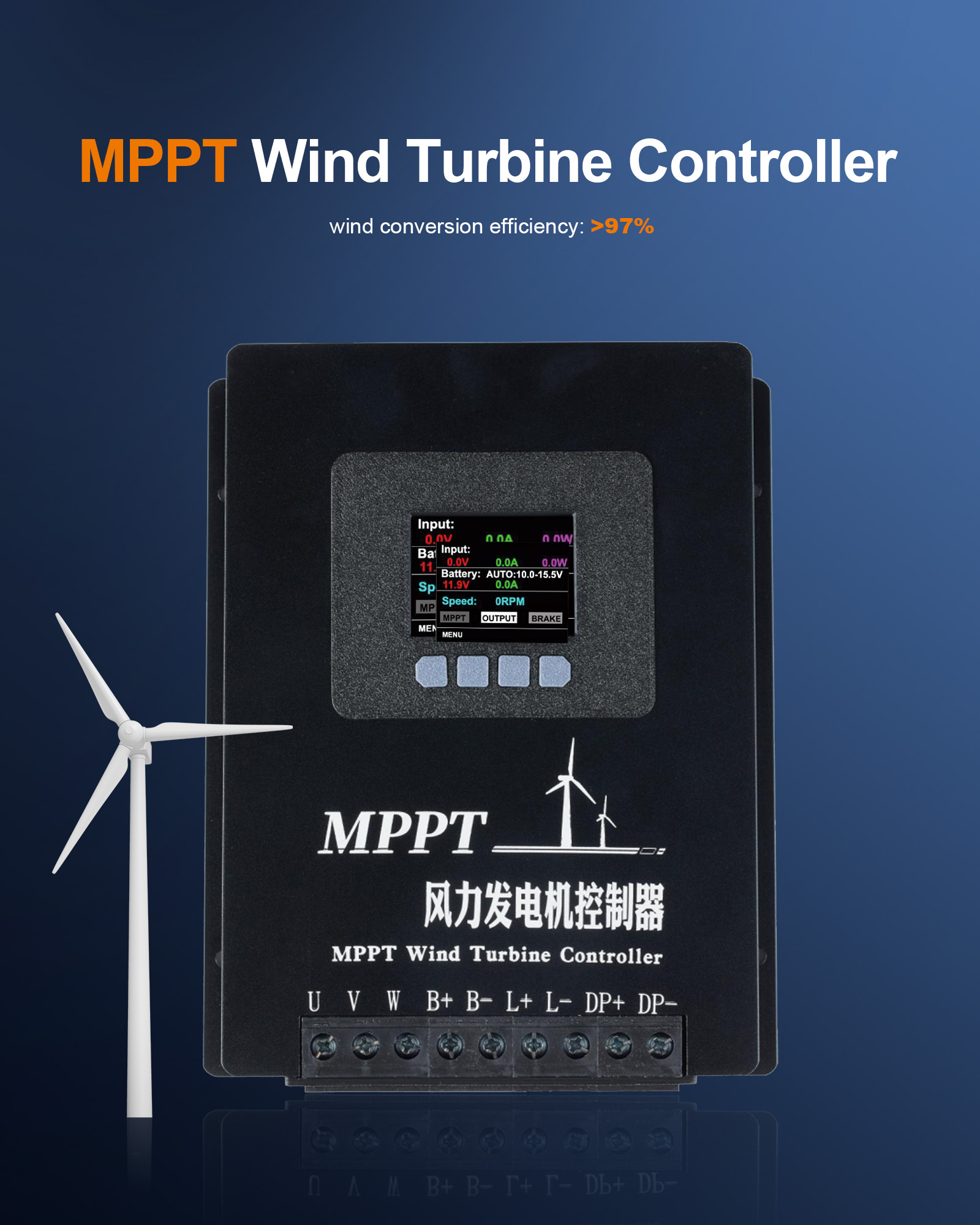
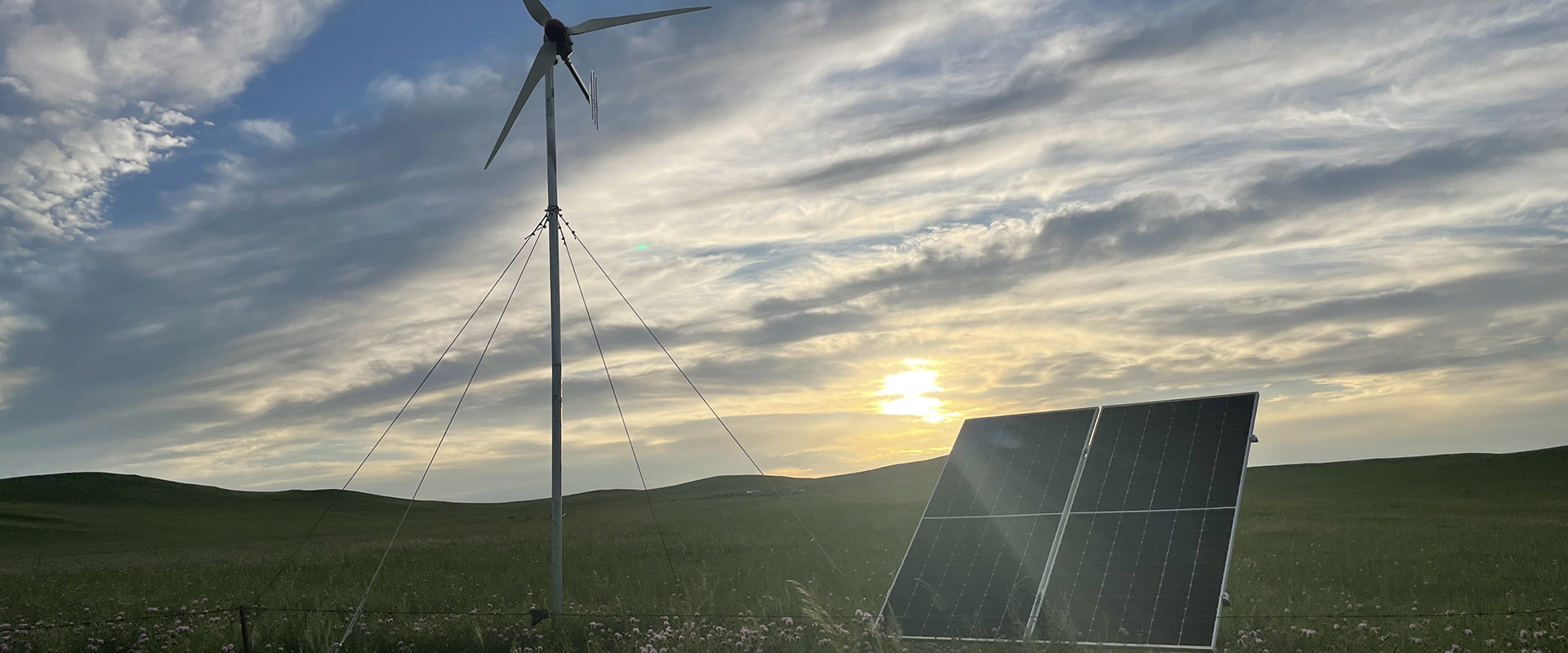
For true off-grid resilience, relying solely on solar energy can be risky, especially during prolonged stormy weather or in high-latitude winter camping. The industry is moving toward hybrid controllers that integrate both wind turbine and solar PV inputs. By combining an MPPT solar algorithm with a wind turbine rectifier, these advanced systems ensure continuous battery charging 24/7, harvesting wind energy at night and solar energy during the day.




Designing a reliable off-grid power supply for an RV or overland vehicle requires understanding how the MPPT 80A controller interacts with the broader electrical ecosystem. Unlike stationary home solar systems, mobile off-grid setups face unique challenges:
In a residential setup, solar panels are permanently mounted at the optimal angle facing south (in the northern hemisphere). In contrast, an RV is constantly changing direction and parking in unpredictable environments. You might park under the partial shade of a tree at a campsite, or the sun angle might change dynamically as you drive. An advanced MPPT controller utilizes continuous tracking algorithms that scan the entire voltage range of the solar array within seconds to locate the true maximum power point. This prevents the controller from getting stuck on a false local peak caused by partial shading of a single panel, maximizing energy harvest by up to 30% compared to standard controllers.
Lithium Iron Phosphate (LiFePO4) batteries have become the gold standard for RV off-grid power due to their lightweight, high energy density, and deep discharge capabilities. However, charging lithium batteries below freezing temperatures (0°C / 32°F) can cause permanent damage (lithium plating). Premium 80A MPPT controllers feature external temperature sensors and communication protocols with the Battery Management System (BMS). If the temperature drops too low, the controller will automatically stop charging or redirect solar power to internal battery heating pads until the cells reach a safe temperature.
When installing an 80A charge controller, safety is paramount. The high current capacity requires thick gauge copper wiring (typically 4 AWG to 2 AWG depending on run length) between the controller and the battery bank. High-quality fuses or circuit breakers must be installed on both the PV input and battery output lines. This protects the system from short circuits and allows for easy isolation during maintenance. Furthermore, the controller's ability to limit its output current ensures that even if you oversize the solar array (over-panelling to get better performance on cloudy days), the controller will safely throttle the charging current to exactly 80A without overheating.
The company's core R&D strength is composed of a scientific research team led by senior doctors in the industry. It has long-term focus on the cutting-edge exploration and innovative application of new energy technologies, continues to increase investment in core R&D, and has formed deep technological accumulation and independent innovation capabilities in core areas such as efficient conversion of electric energy, intelligent system integration, and coordinated control of integrated wind, solar, and storage.
Relying on industry-leading automated production lines and high-precision full-dimensional testing equipment, the company has independently developed a number of intelligent new energy products with completely independent intellectual property rights, fully covering three major application scenarios: off-grid, grid-connected, and mixed grid.
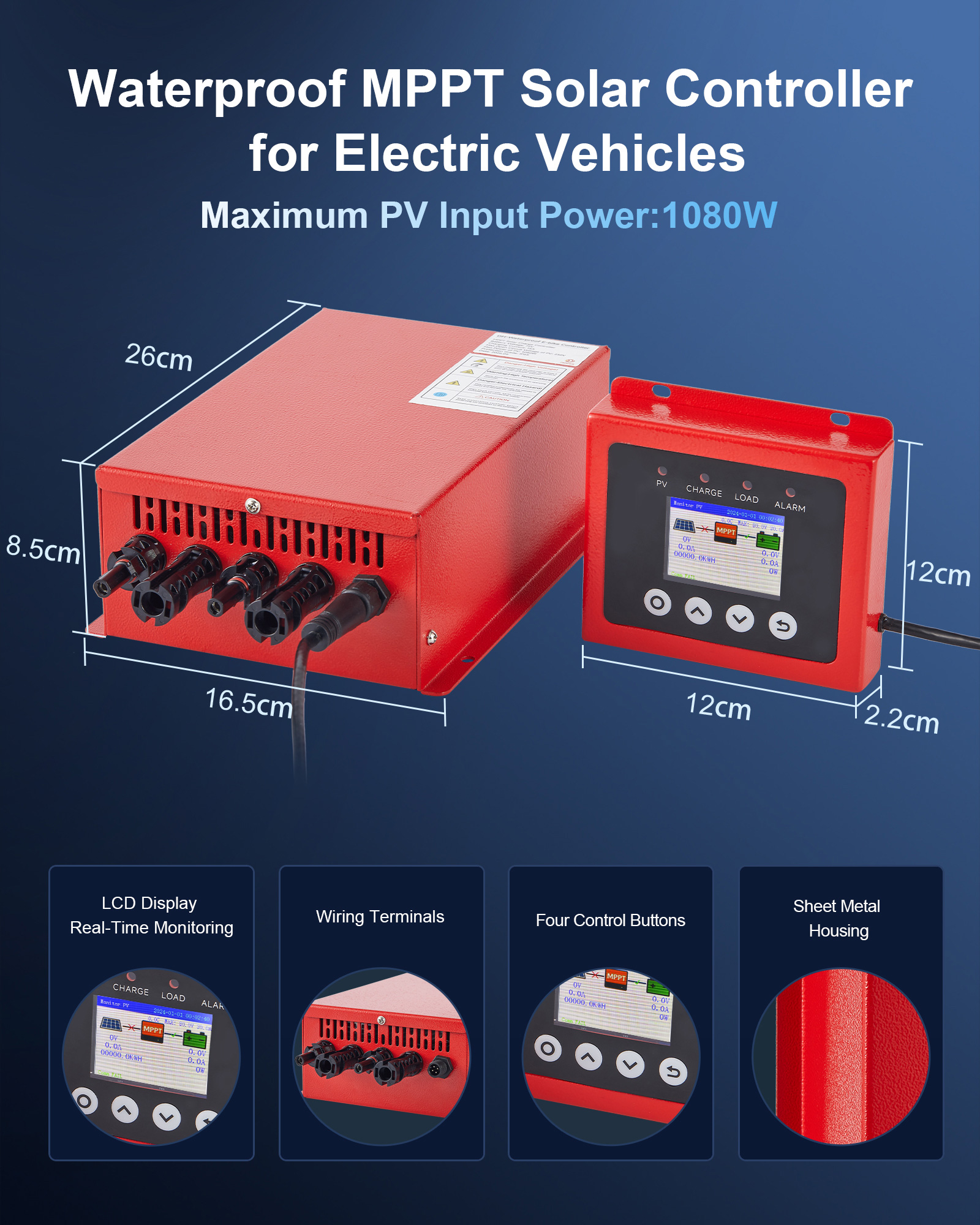
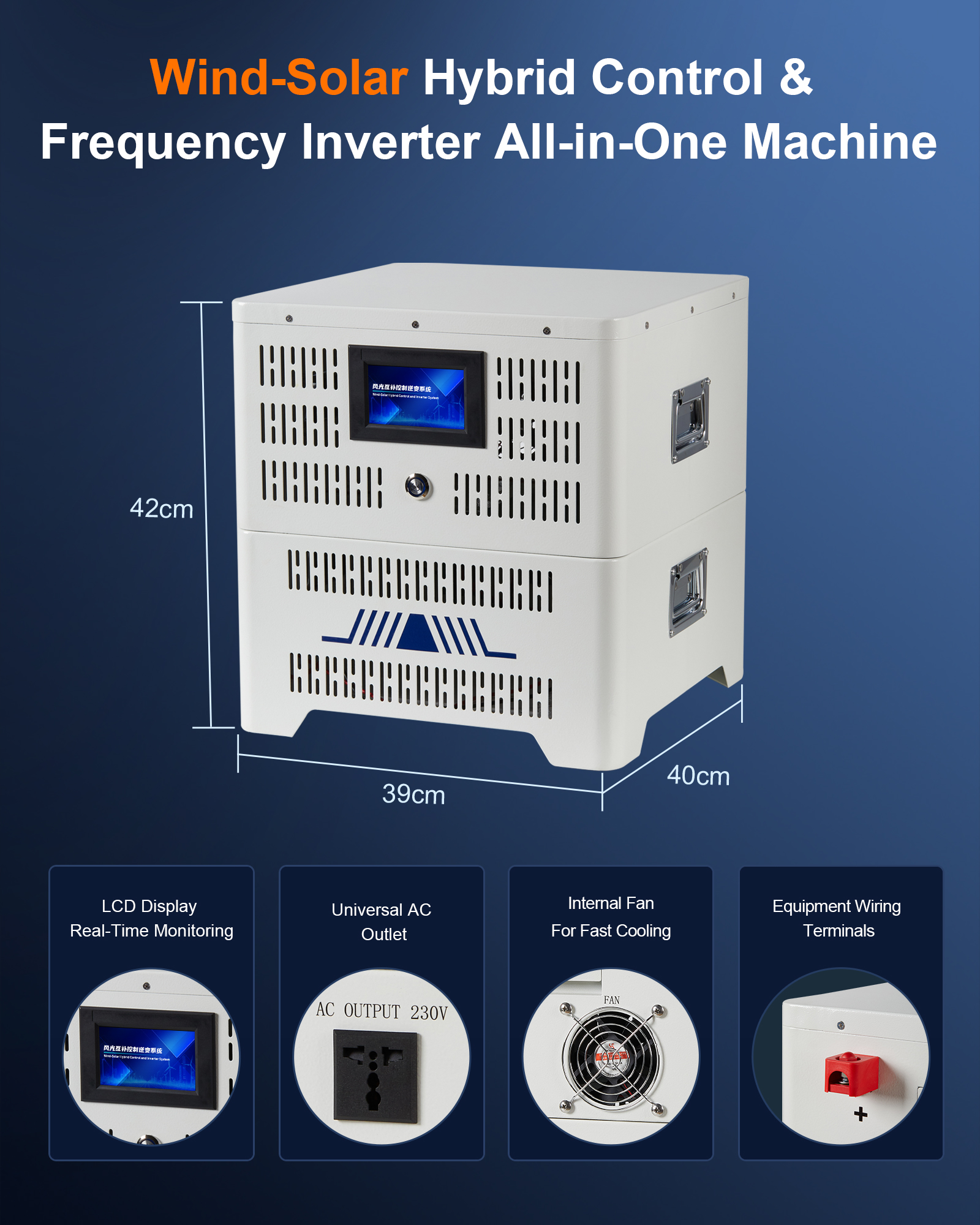
The product matrix includes core categories such as high-frequency/power frequency inverters, wind power controllers, photovoltaic controllers, wind-solar hybrid controllers, wind-solar storage-control-inverse integrated power generation systems, etc., which can be flexibly adapted to diversified power needs such as household use, industrial and commercial distributed, and off-grid independent power stations.
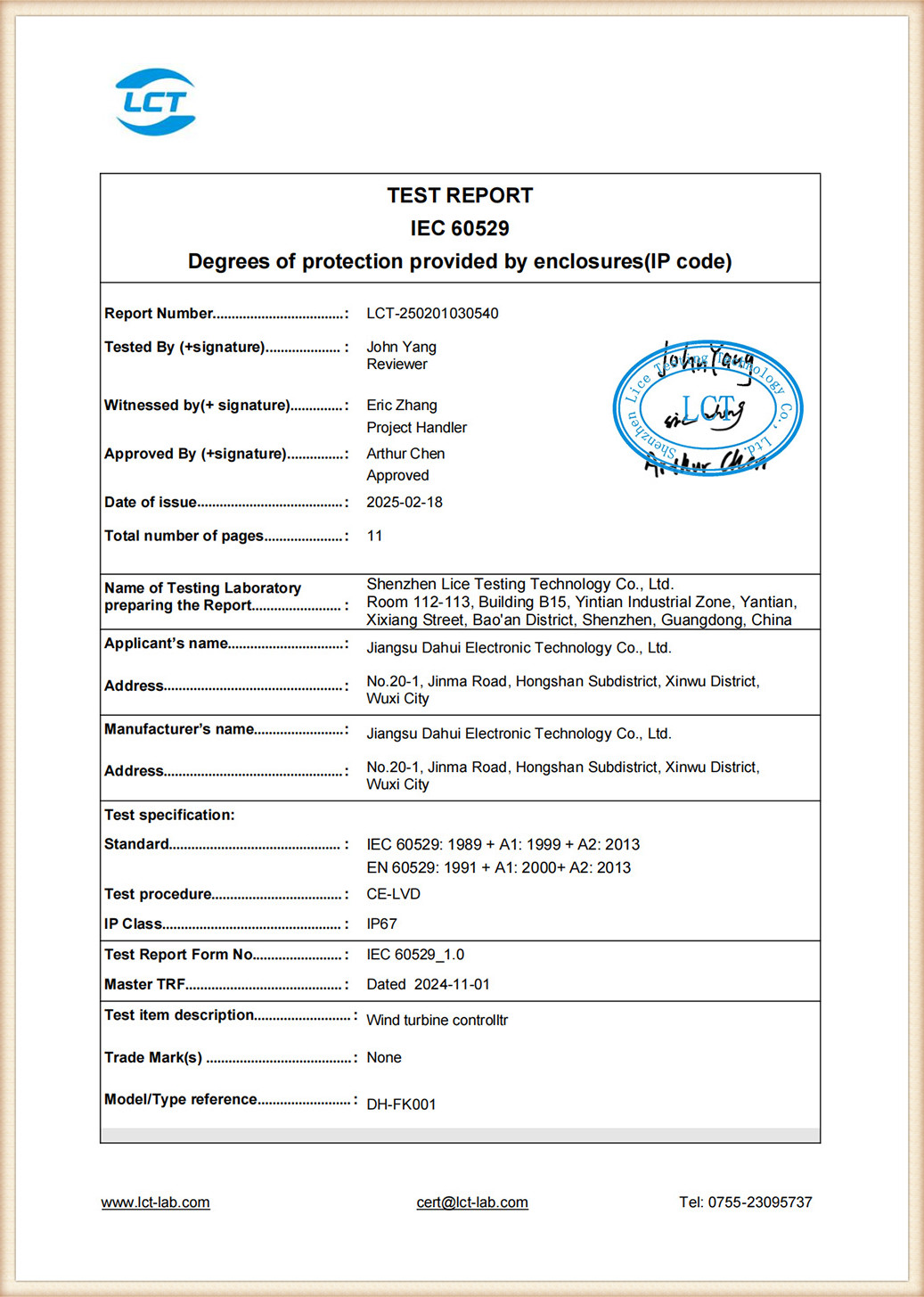
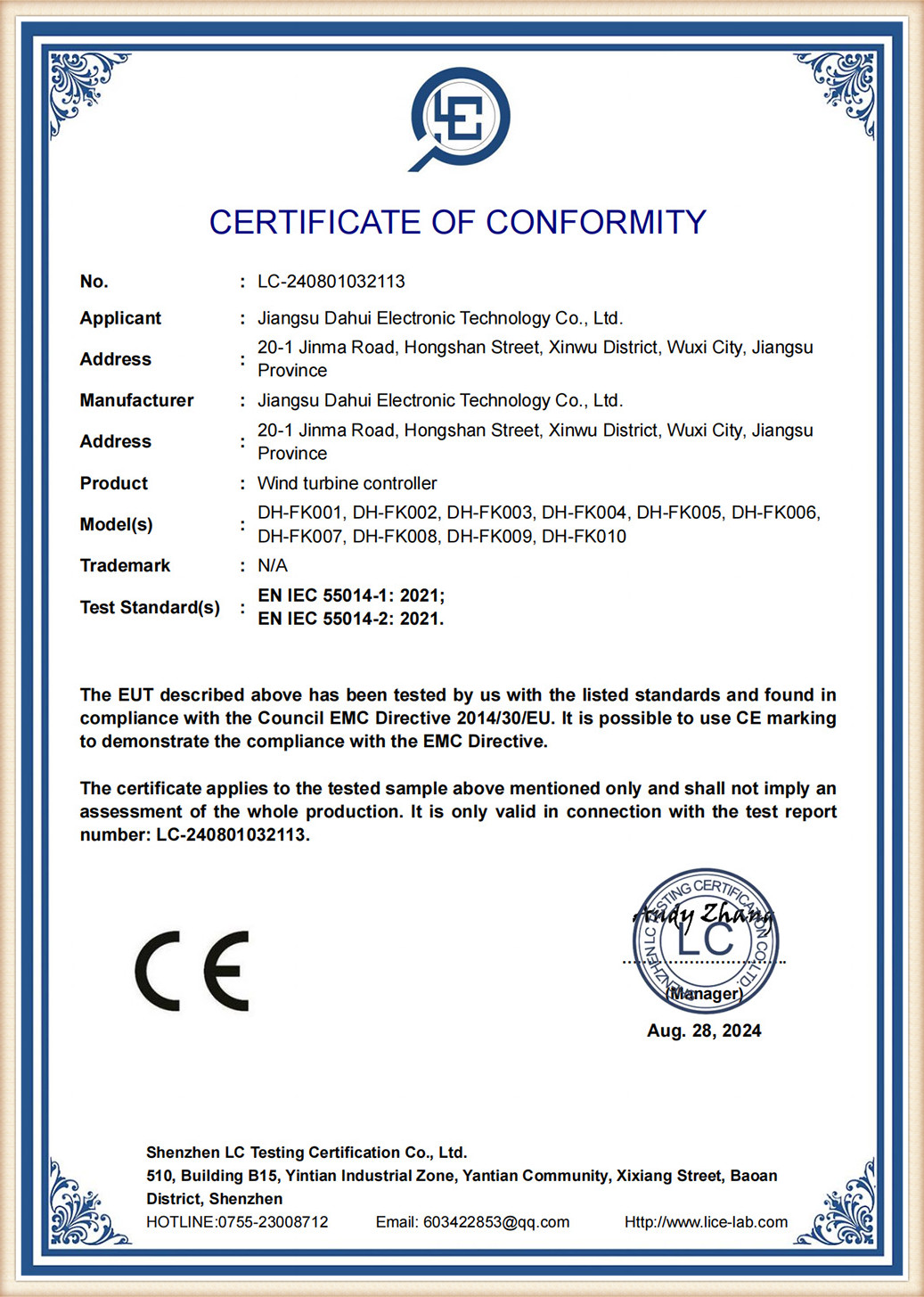
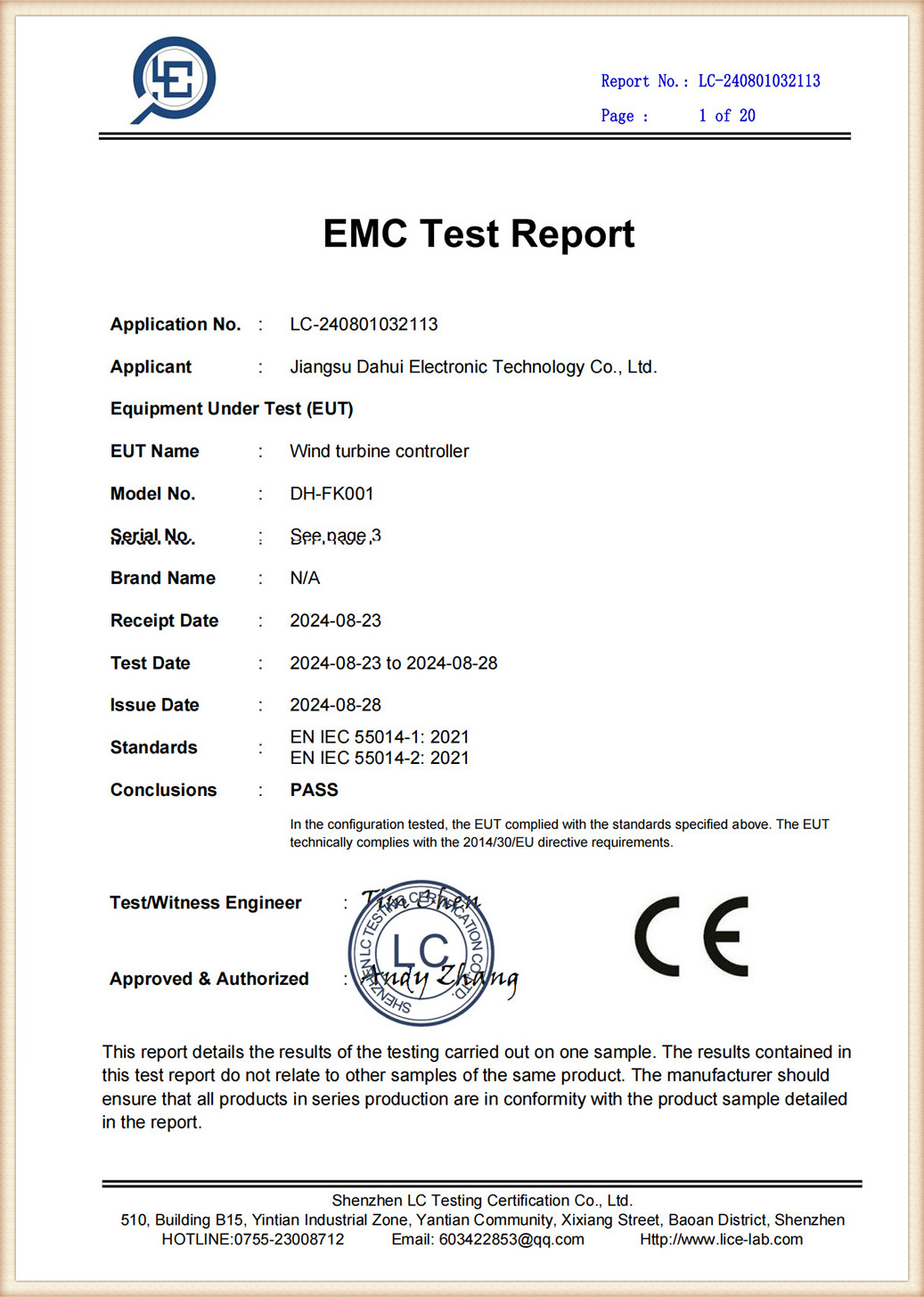
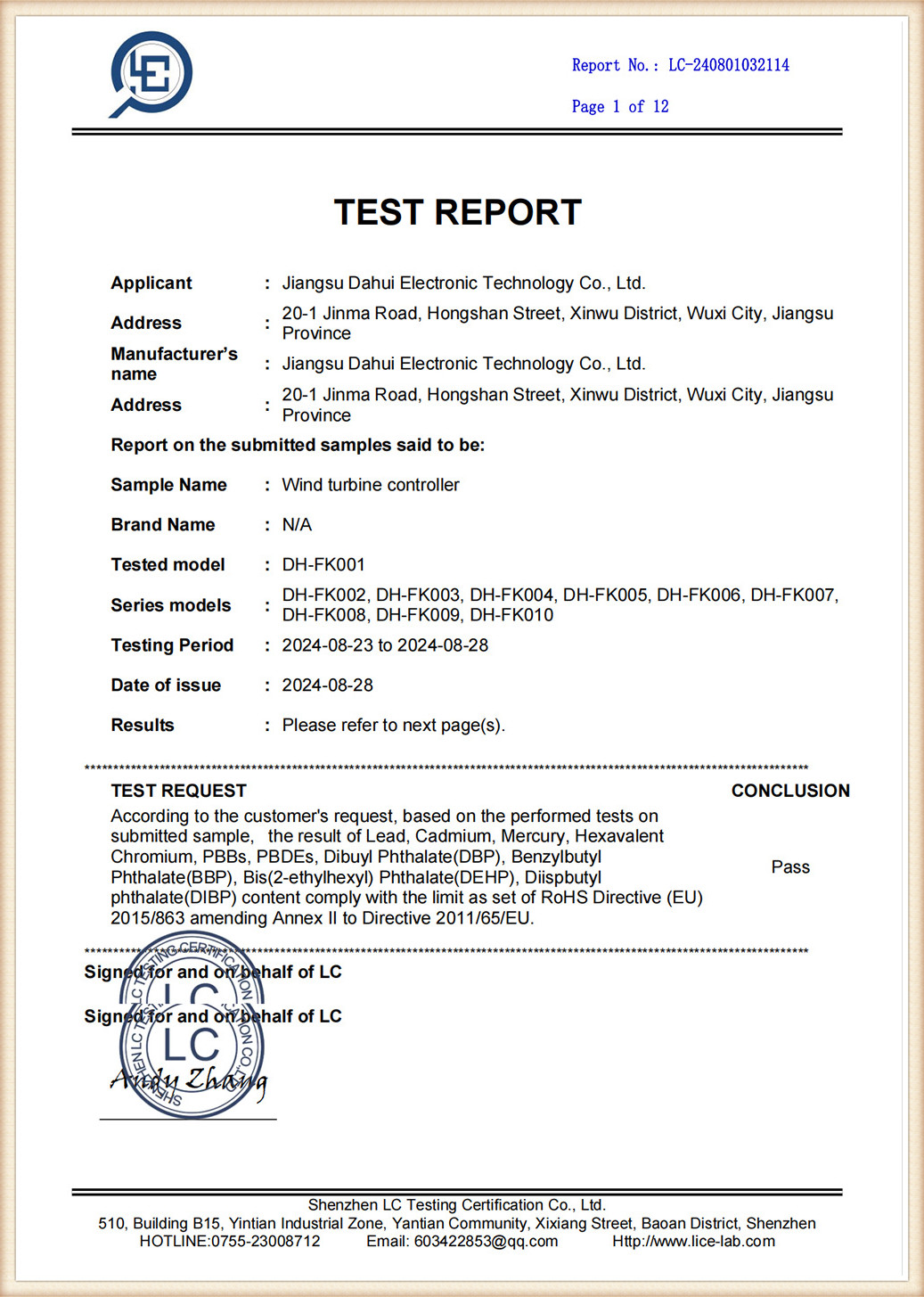
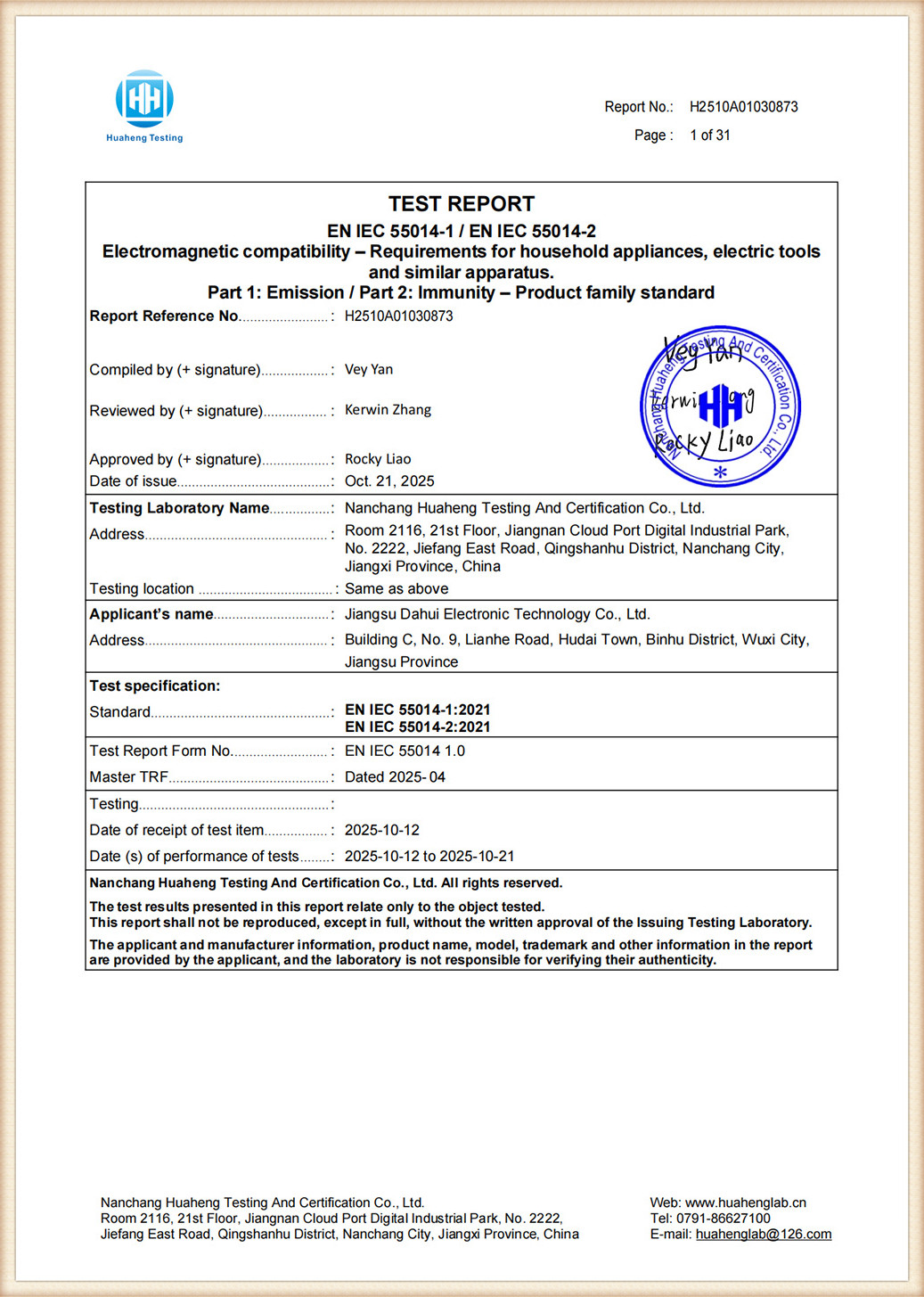
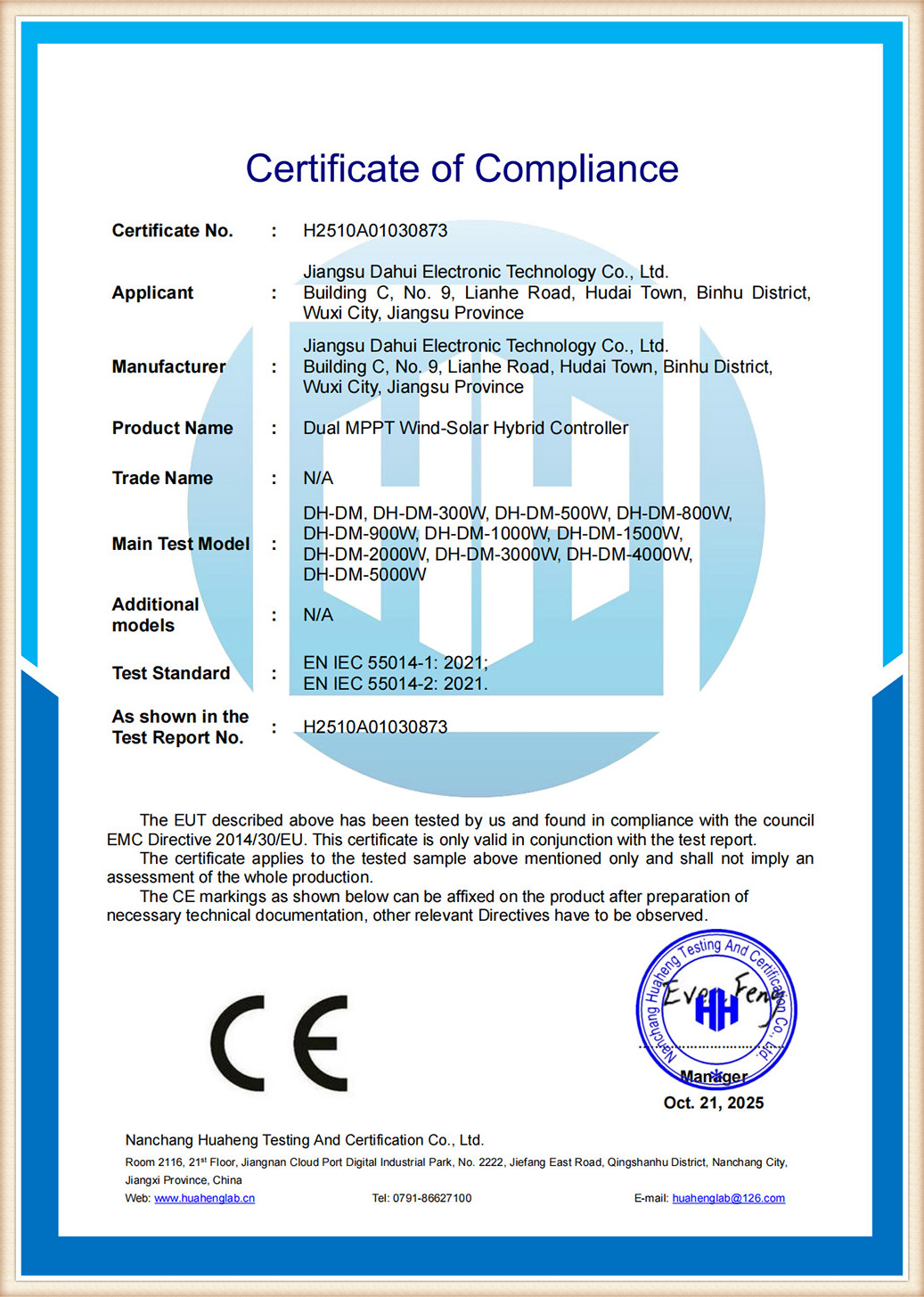
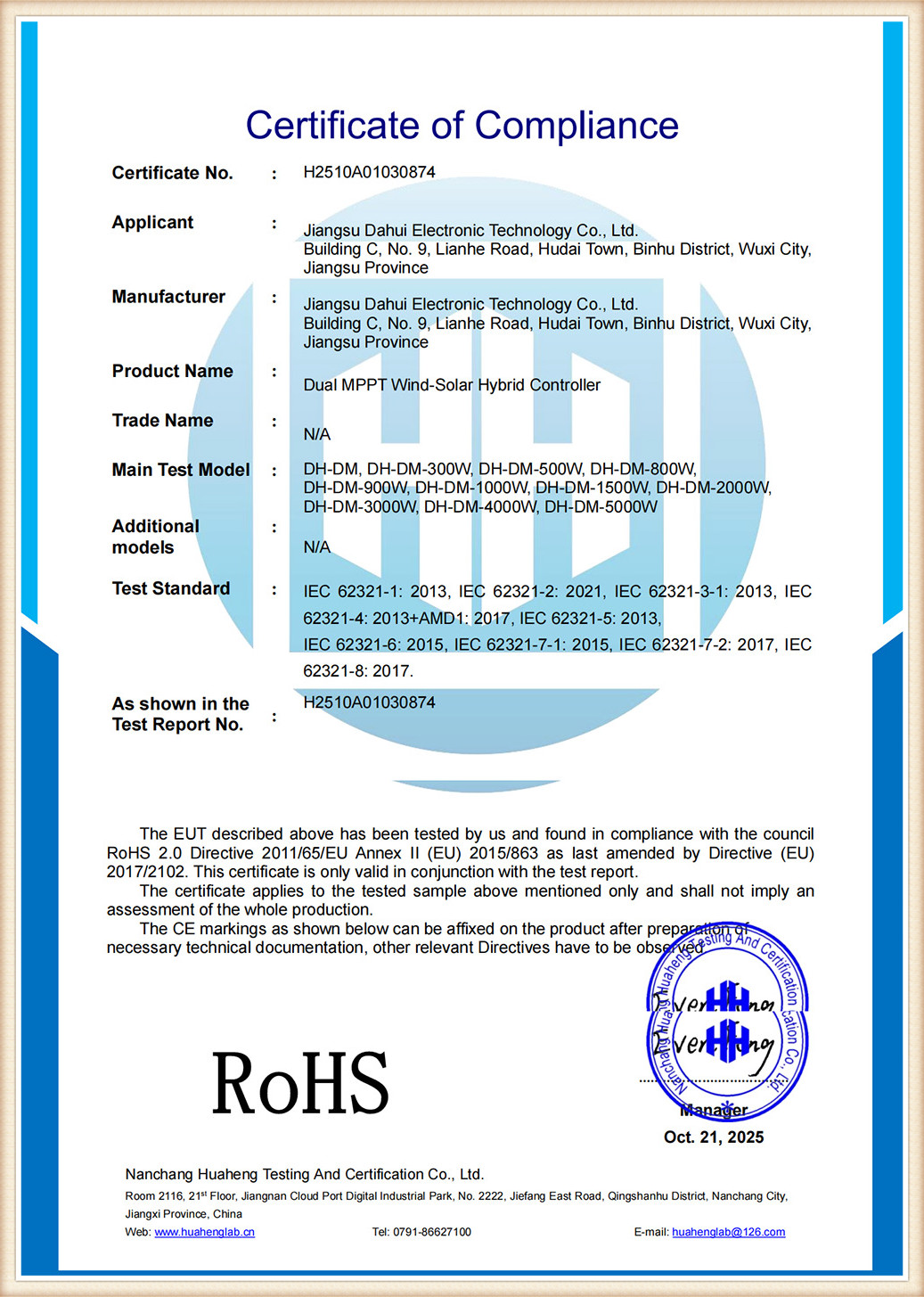
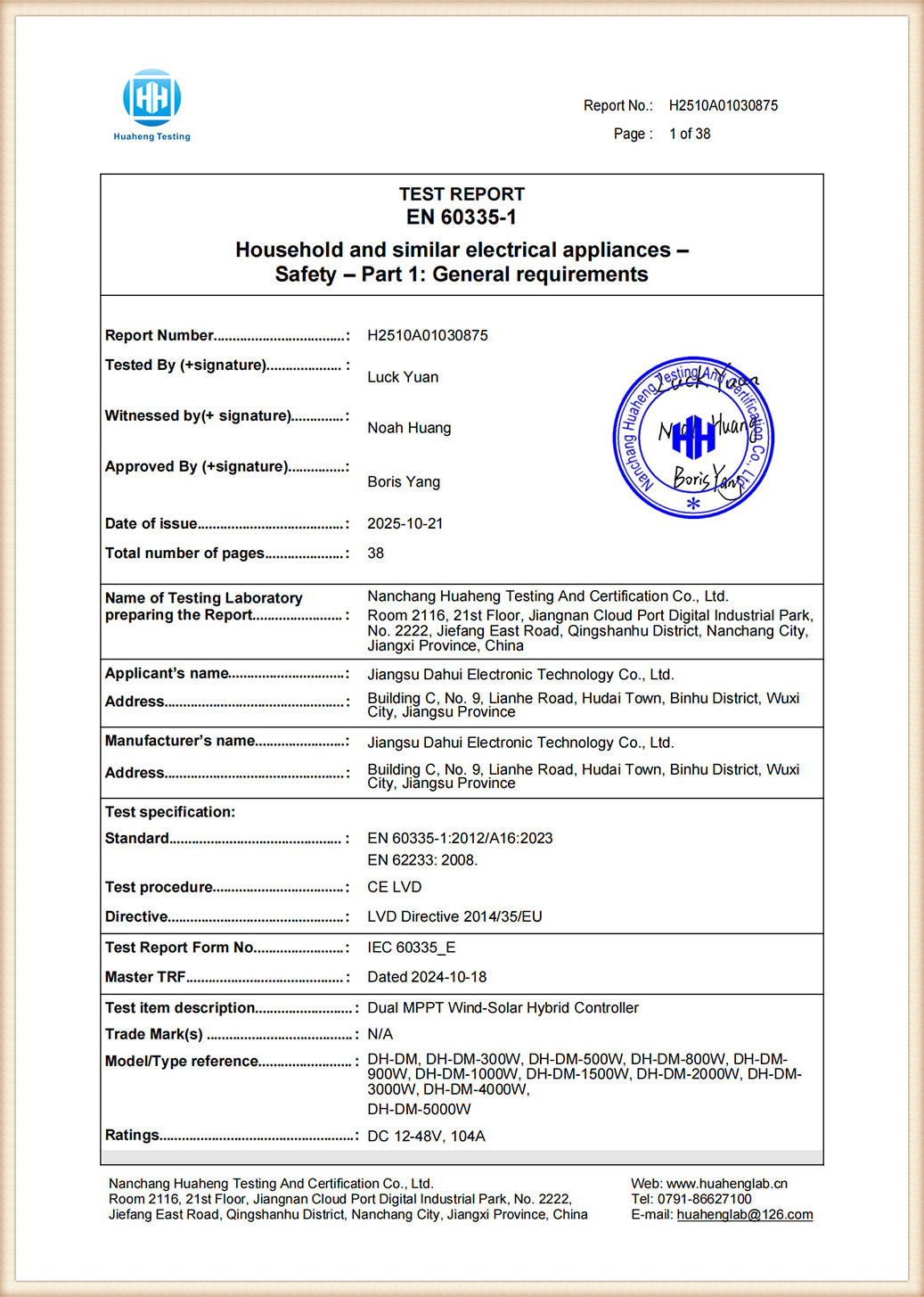
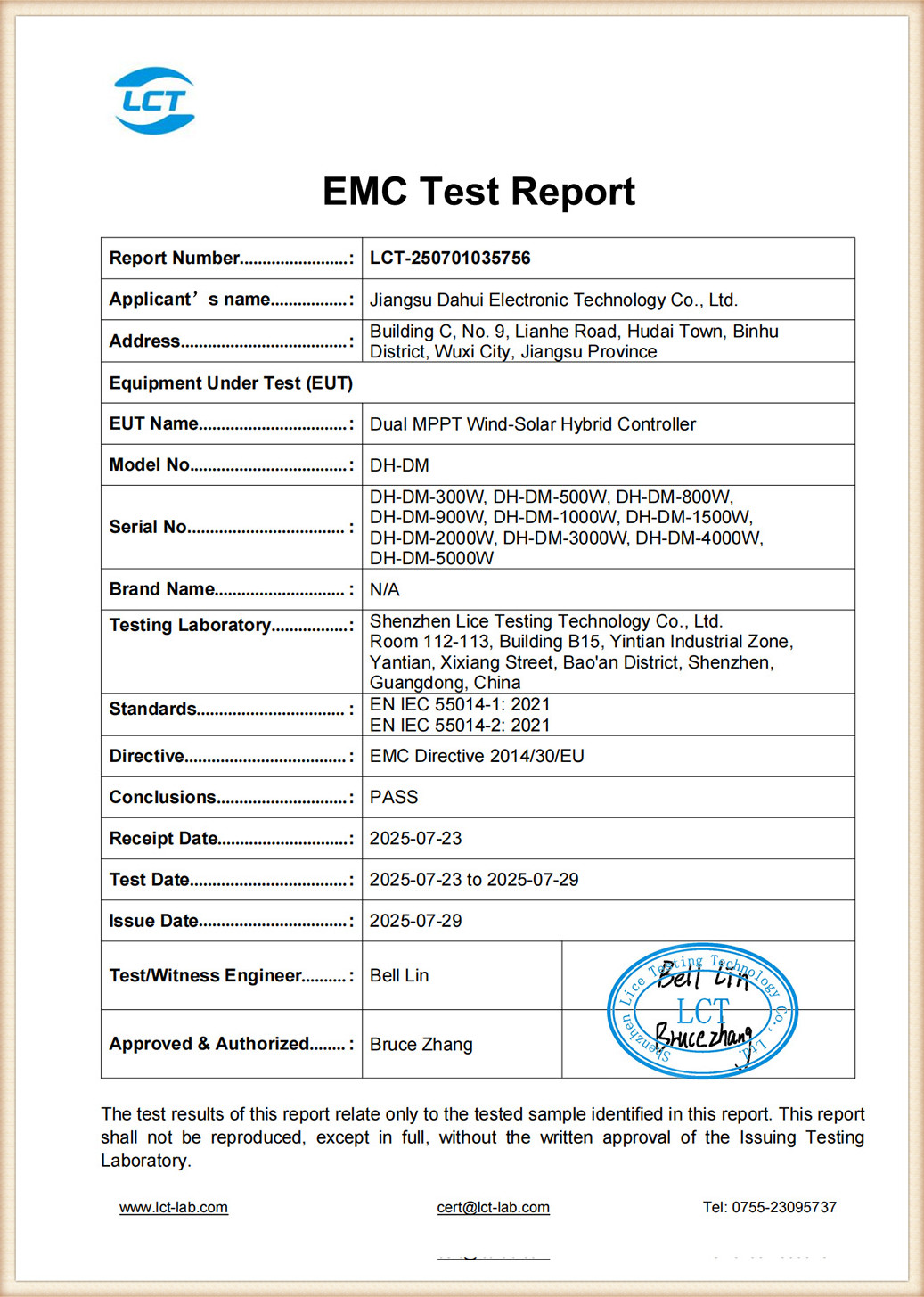
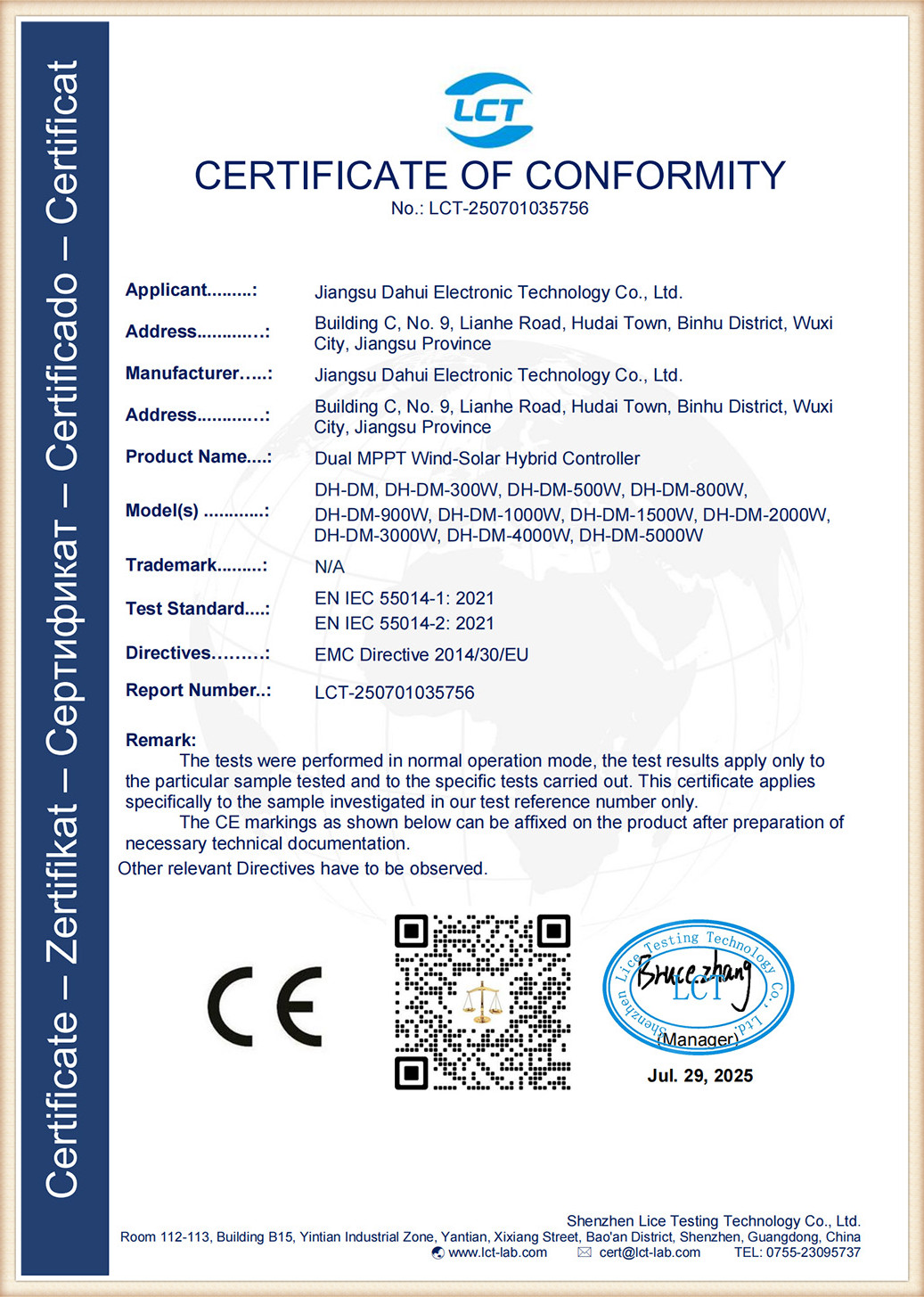
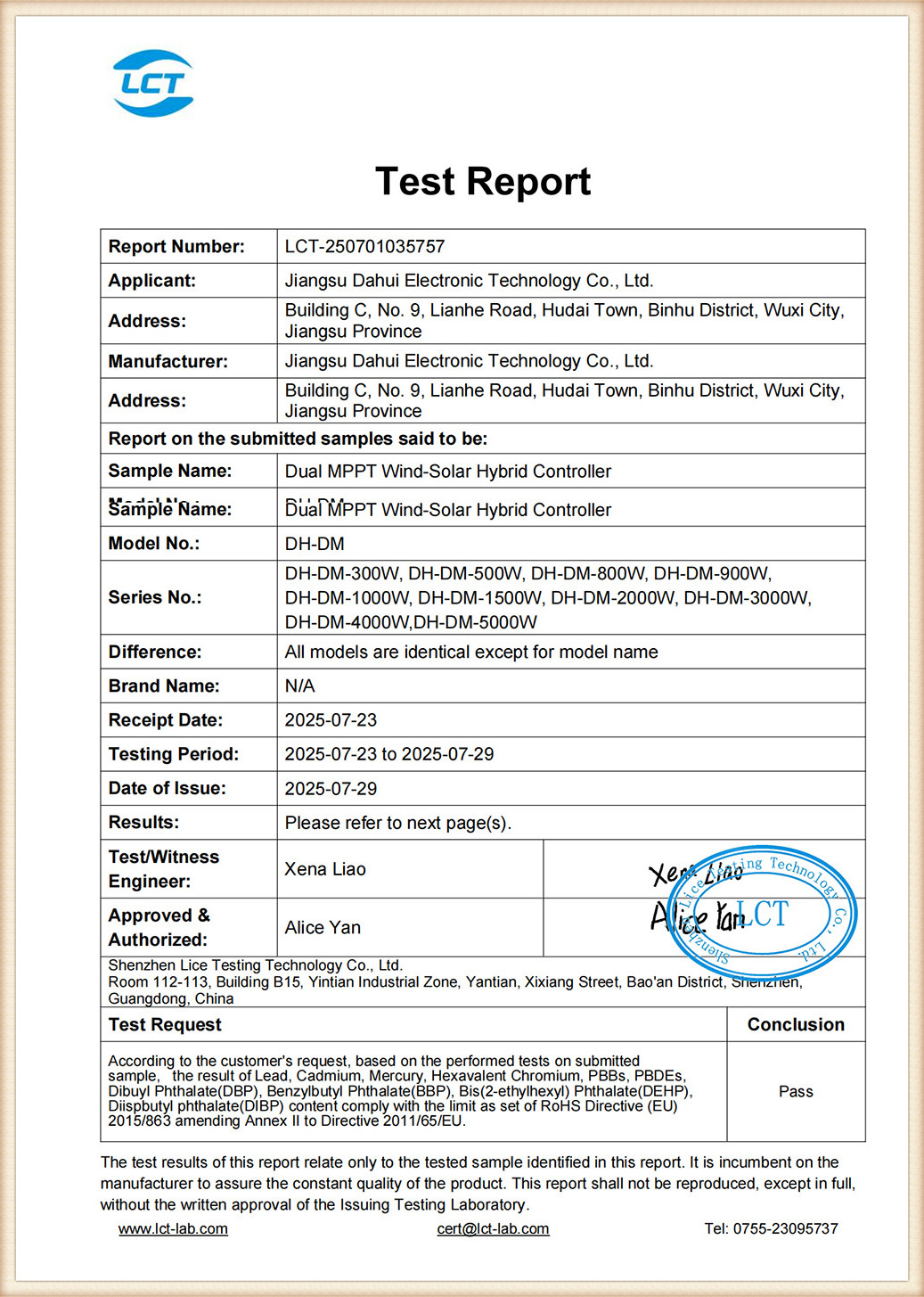
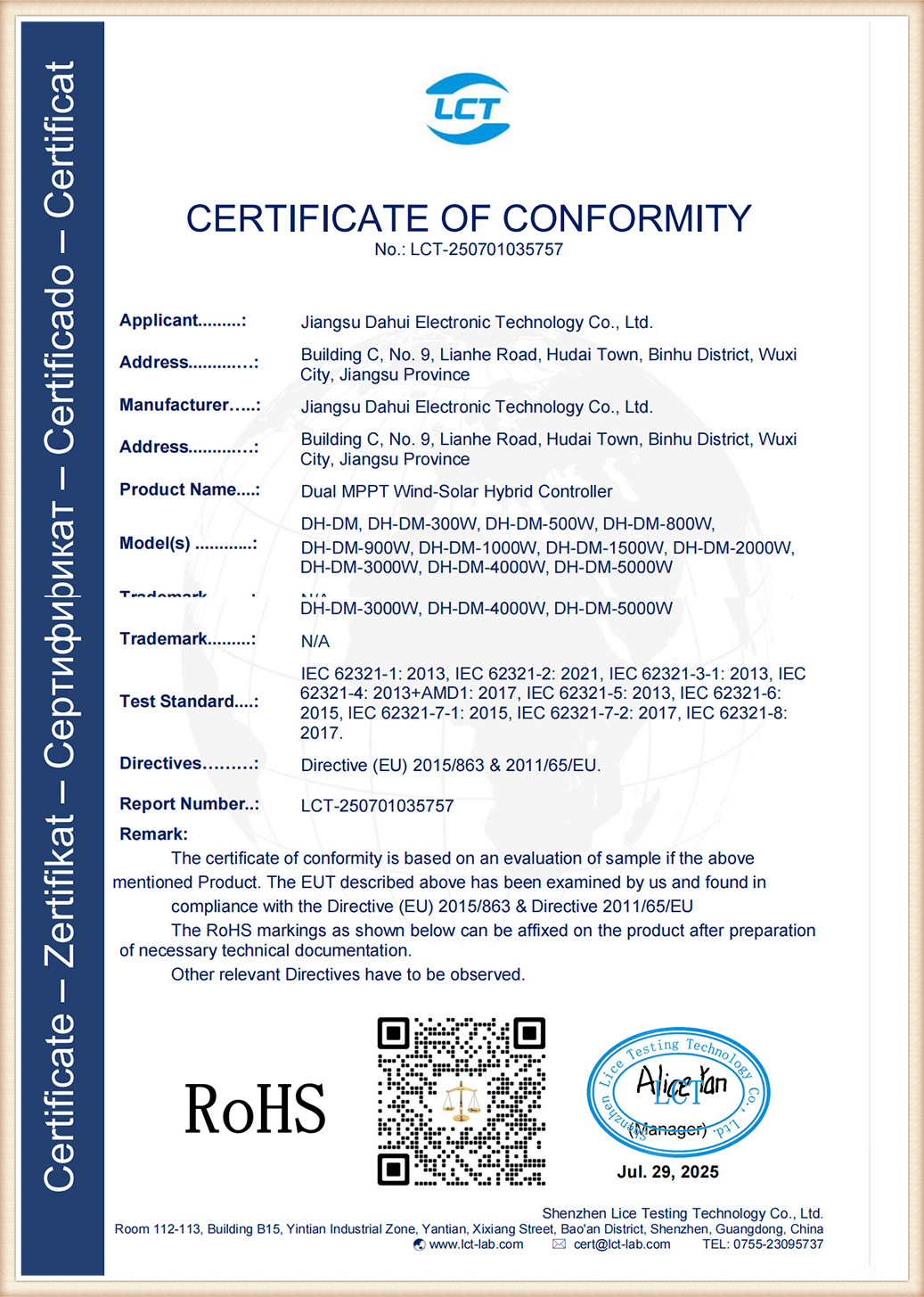
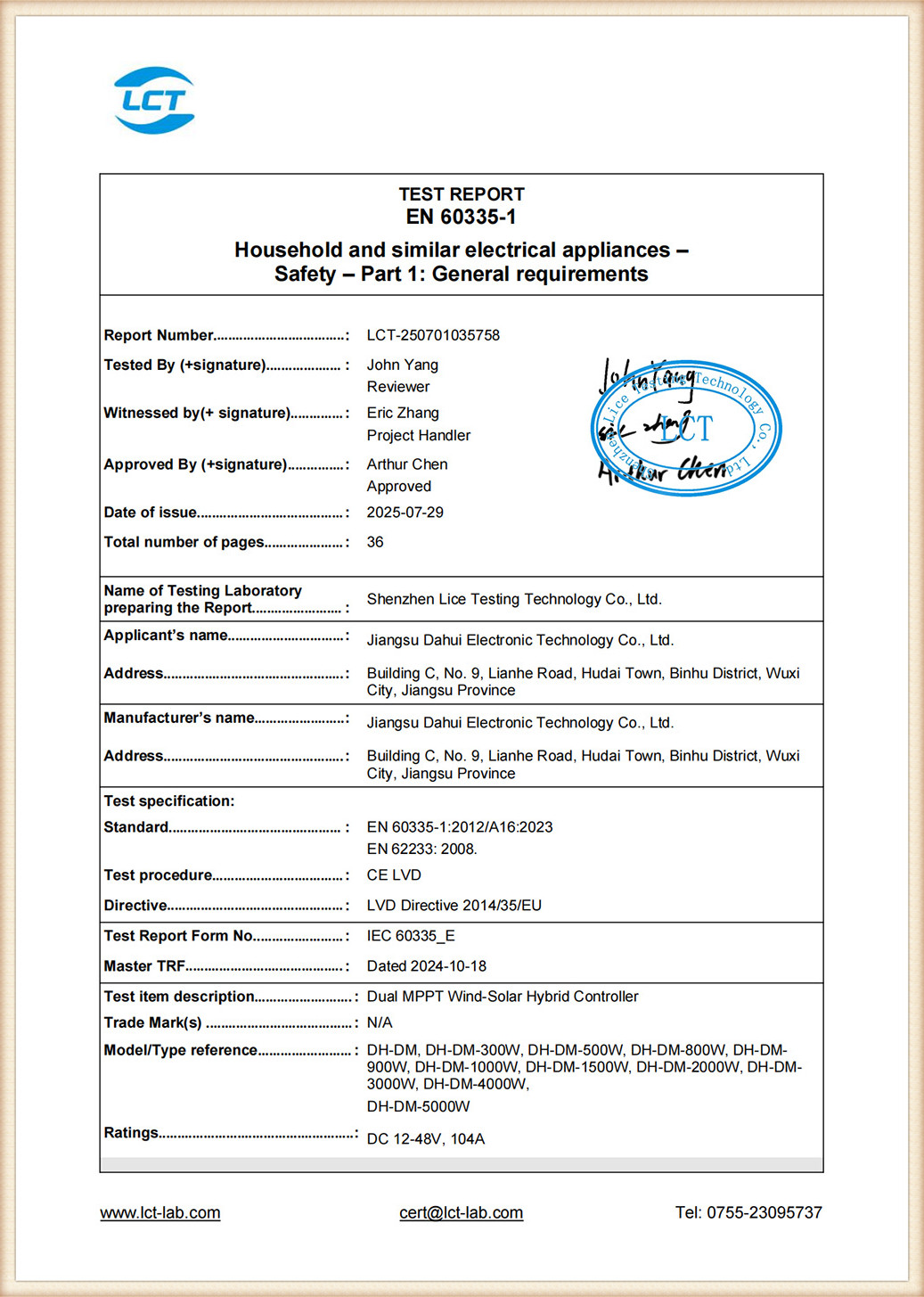
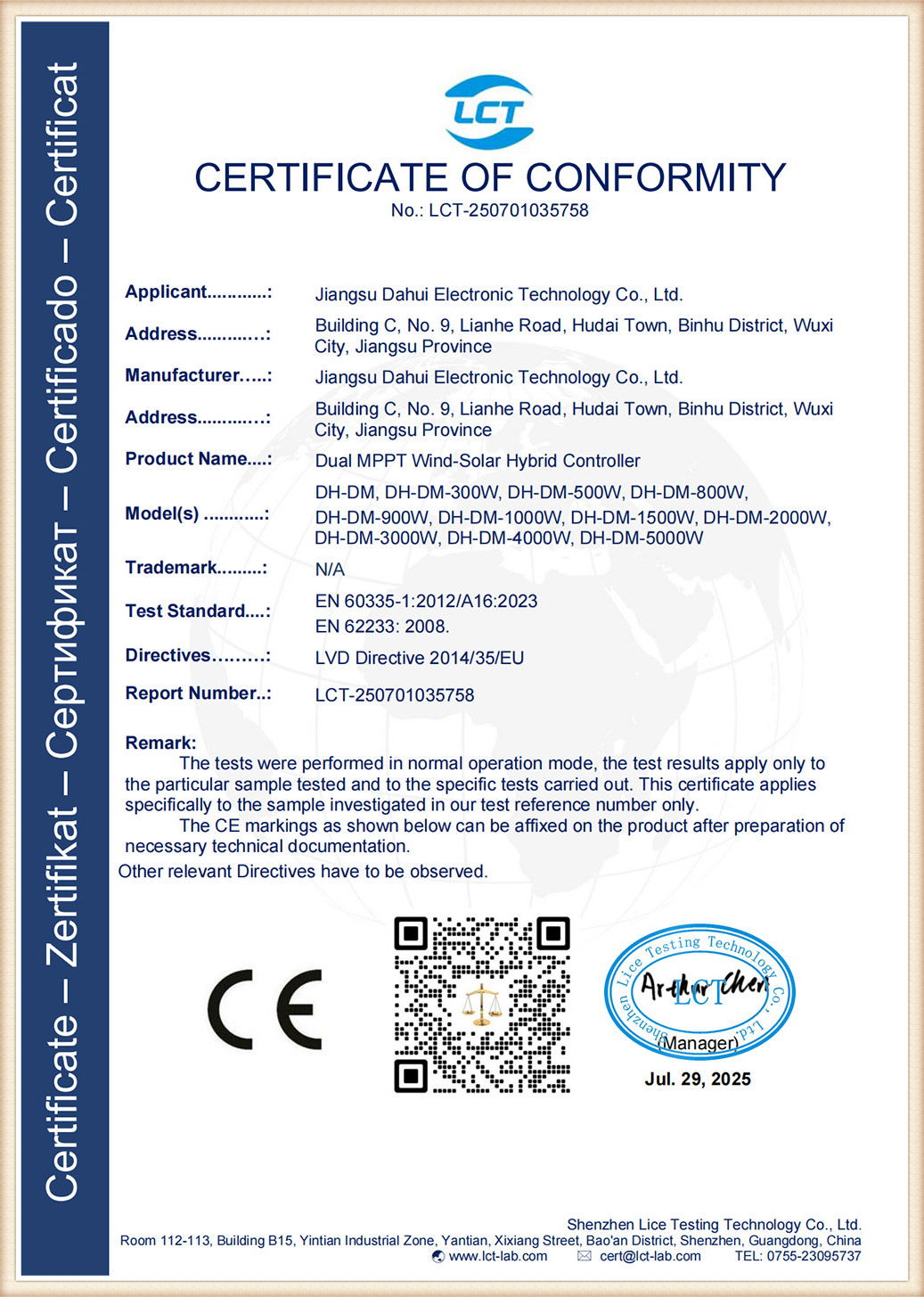
The company always adheres to the core business philosophy of "quality first, independent research and development", and regards product quality and technological innovation as the core driving force for corporate development. At present, it has obtained a number of international authoritative product certifications and ISO quality management system certifications, and has established a full-chain quality management system from raw material inspection, full-process control of the production process to multi-dimensional inspection of finished products. Product quality is strictly controlled throughout the entire process, and core product performance indicators are comprehensively better than industry standards, providing a solid guarantee for the long-term stable operation and reliable service life of the product.