Leave Your Message
Explore our leading-edge MPPT charge controllers engineered specifically for dual-energy municipal street lighting systems.
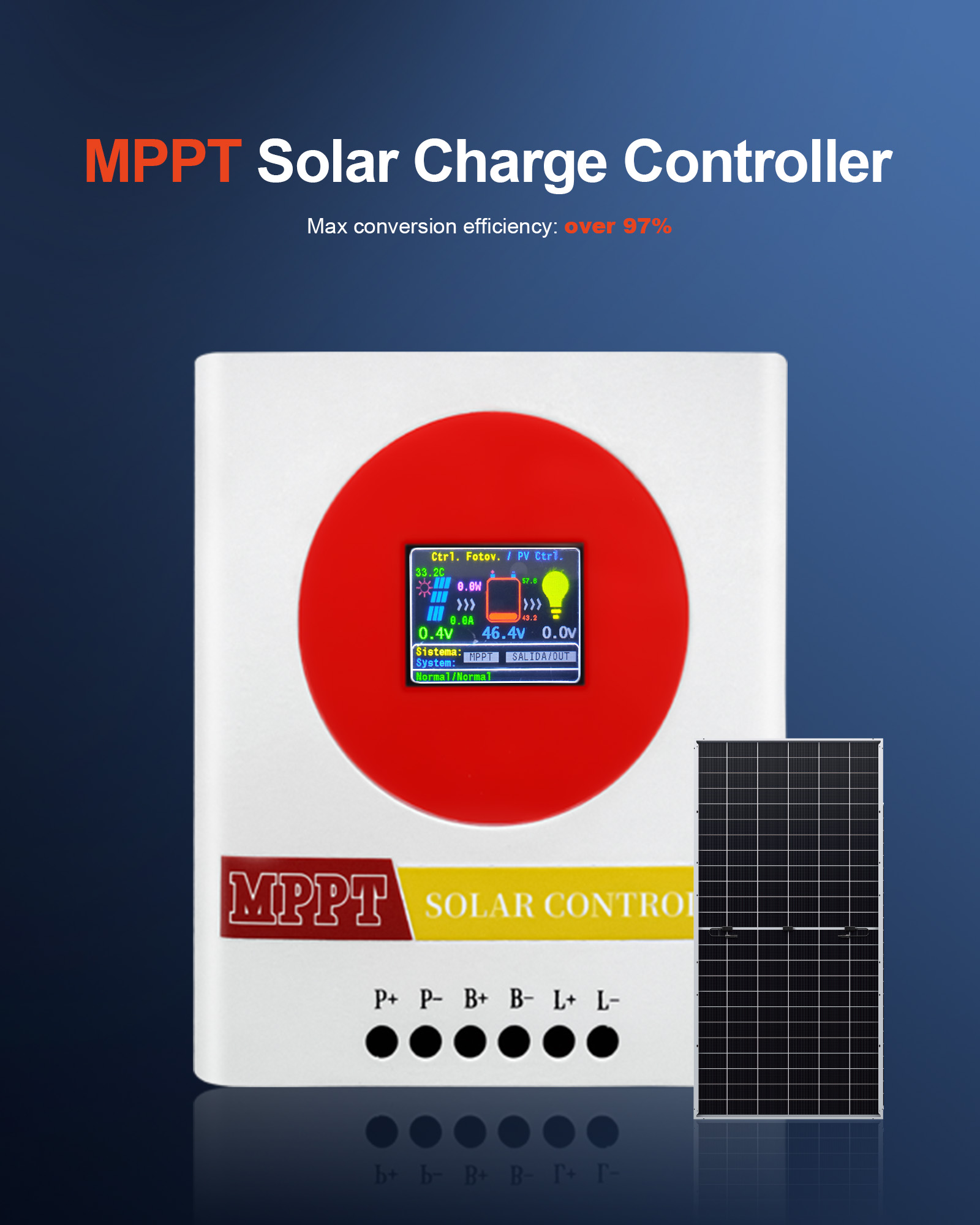
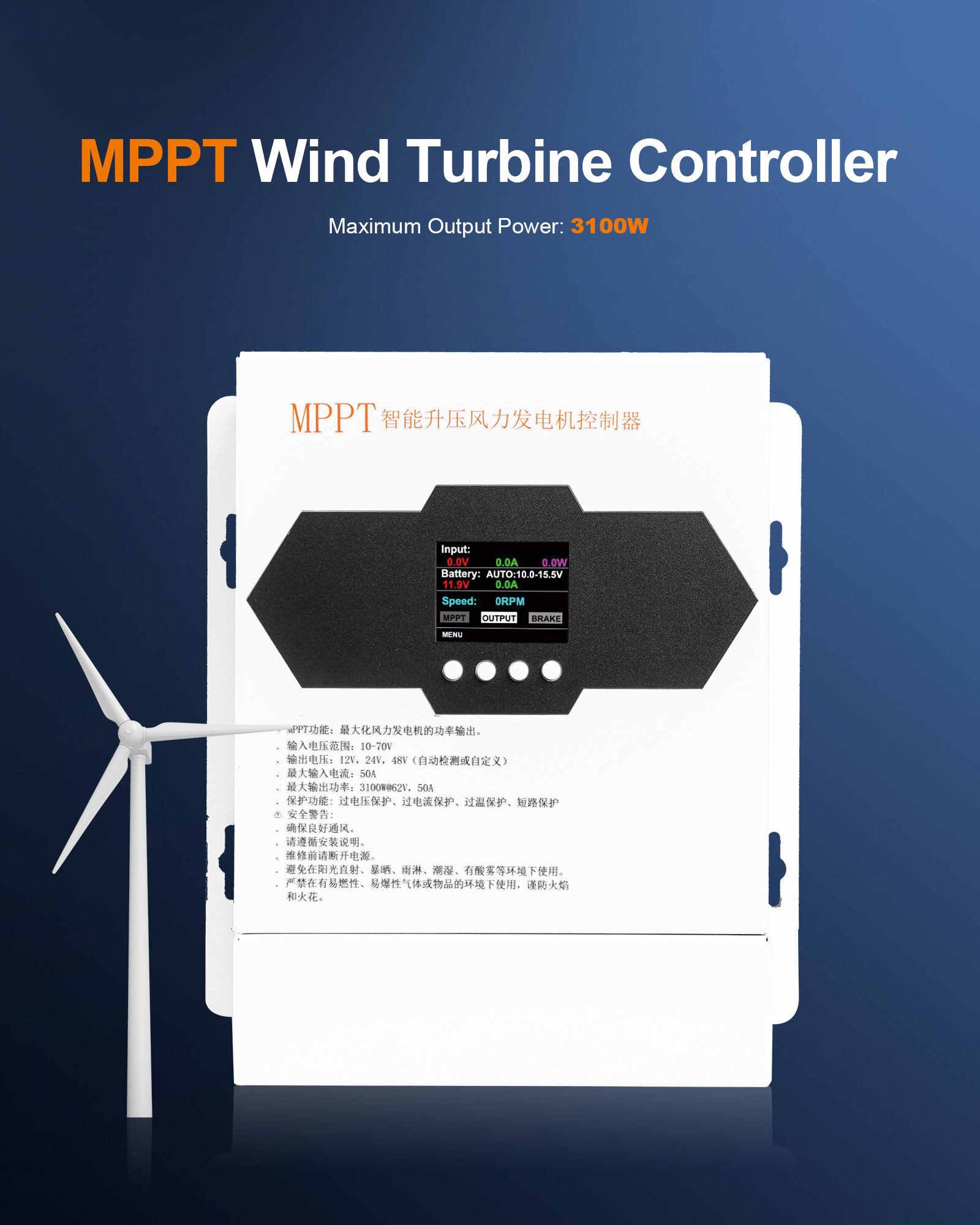
As smart cities expand and global carbon neutrality targets become more stringent, municipal authorities and industrial developers are shifting away from traditional grid-tied public lighting. While solar-only street lights have seen widespread adoption, they face fundamental geographic and seasonal limitations. During prolonged winter months, high-latitude rainy seasons, or severe dust storms, solar panels alone struggle to generate sufficient energy. This is where Hybrid Solar Wind Street Light Controllers step in, utilizing a complementary energy model that harvests power from both wind turbines and photovoltaic panels.
The global commercial landscape for wind-solar street poles has transitioned from niche installations to mainstream infrastructure projects. Modern highways, remote coastal access roads, industrial parks, and high-altitude public paths are increasingly deployed with these hybrid structures. By utilizing an MPPT Hybrid Solar Charge Controller, operators ensure that power generation is active 24 hours a day—capturing solar radiation during the day and kinetic wind energy during the night or during stormy weather. This dual-source reliance reduces battery storage requirements by up to 30% while ensuring 99.9% uptime for critical lighting infrastructure.

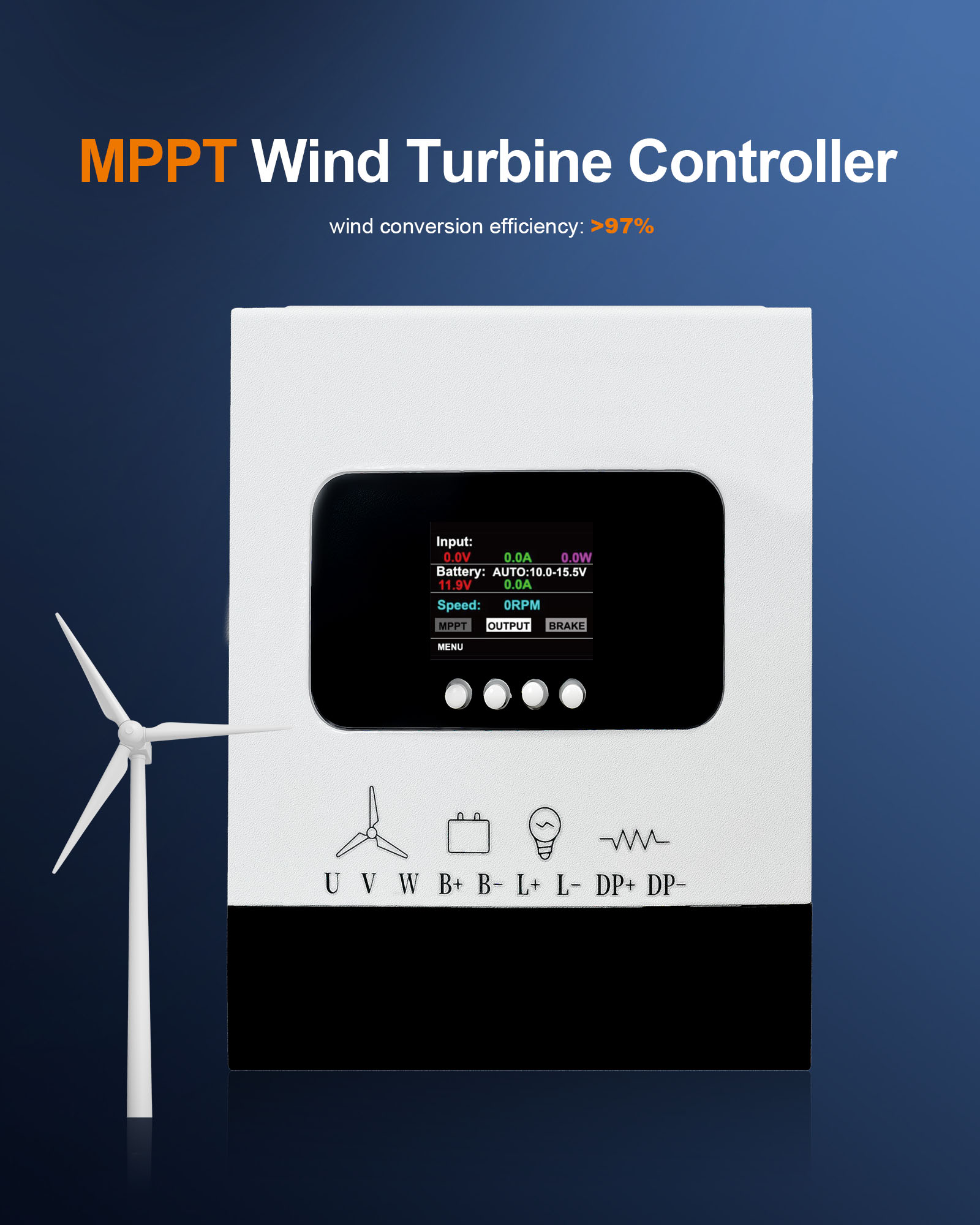
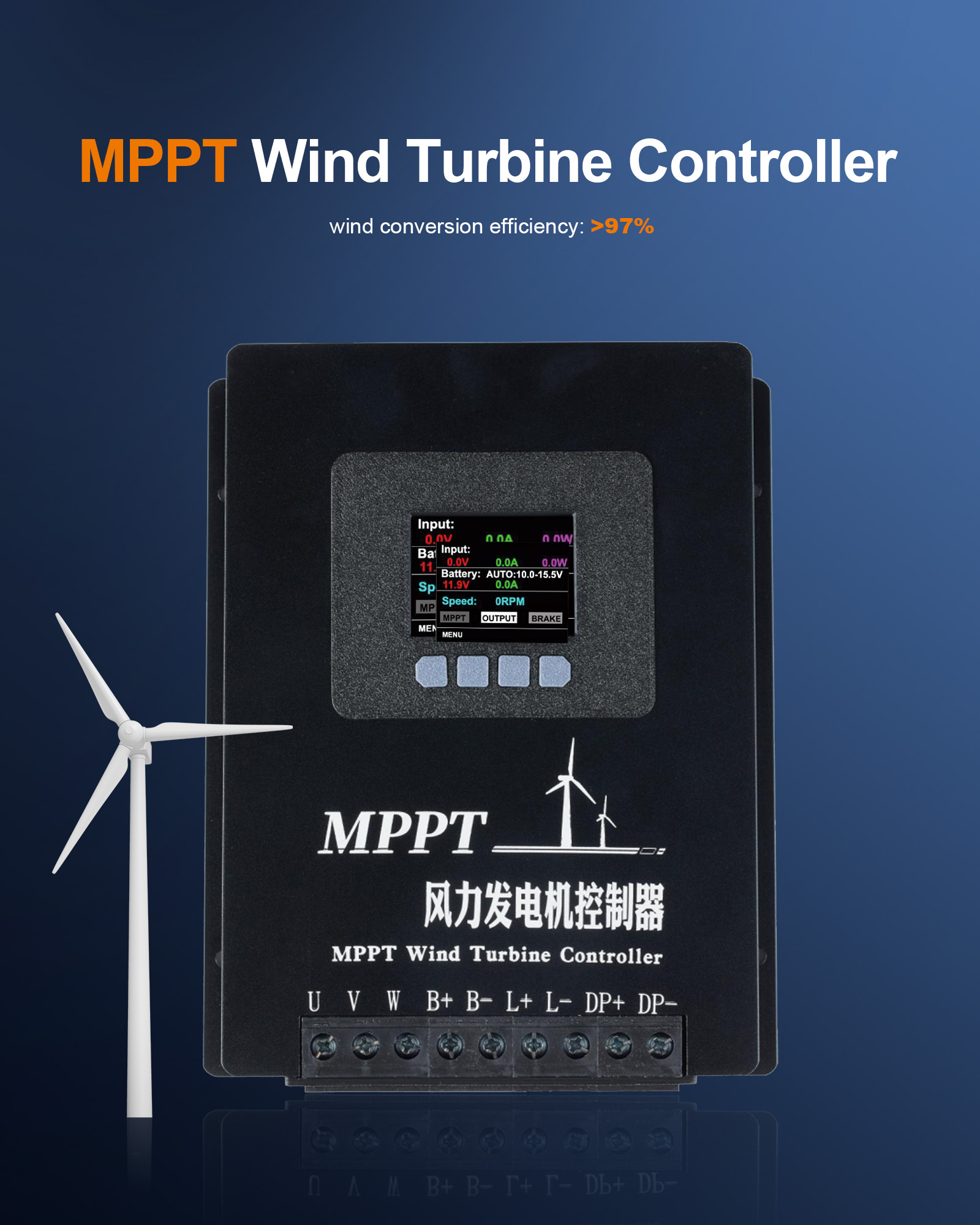
The core challenge of a hybrid wind-solar system lies in the management of two highly distinct electrical sources. Solar panels generate direct current (DC) with a relatively stable voltage output that varies primarily based on solar irradiance. Conversely, wind turbines generate alternating current (AC) with highly fluctuating voltage and frequency directly proportional to the wind speed. An ordinary charge controller cannot handle these dynamic differences simultaneously.
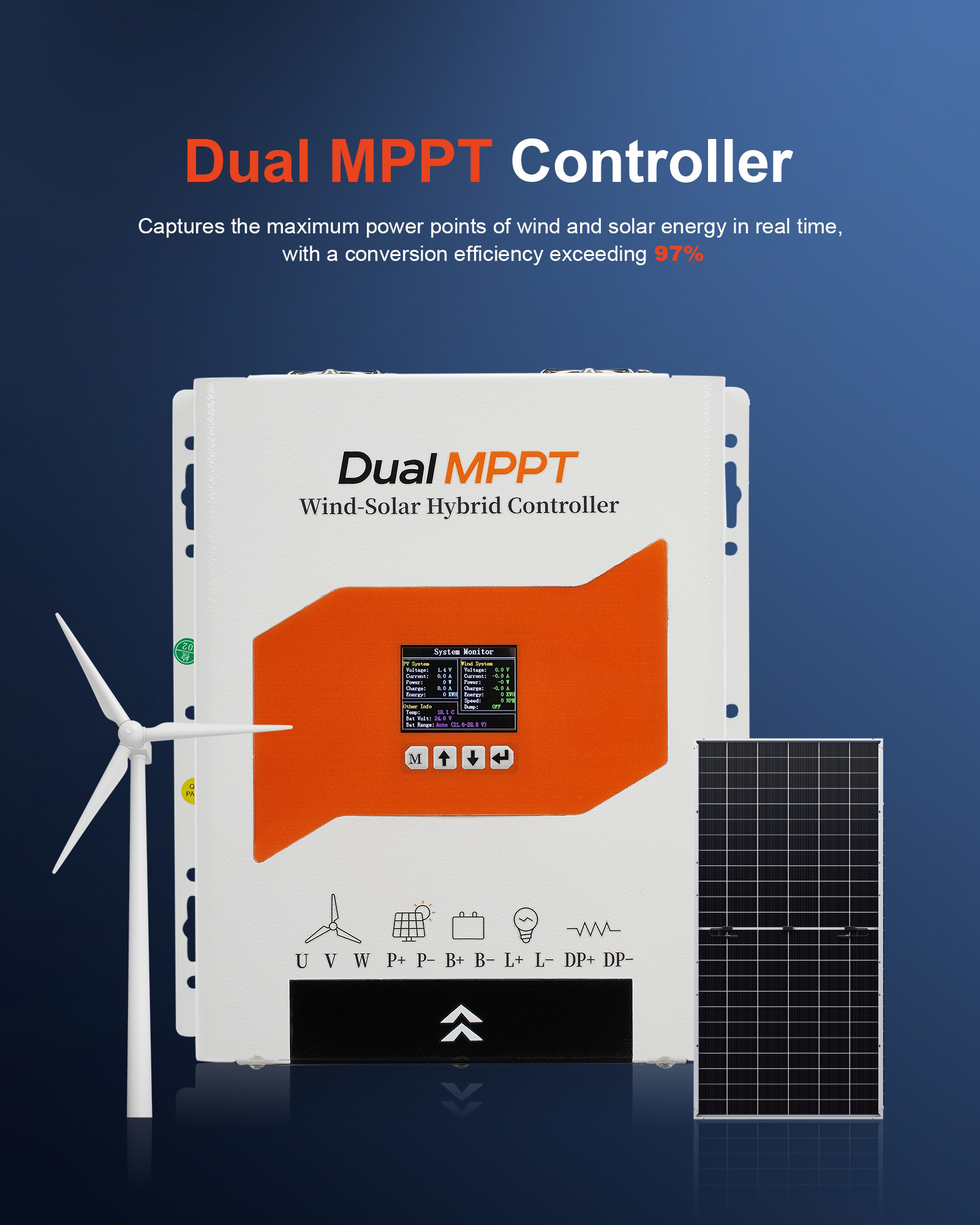
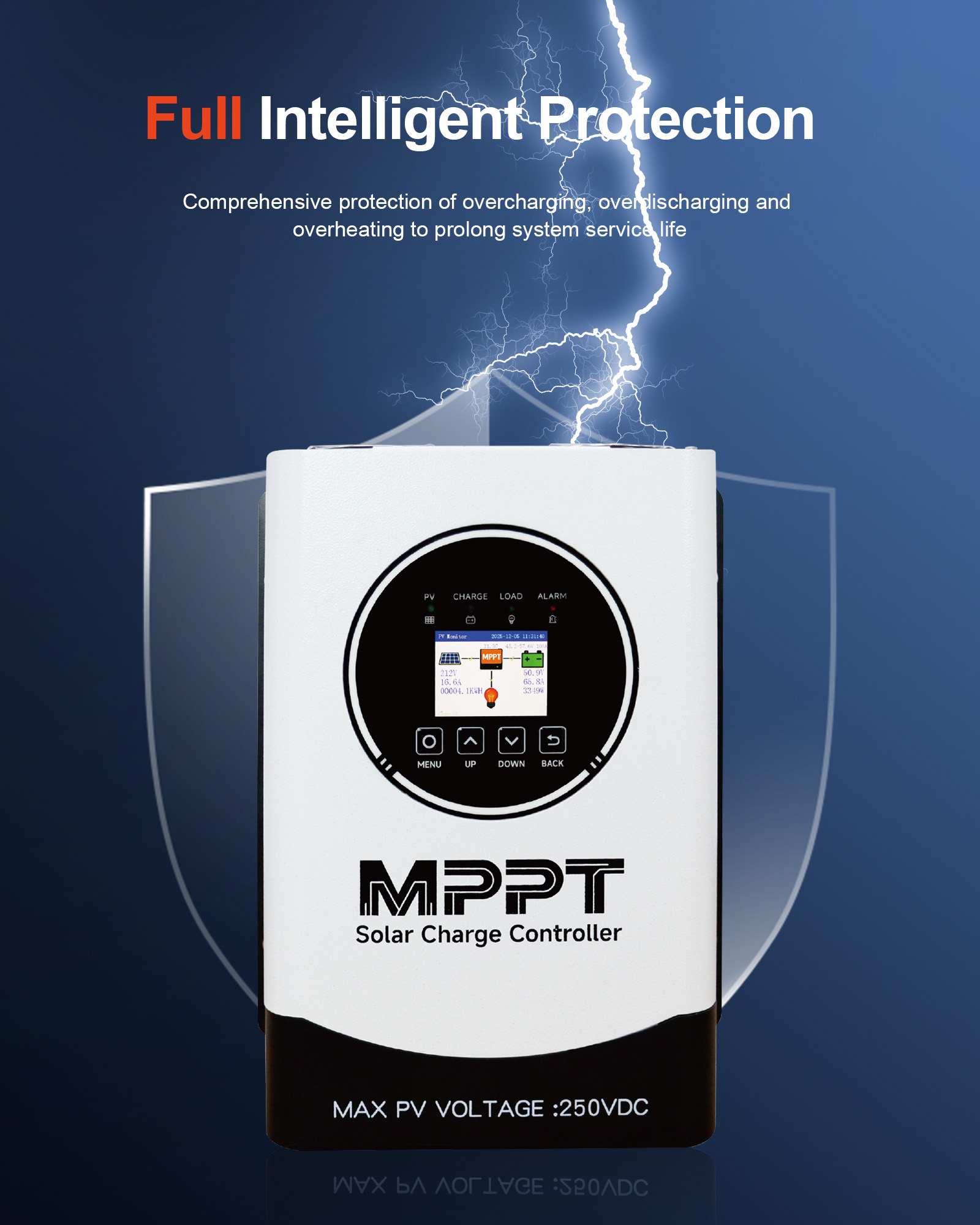
An advanced MPPT Hybrid Solar Charge Controller utilizes dedicated dual-channel tracking circuits:
Furthermore, to protect the system during high-velocity wind storms, the controller includes an automatic dump load circuit. When the battery is fully charged or the wind speeds exceed safe operational limits, the controller redirects excess energy to a high-power ceramic resistor, slowing the turbine electromagnetically.

The integration of wind and solar power yields massive operational benefits across diverse geographical landscapes. Below are the primary deployment scenarios where these controllers demonstrate unmatched reliability:
Highways passing through mountain ranges or along coastlines are characterized by strong, consistent winds, especially at night when solar power is absent. However, these areas are often remote and far from the main electrical grid, making grid connection cost-prohibitive. Installing hybrid street light systems equipped with MPPT Hybrid Controllers ensures that the kinetic energy of coastal breezes and mountain drafts is captured, providing uninterrupted illumination for high-speed traffic without relying on expensive underground grid cabling.
Modern urban planning demands that street lights act as multifunctional "smart poles." Beyond illumination, they host 5G micro-base stations, environmental monitoring sensors, public Wi-Fi routers, and security cameras. These auxiliary devices present a constant baseline power draw that solar-only systems struggle to sustain through winter. A wind-solar hybrid controller provides the continuous, high-wattage DC bus required to keep these critical IoT devices active 24/7, even during overcast winter weeks.
In heavy industrial zones, mining sectors, and remote oil fields, safety regulations demand reliable lighting along transit paths. These environments are prone to heavy dust, which coats PV panels and severely degrades solar efficiency. The constant movement of heavy equipment and geographical positioning often creates localized wind tunnels. The wind turbine element of the hybrid street pole acts as a critical backup, ensuring safety illumination remains active even when the solar panels are temporarily obscured by dust or snow.


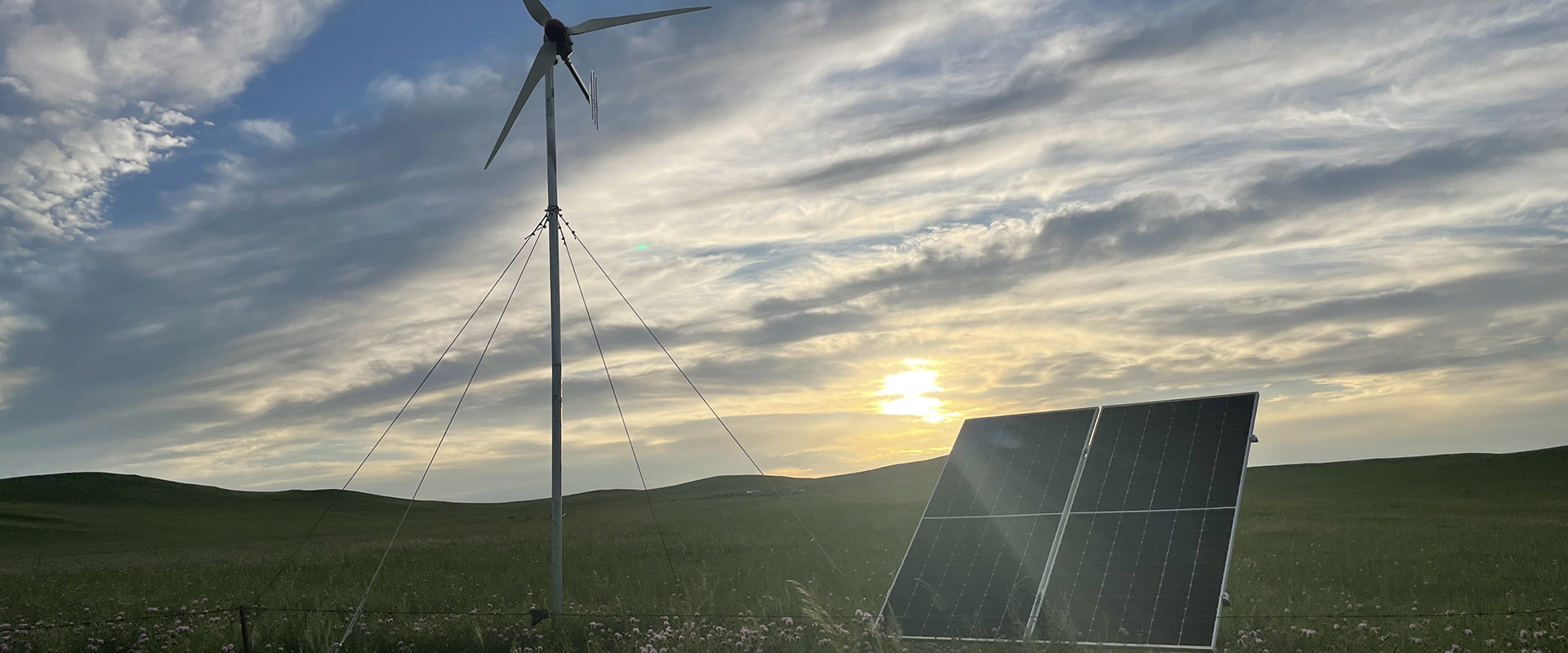
The company's core R&D strength is composed of a scientific research team led by senior doctors in the industry. It has long-term focus on the cutting-edge exploration and innovative application of new energy technologies, continues to increase investment in core R&D, and has formed deep technological accumulation and independent innovation capabilities in core areas such as efficient conversion of electric energy, intelligent system integration, and coordinated control of integrated wind, solar, and storage.
Relying on industry-leading automated production lines and high-precision full-dimensional testing equipment, the company has independently developed a number of intelligent new energy products with completely independent intellectual property rights, fully covering three major application scenarios: off-grid, grid-connected, and mixed grid.
The product matrix includes core categories such as high-frequency/power frequency inverters, wind power controllers, photovoltaic controllers, wind-solar hybrid controllers, wind-solar storage-control-inverse integrated power generation systems, etc., which can be flexibly adapted to diversified power needs such as household use, industrial and commercial distributed, and off-grid independent power stations.
As power electronics and digital technologies evolve, the next generation of Hybrid Solar Wind Street Light Controllers is moving towards higher intelligence and system-level integration. Key trends shaping the industry include:
By integrating machine learning algorithms directly onto the controller's microprocessor, next-gen systems can analyze historical charge patterns and correlate them with localized weather forecasts. If the system predicts a prolonged windless or overcast period, it dynamically dims the street light during non-peak hours, preserving battery life and avoiding complete blackouts.
Integrating LoRaWAN, NB-IoT, or 4G/5G modules directly inside the controller housing allows municipal operators to monitor battery health, wind turbine RPM, and solar output in real-time. Automated alerts notify maintenance crews of turbine bearing wear or dirty solar panels before a system failure occurs, reducing operational costs by up to 40%.
Transitioning from traditional silicon MOSFETs to Gallium Nitride (GaN) and Silicon Carbide (SiC) switches allows controllers to operate at higher switching frequencies with significantly lower thermal dissipation. This results in smaller controller footprints, higher efficiency ratings (>99.5%), and enhanced reliability in high-temperature environments.
With the rapid commercialization of Sodium-Ion (Na-Ion) and Solid-State batteries, modern controllers are being designed with highly customizable charge profile algorithms. Sodium-ion compatibility is particularly crucial for cold-climate street lights, as Na-ion batteries retain capacity far better than lithium-ion chemistries at sub-zero temperatures.
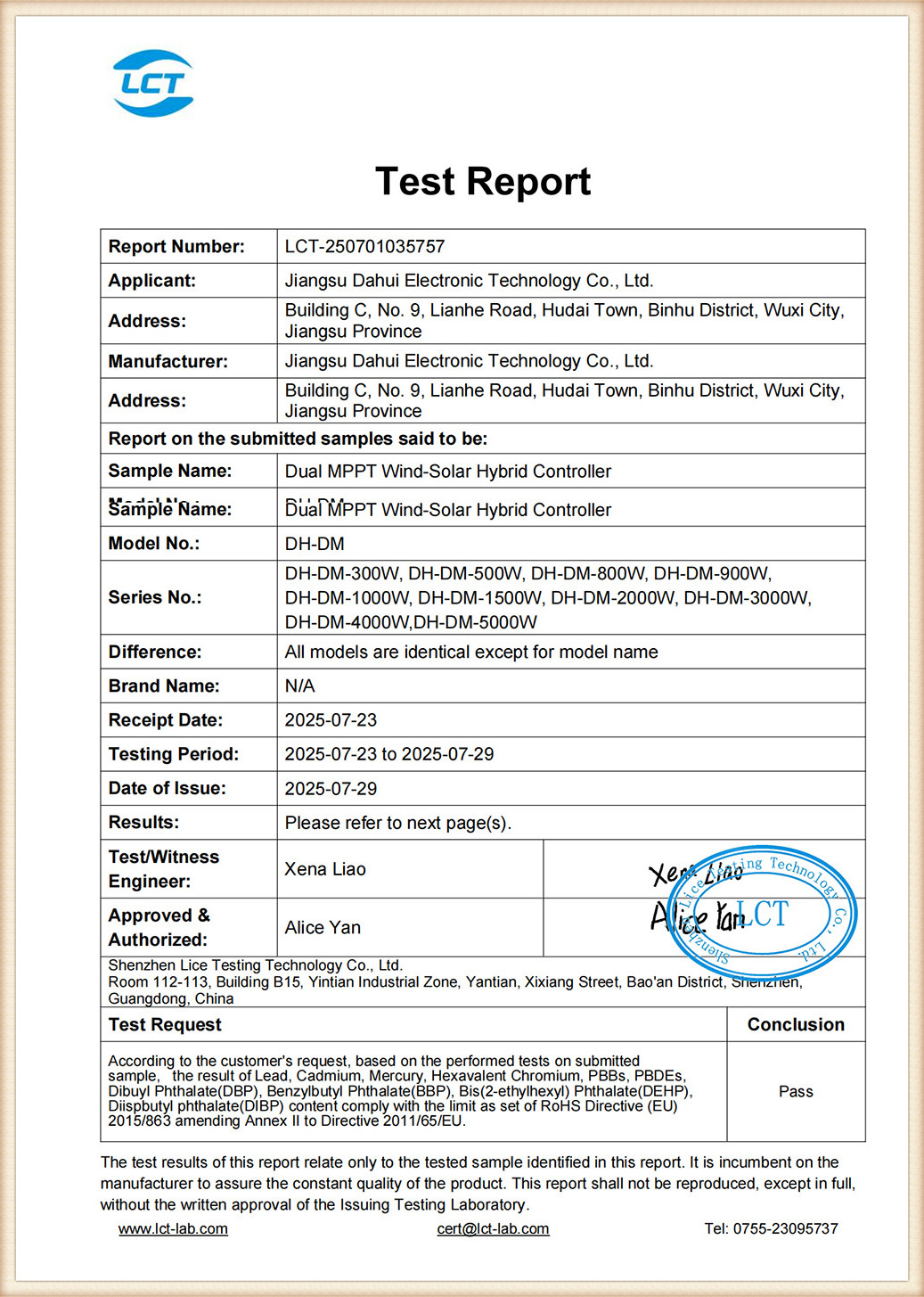
The company always adheres to the core business philosophy of "quality first, independent research and development", and regards product quality and technological innovation as the core driving force for corporate development. At present, it has obtained a number of international authoritative product certifications and ISO quality management system certifications, and has established a full-chain quality management system from raw material inspection, full-process control of the production process to multi-dimensional inspection of finished products. Product quality is strictly controlled throughout the entire process, and core product performance indicators are comprehensively better than industry standards, providing a solid guarantee for the long-term stable operation and reliable service life of the product.








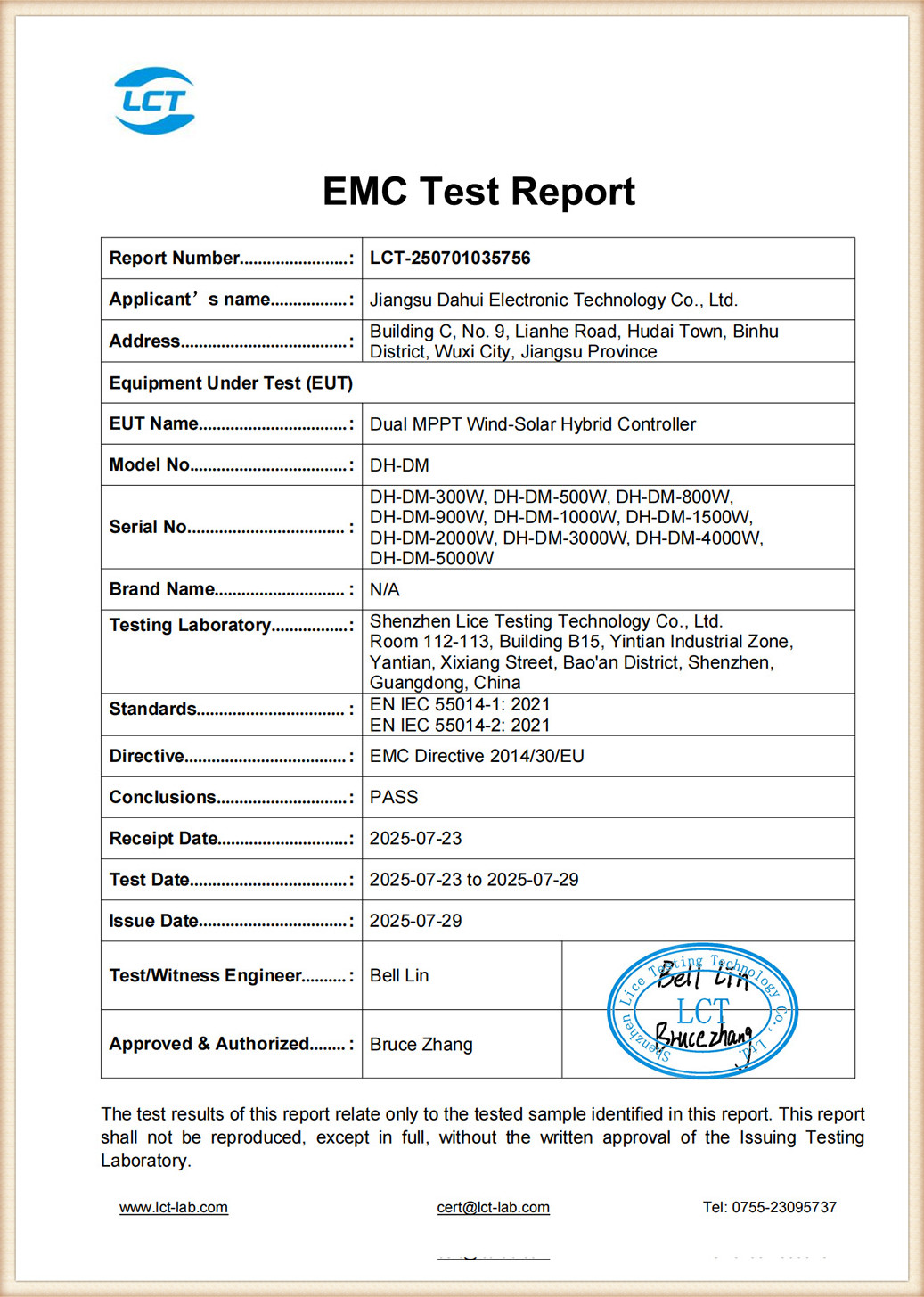


Select from our comprehensive lineup of controllers designed for maximum efficiency and long service life in harsh outdoor environments.